Designing Mobility Through Lived Experience
Research is no longer a precursor to design but a creative, sense-making act that helps us understand systems, empathize with lived experiences, navigate uncertainty, and shape the futures we choose to champion.
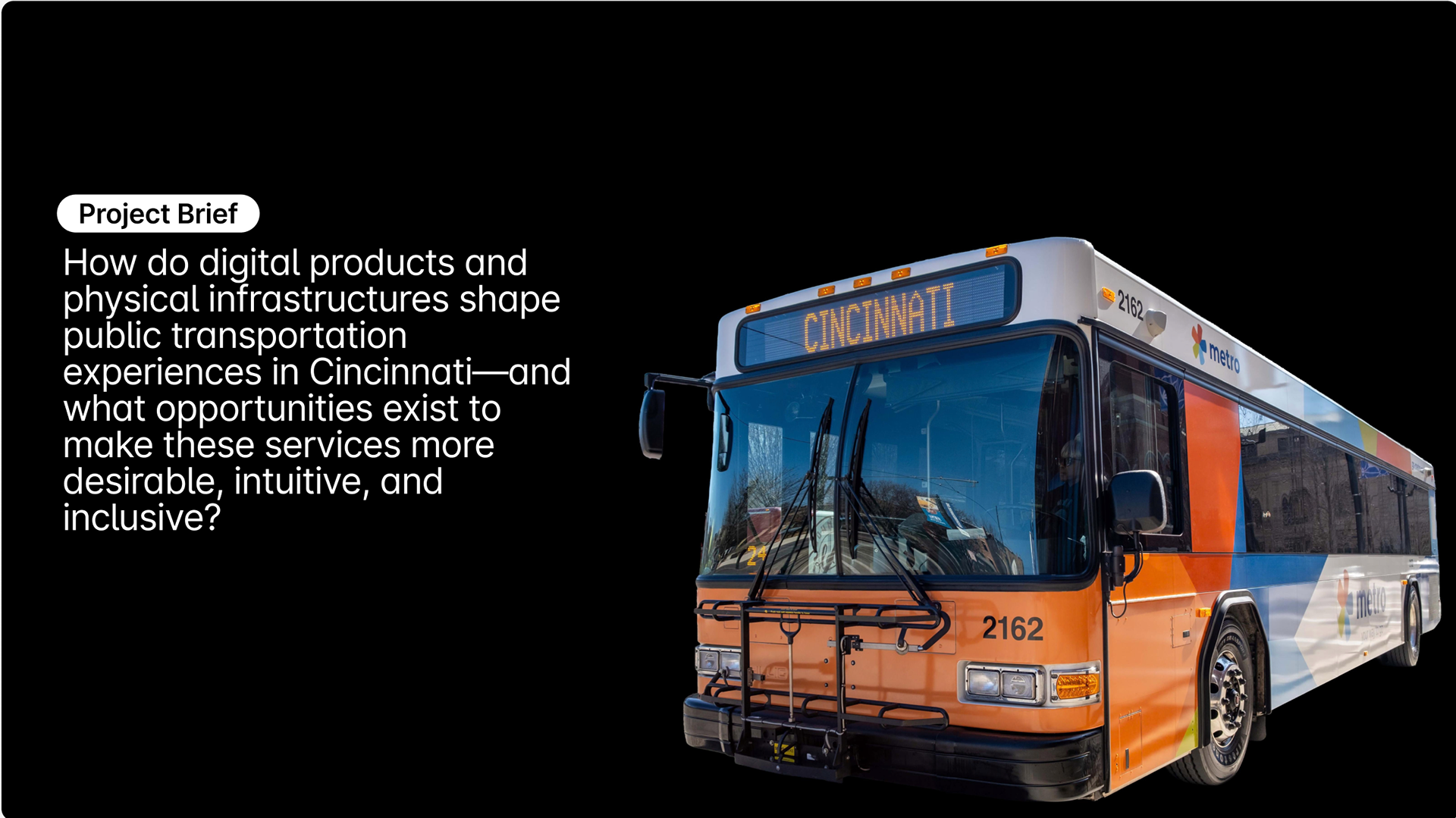
As part of a semester-long research investigation into Cincinnati’s public transportation ecosystem, I had to pick a category and examine how my riders navigate the intersection of digital products and physical infrastructure across Metro and TANK services.
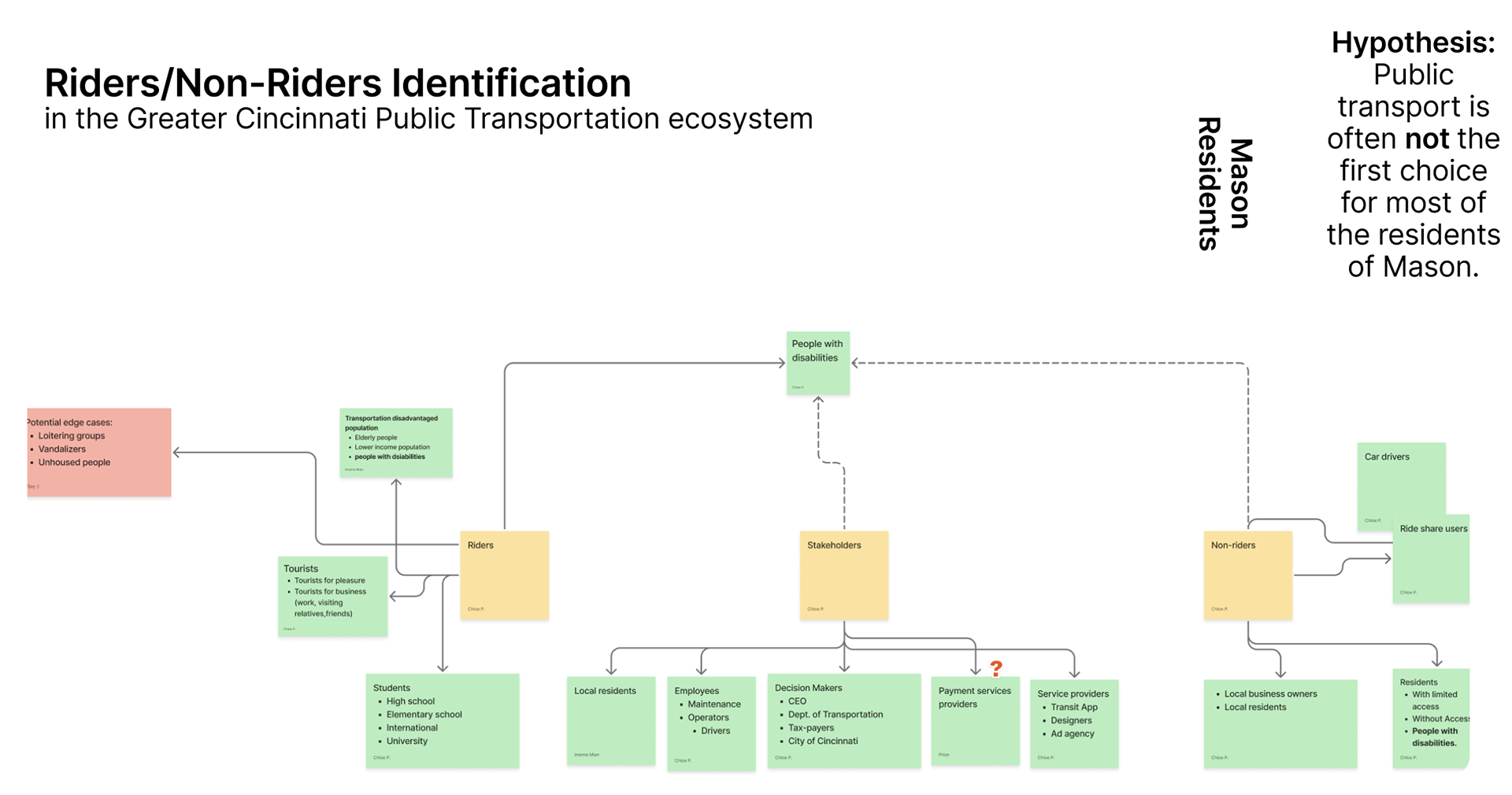
I hit a jackpot and got to work with the most challenging category: non-riders. People who do not even see the public transportation network as part of their everyday life.
To understand the system firsthand, I began by taking a public bus from Mason to Cincinnati. Because this was a Research Methods project, I documented the journey using an early qualitative research method called EXPERIENCE SAFARI.
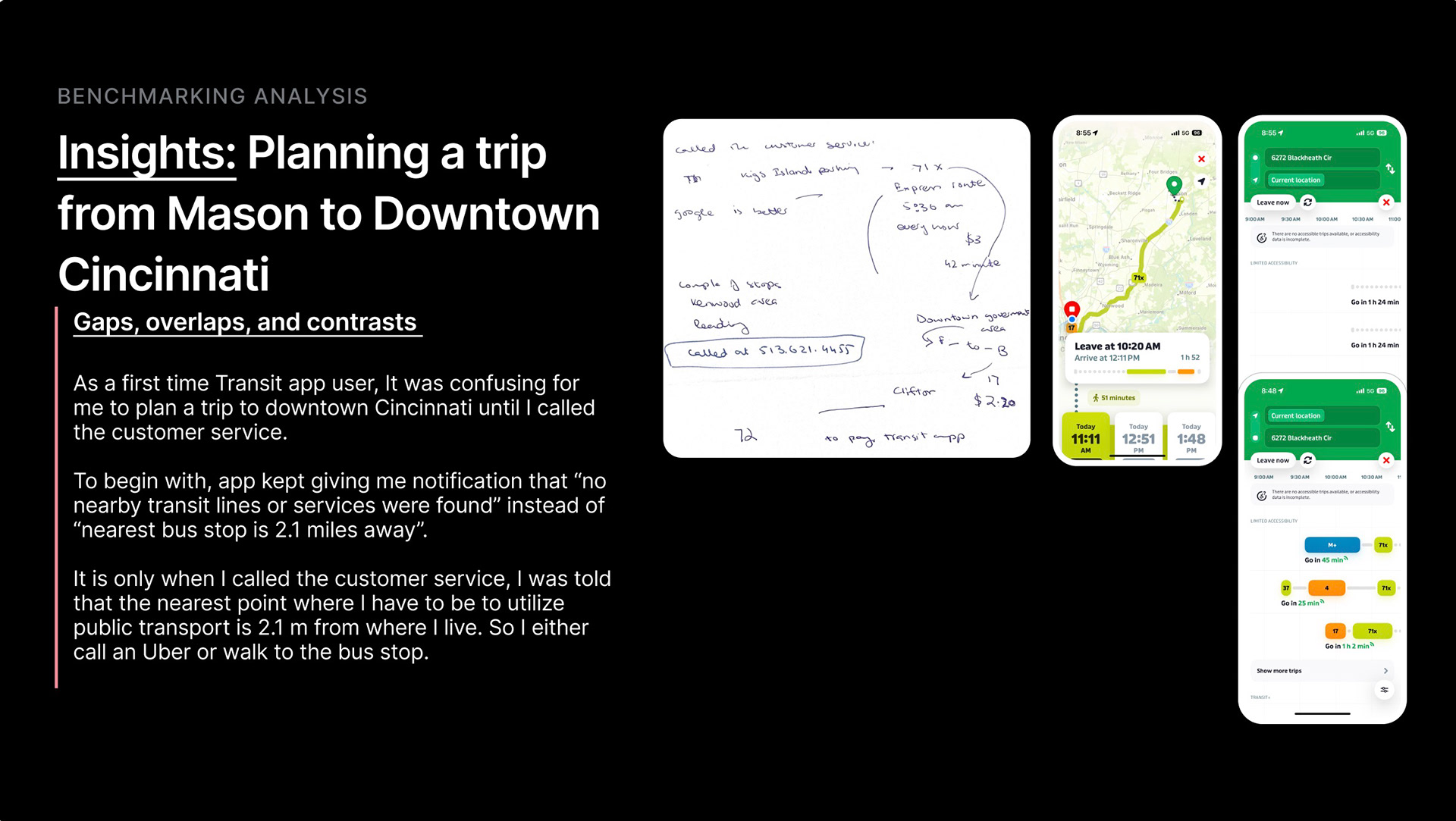
The picture below shows my observations while gathering information about planning a bus trip from Mason to Cincinnati. During the planning phase, I searched online and contacted customer service to understand the available options. This process of comparing sources and information is called Benchmarking.
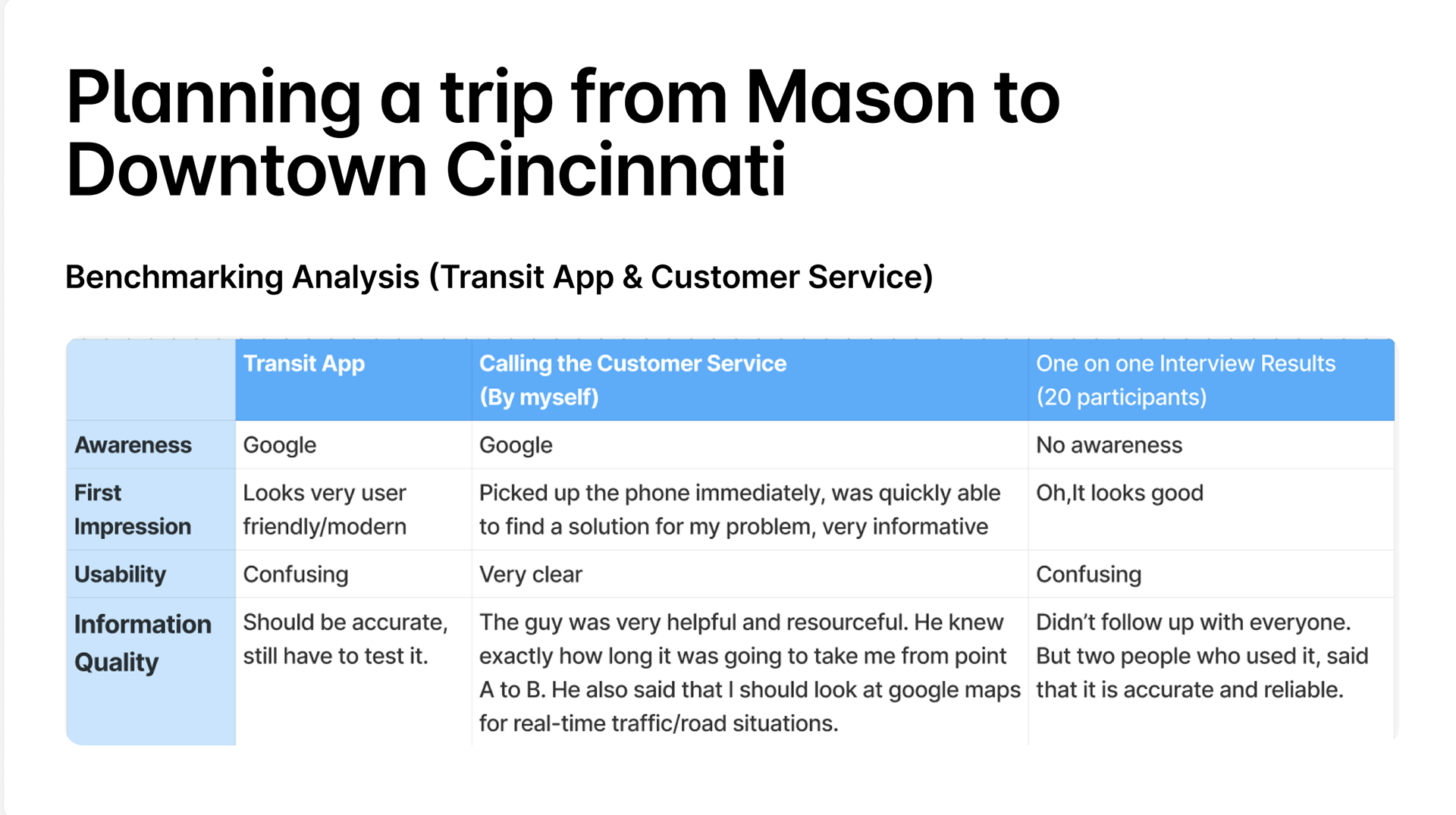
The rightmost column includes data I later collected from 20 Mason residents who had at some point considered using public transportation to travel from Mason to Cincinnati.
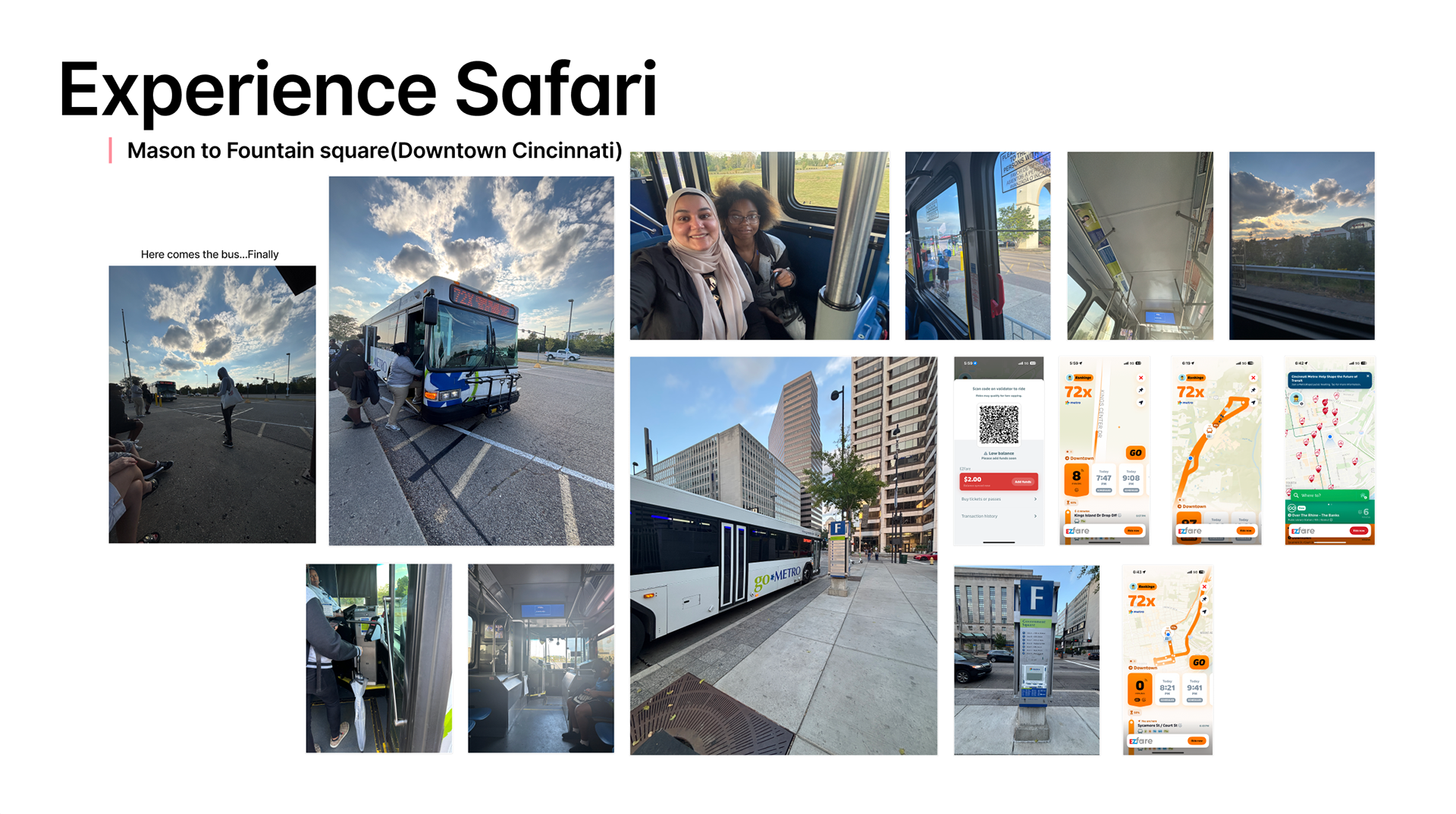
I had a very successful trip. I interviewed the person sitting next to me and watched the other riders (Fly on the Wall; another Research Method). So what's stopping Mason City residents from taking the bus...?
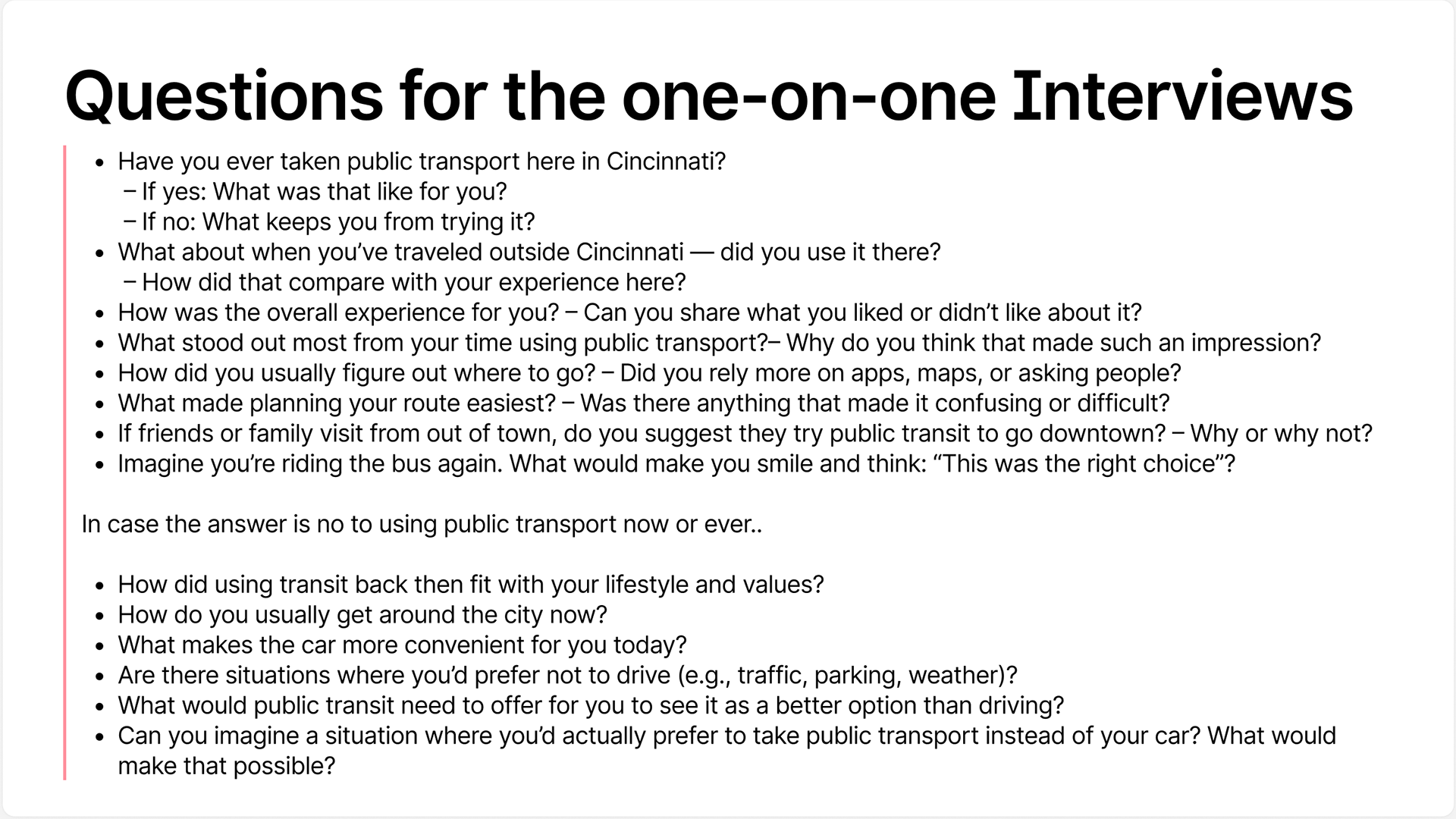
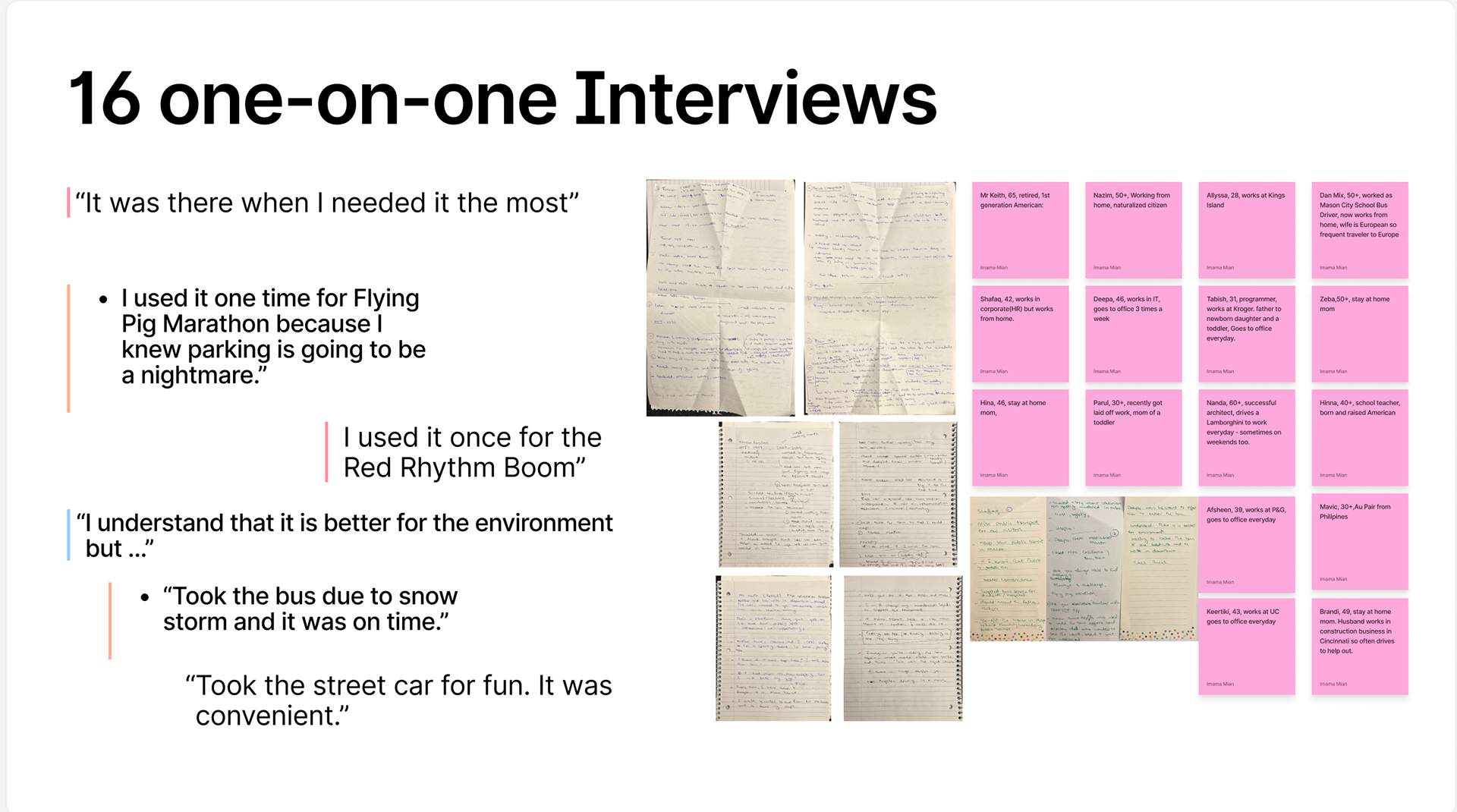
Curiosity is tricky, but that's how we learn. So I decided to go deep into investigation... one-on-one interviews, social listening, interception..I was ready to go deep. I prepared my questions and conducted 16 interviews. I synthesized my insights (the most important part of any research). Gave score to all the methods I used so that I know which ones I liked the most.
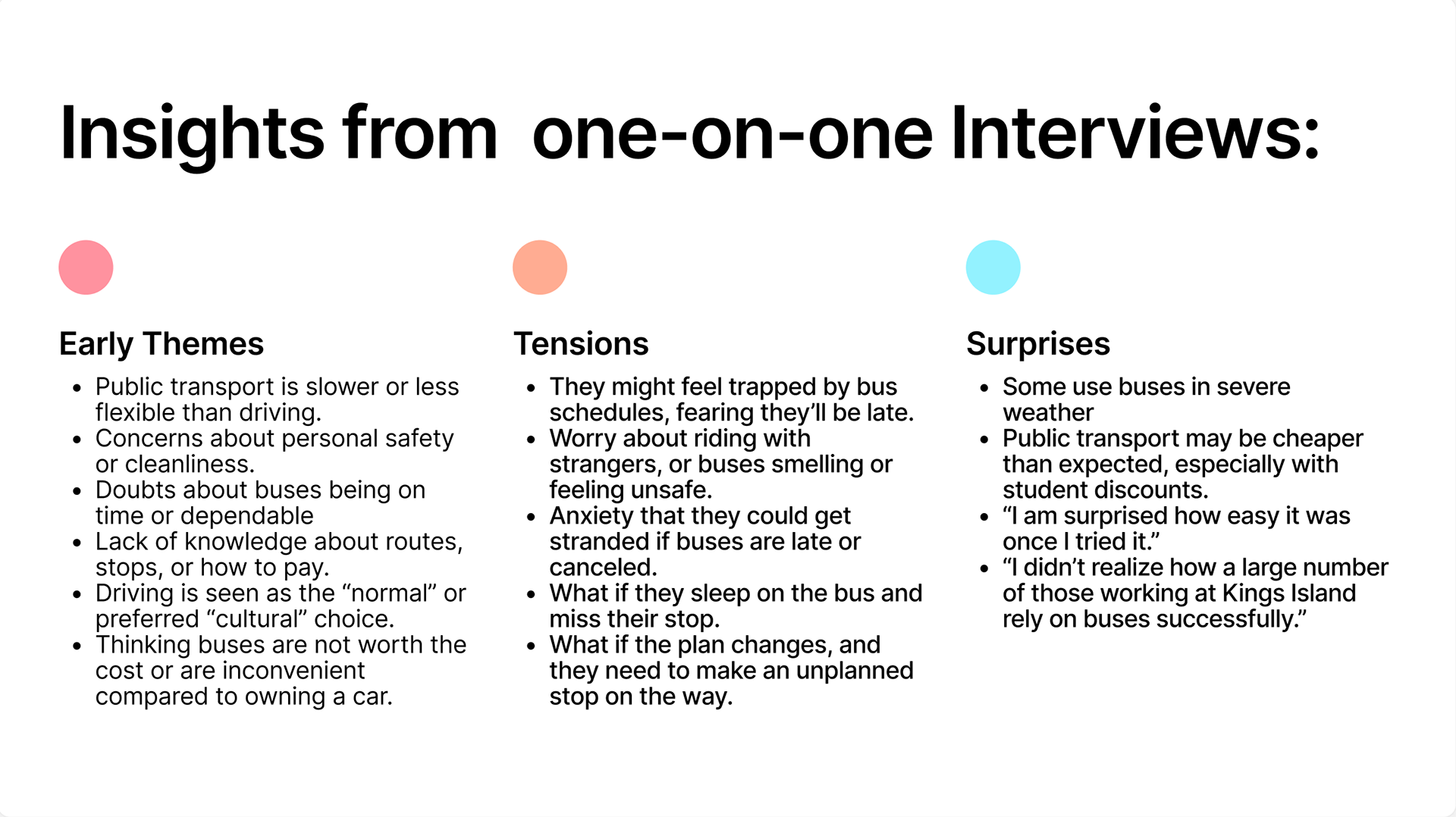
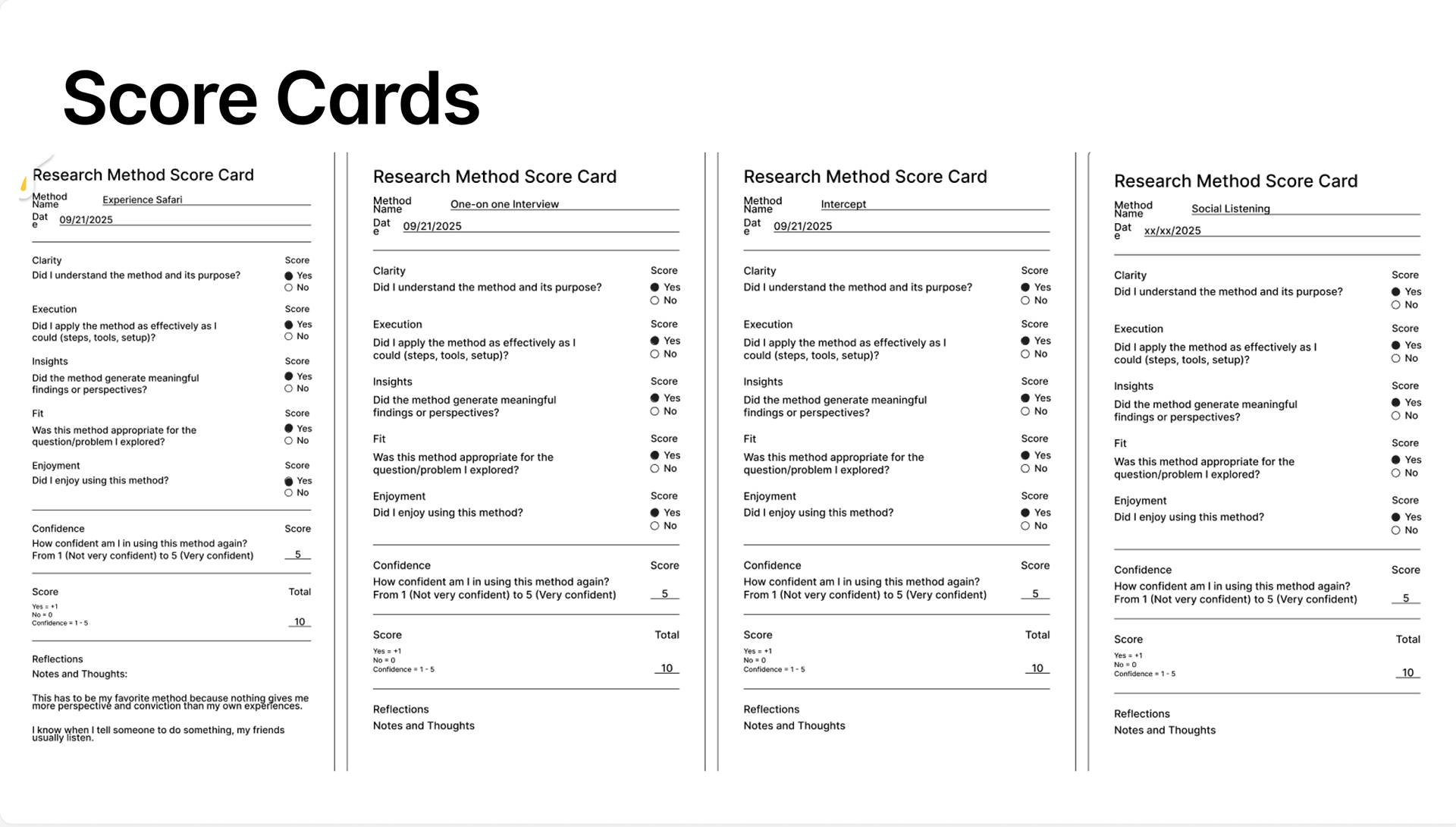
At this point, I am convinced that my hypothesis, "Public transport is often not the first choice for most of the residents of Mason," is true because people don't seem to know that the bus exists in their ecosystem.
Meet Sara Noor. She is my IDT (Ideal Design Target). She came into being as a result of the primary one-on-one interviews.
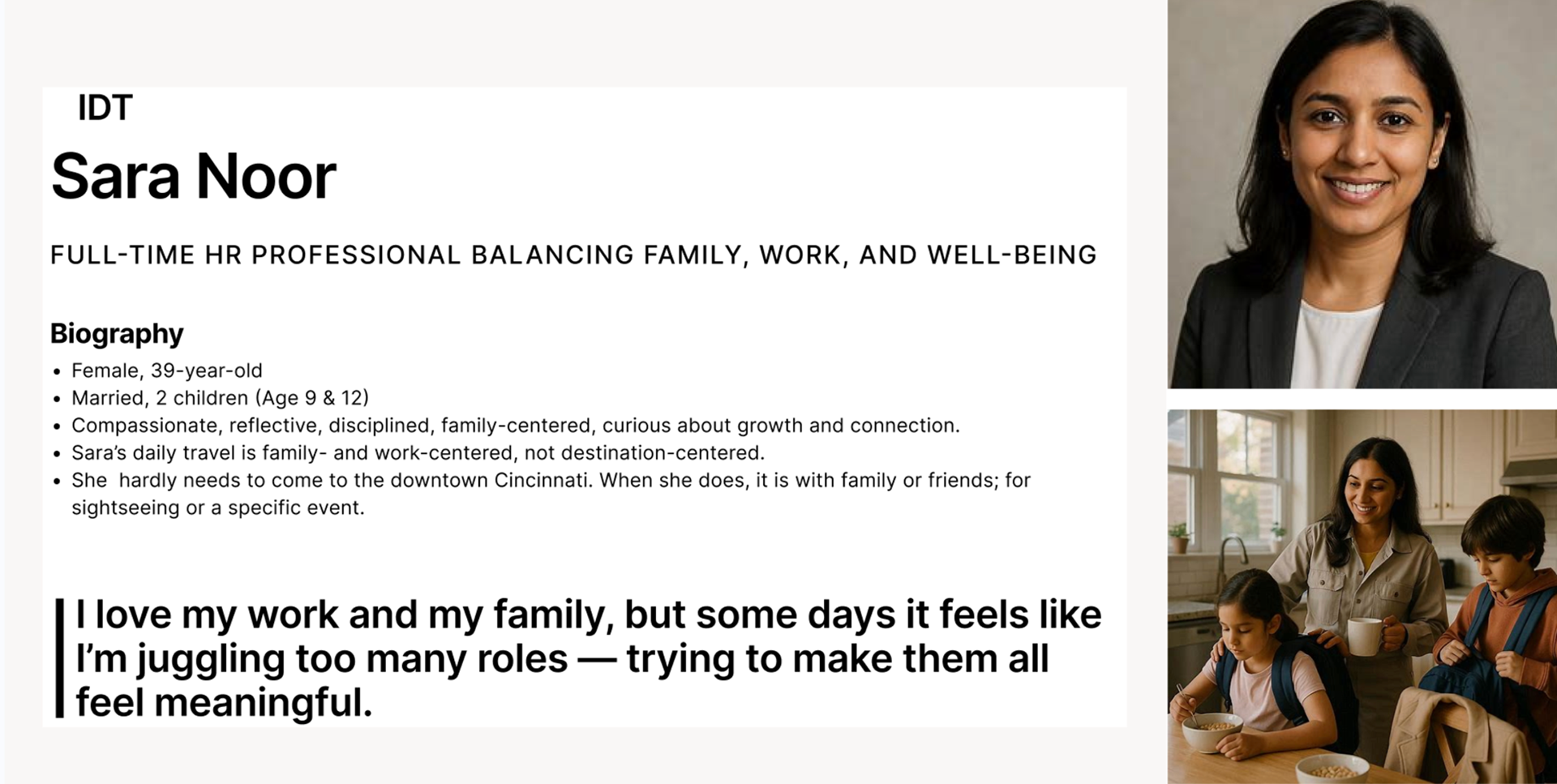
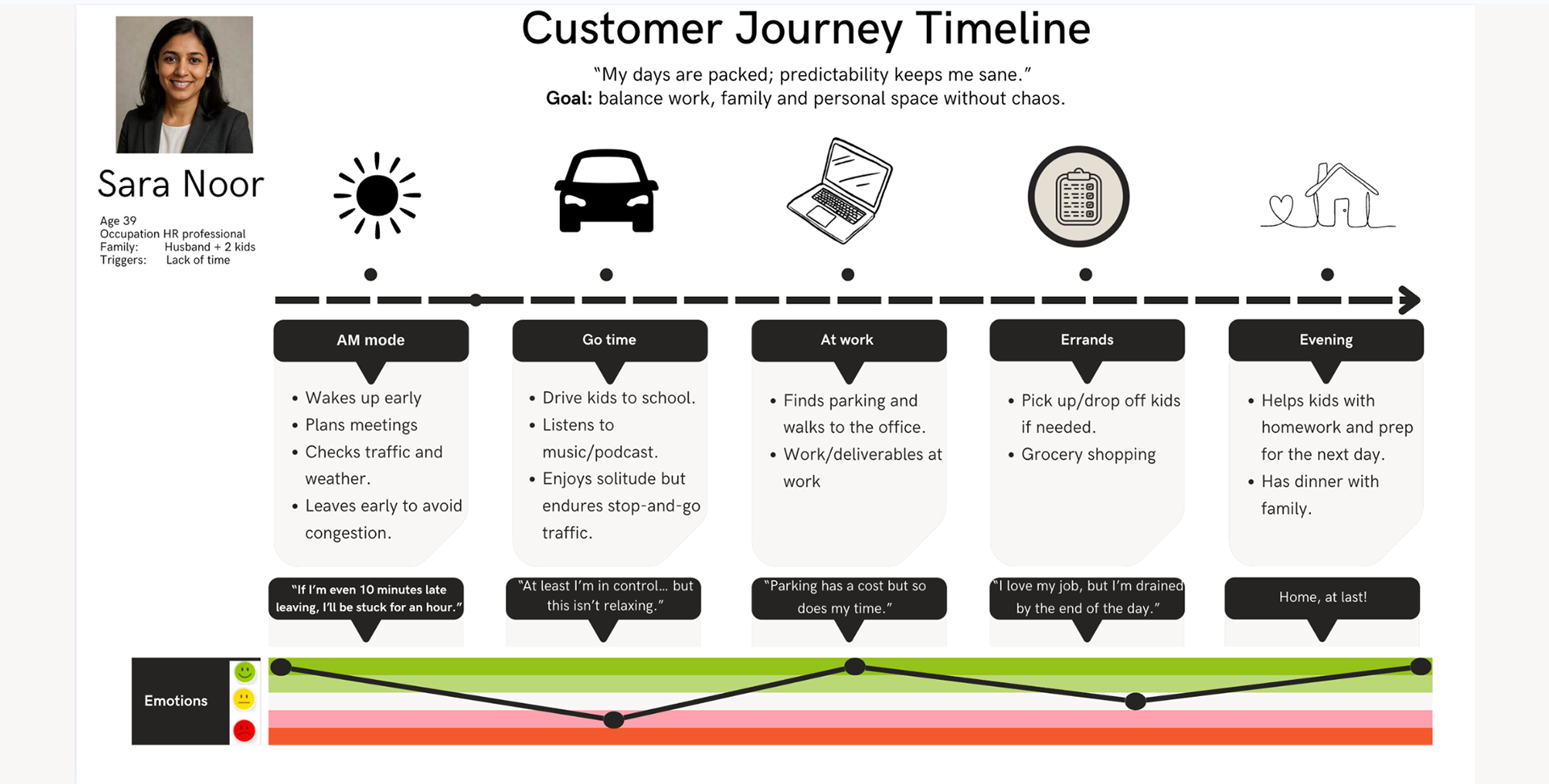
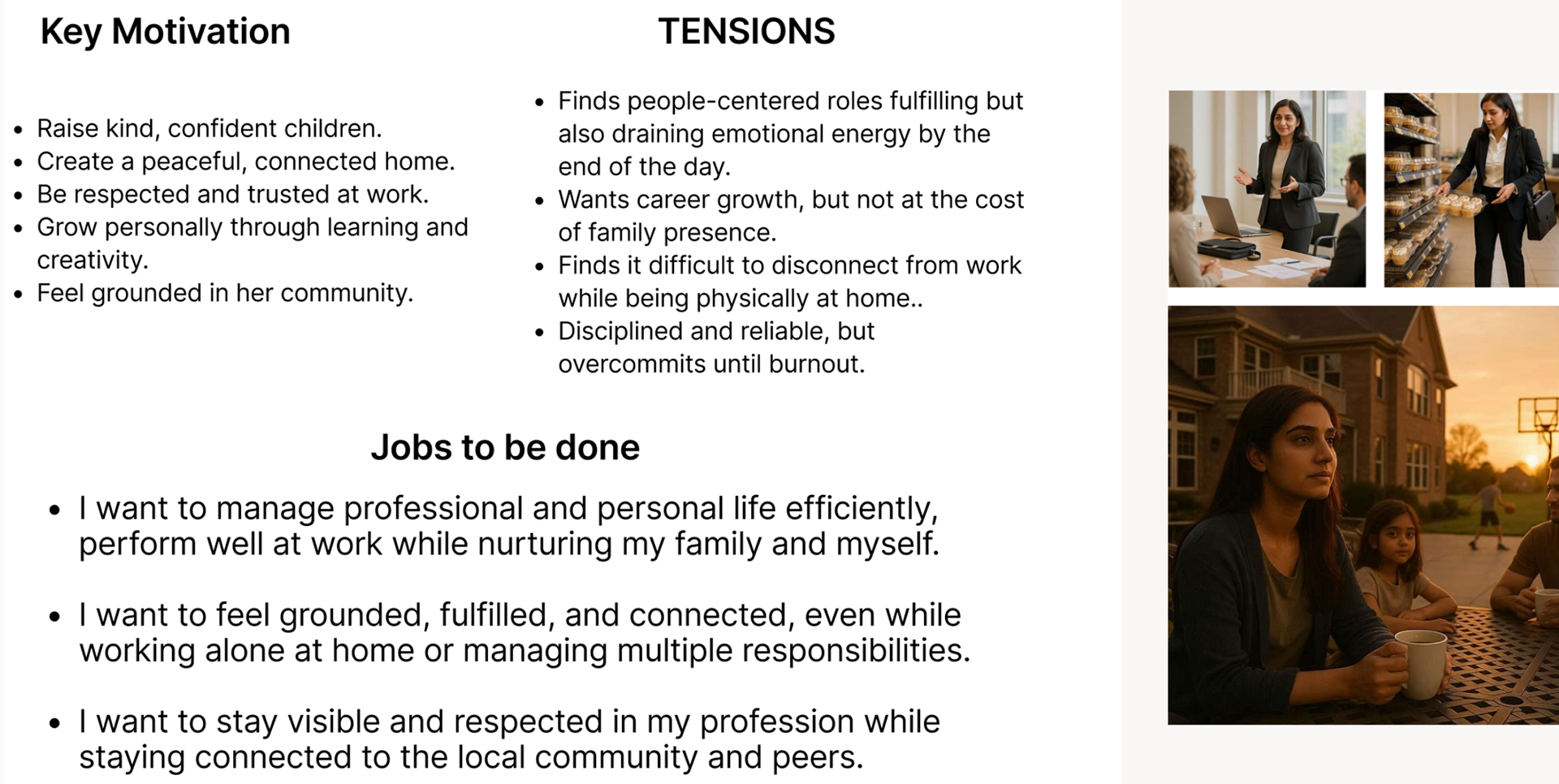
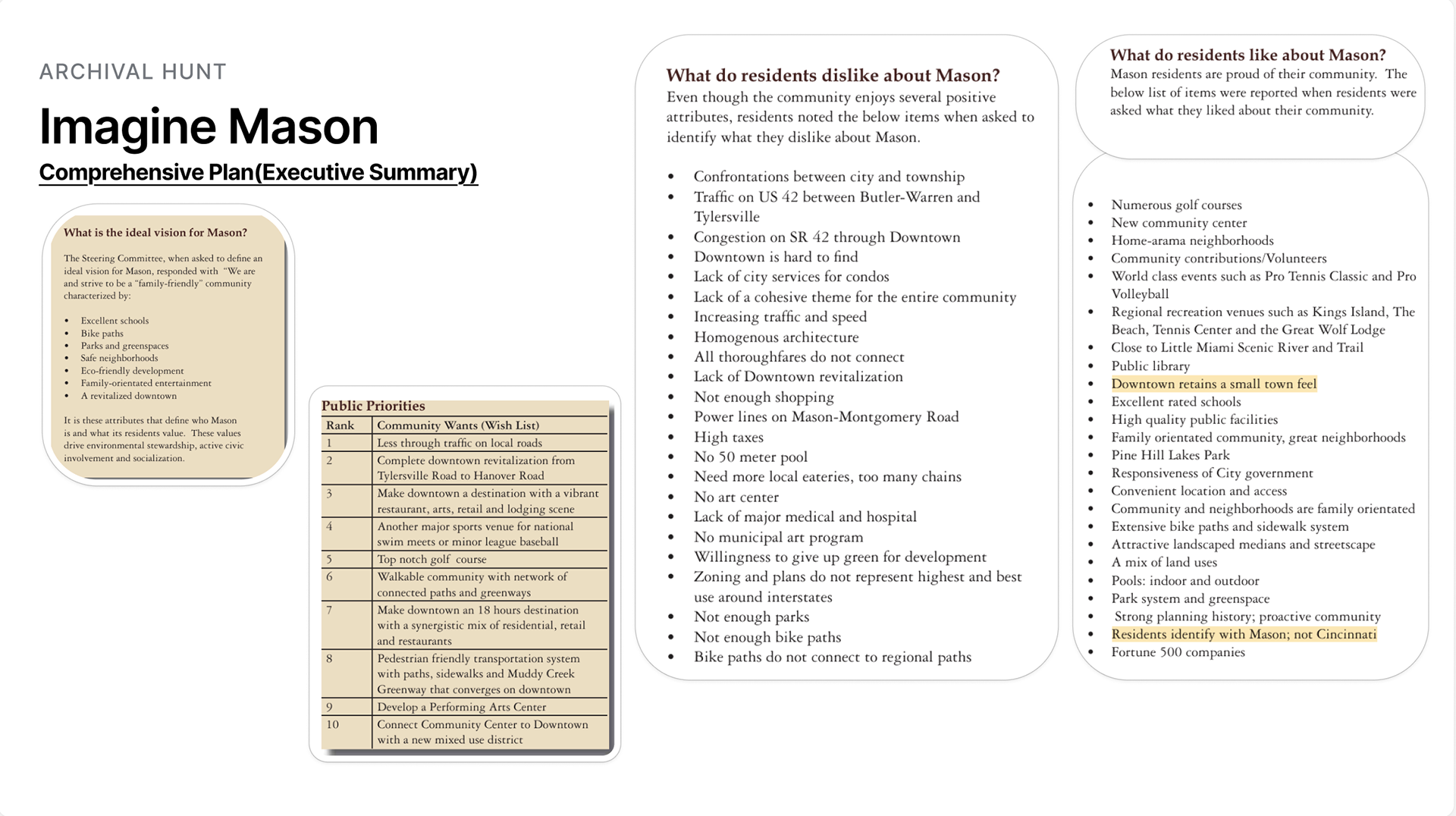
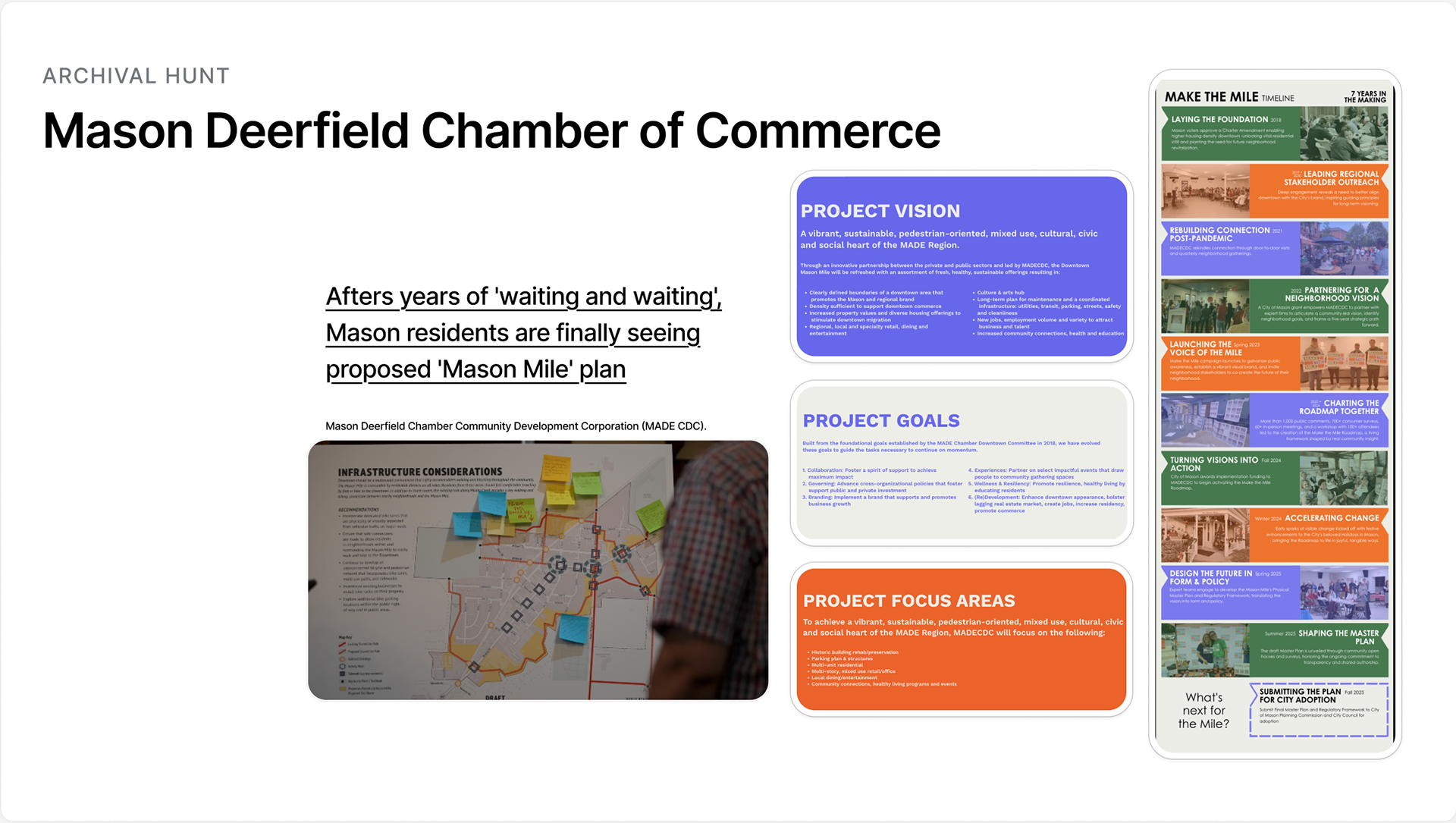
Now that I have a candidate who represents a certain kind of Mason City non-riders, before I design mobility for her, I pause and go on an Archival Hunt (Learning about your WHO through History & Secondary Sources).
Secondary and archival research will help uncover what’s already known about my WHO and the problem space. This is about building a deeper baseline: connecting today’s lived experiences to historical trends, published knowledge, and existing data.
Secondary and archival research will help uncover what’s already known about my WHO and the problem space. This is about building a deeper baseline: connecting today’s lived experiences to historical trends, published knowledge, and existing data.
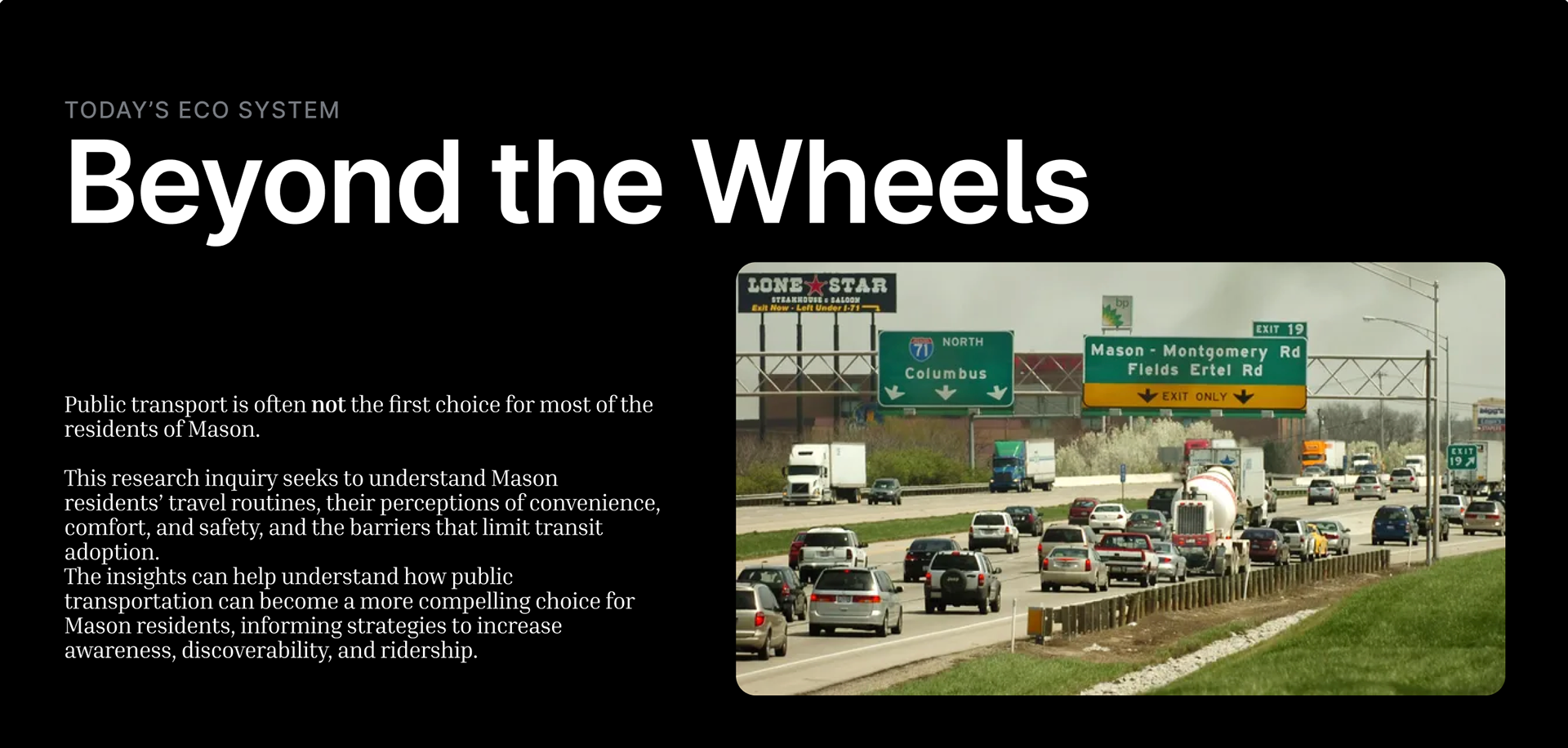
Archival Hunt: Learning about your WHO through History & Secondary Sources:
Secondary and archival research will help you uncover what’s already known about your WHO and the problem space. This is about building a deeper baseline: connecting today’s lived experiences to historical trends, published knowledge, and existing data.
Secondary and archival research will help you uncover what’s already known about your WHO and the problem space. This is about building a deeper baseline: connecting today’s lived experiences to historical trends, published knowledge, and existing data.
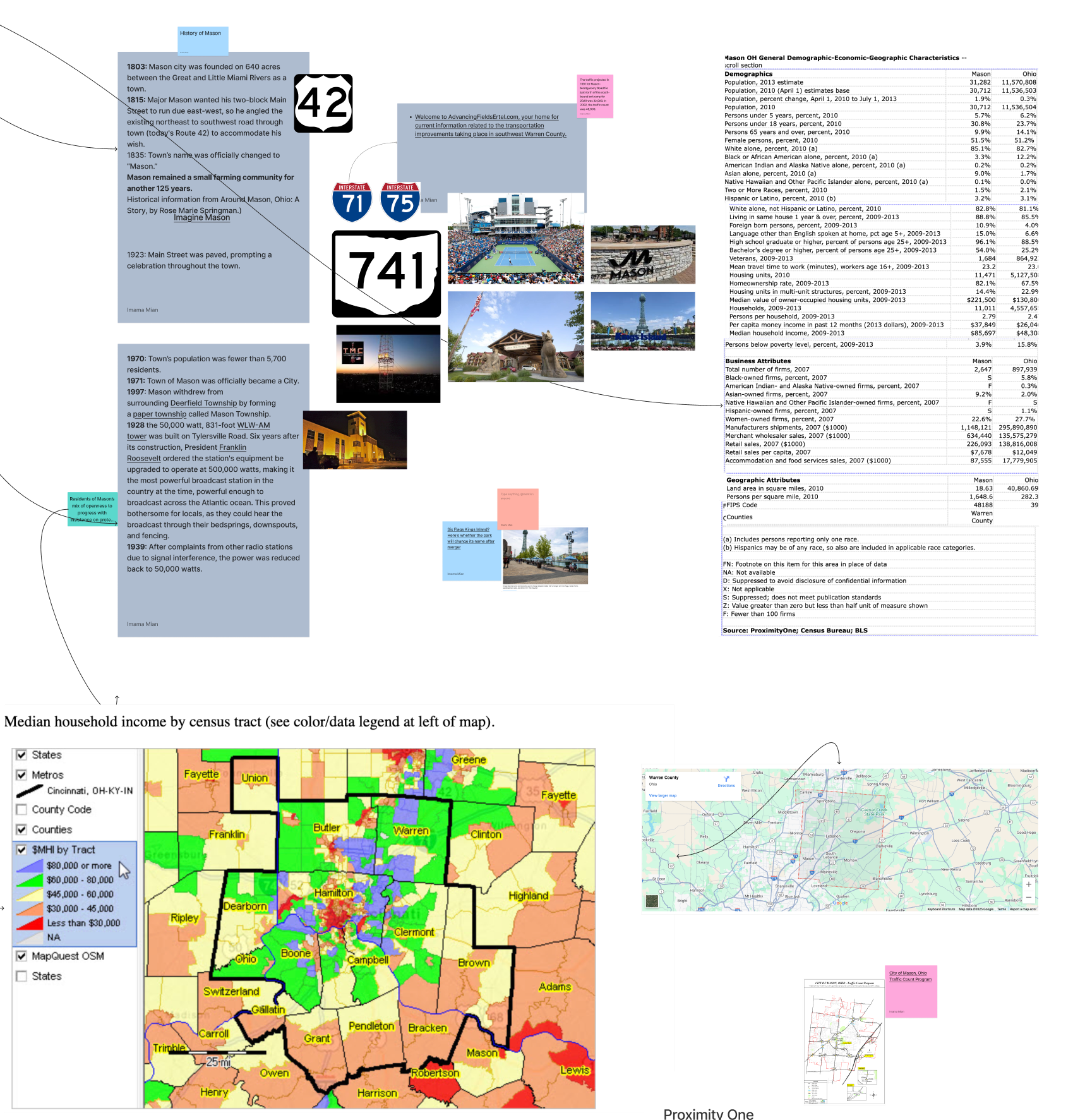
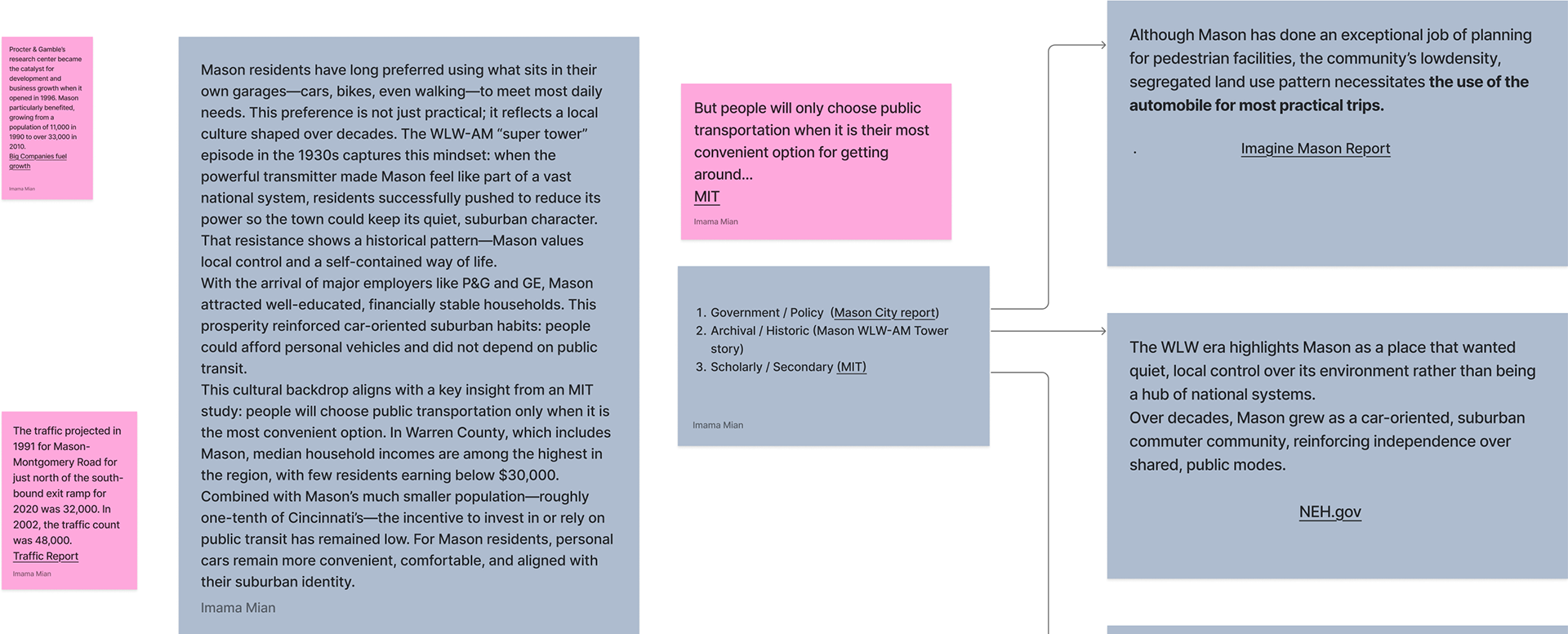
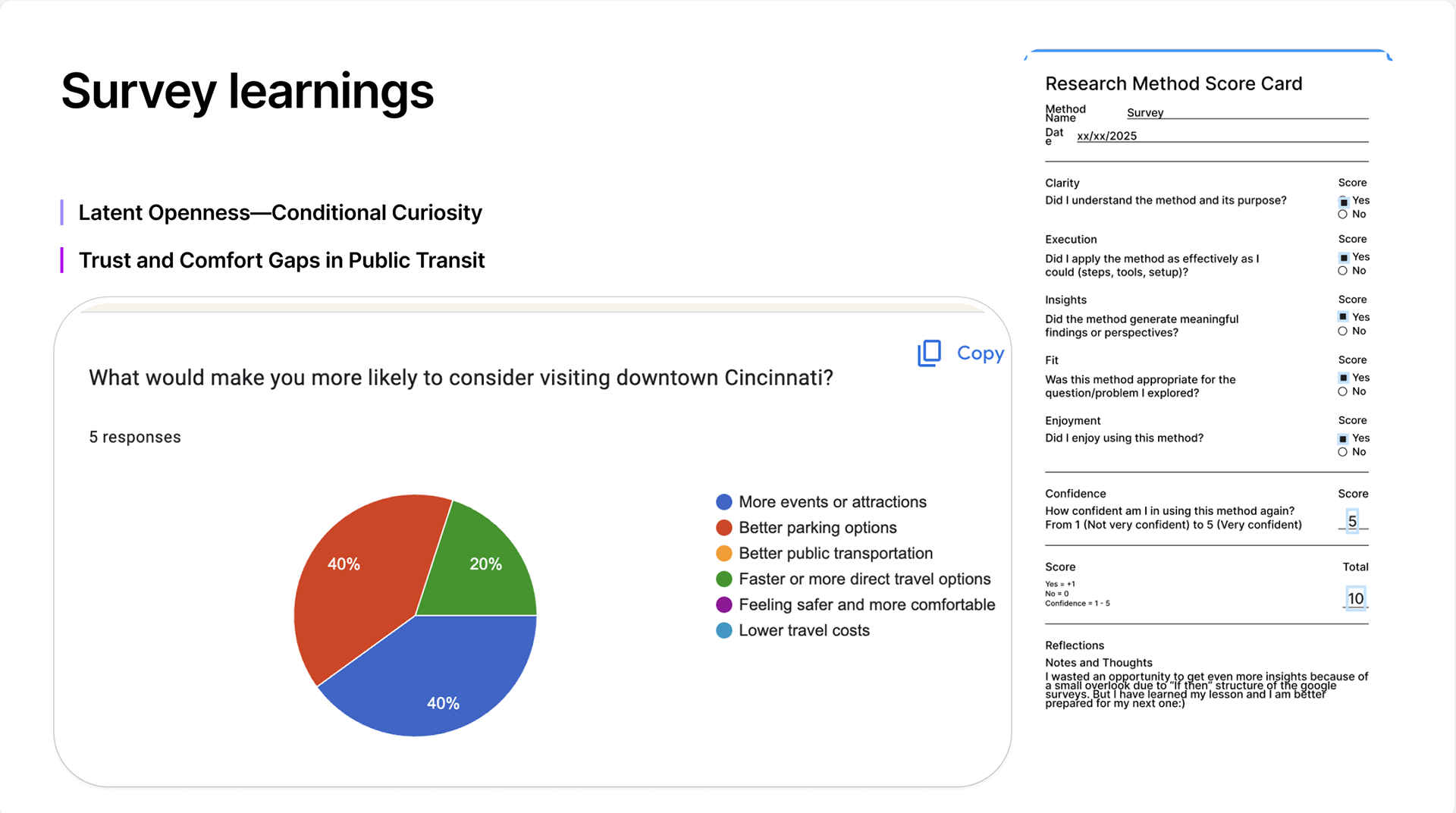
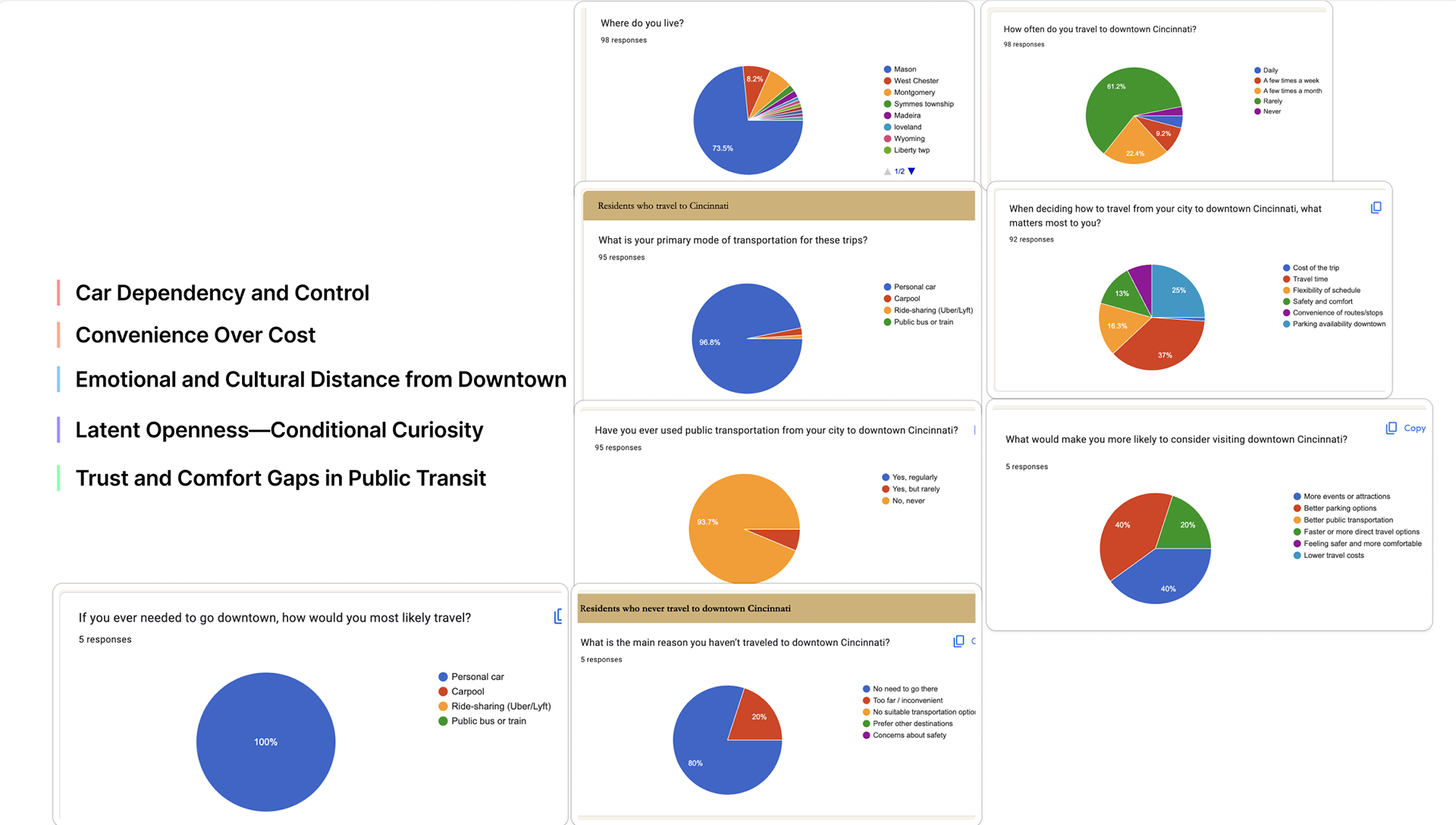
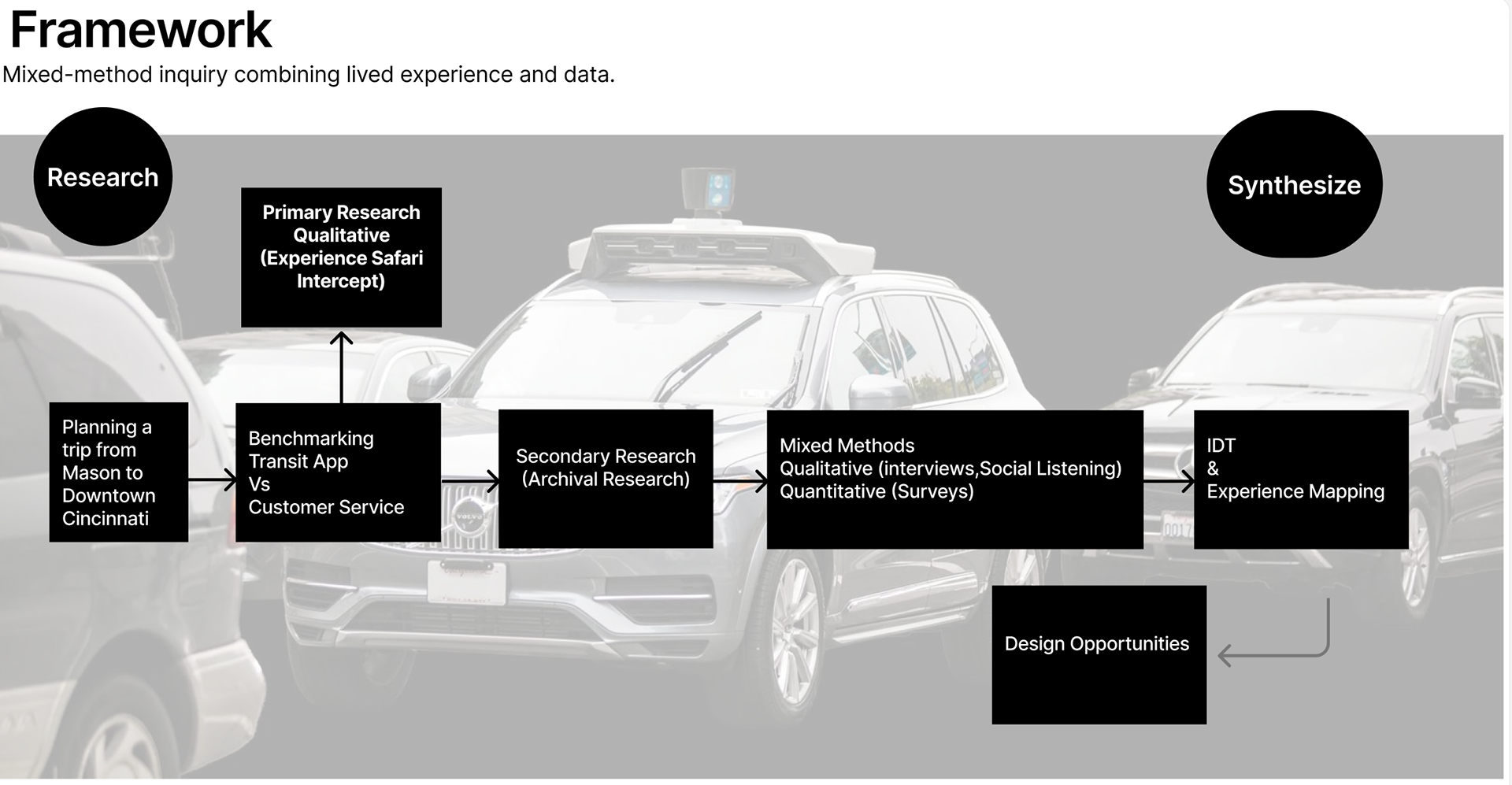
Visual mapping of what I did so far:
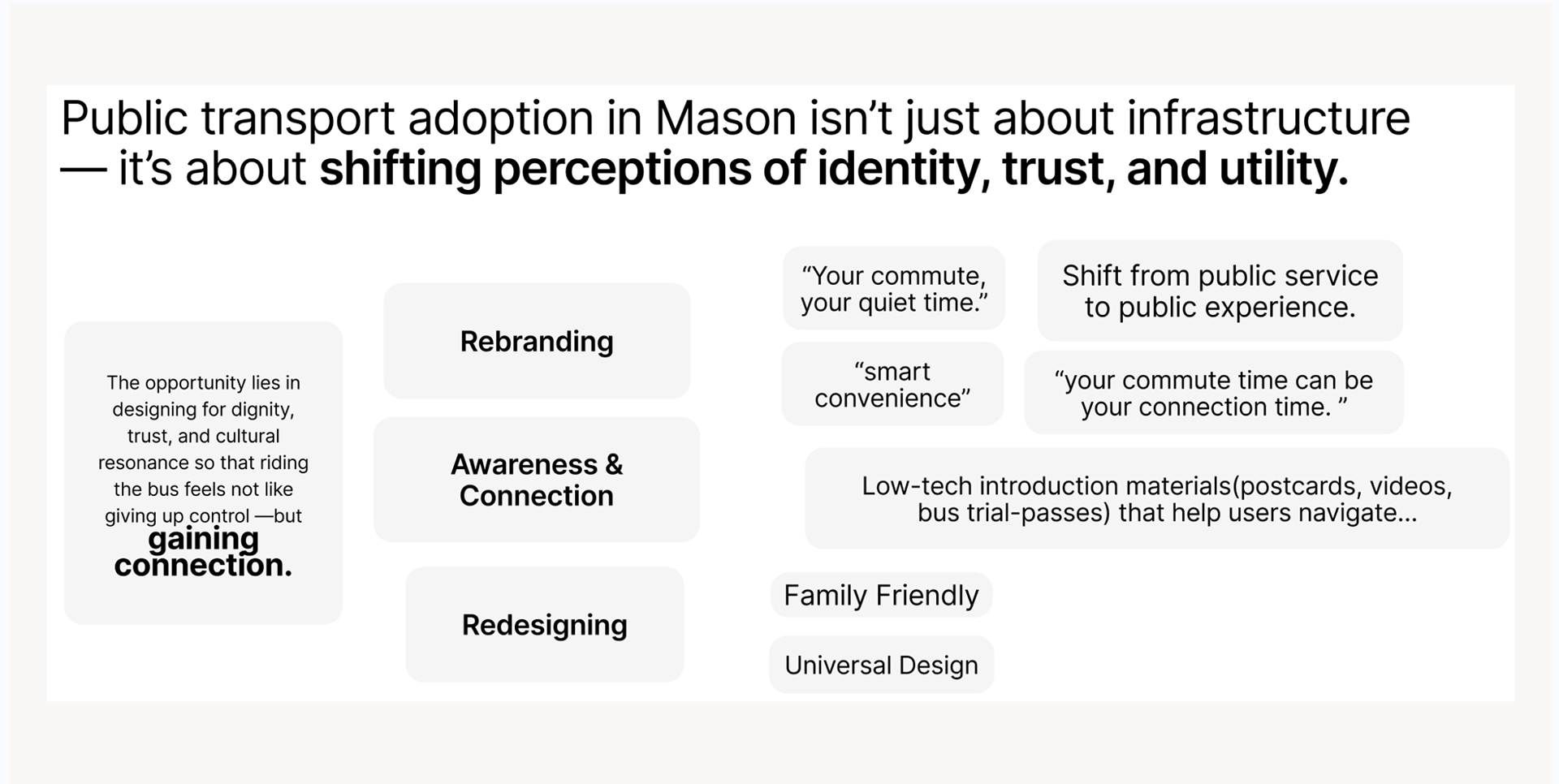
Early design opportunities for change:
Time to make a design opportunity statement. I used the method "How might we?"
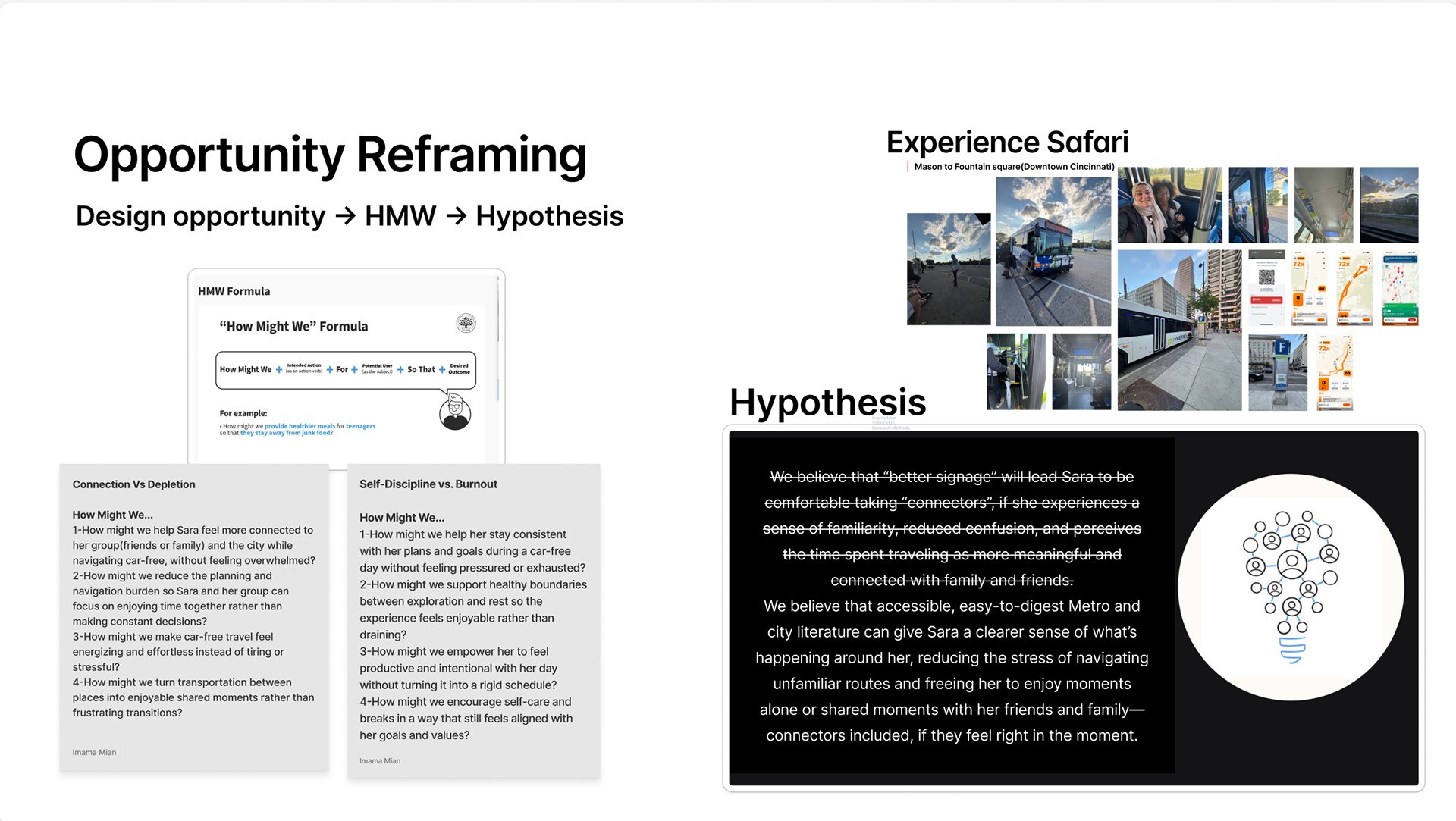
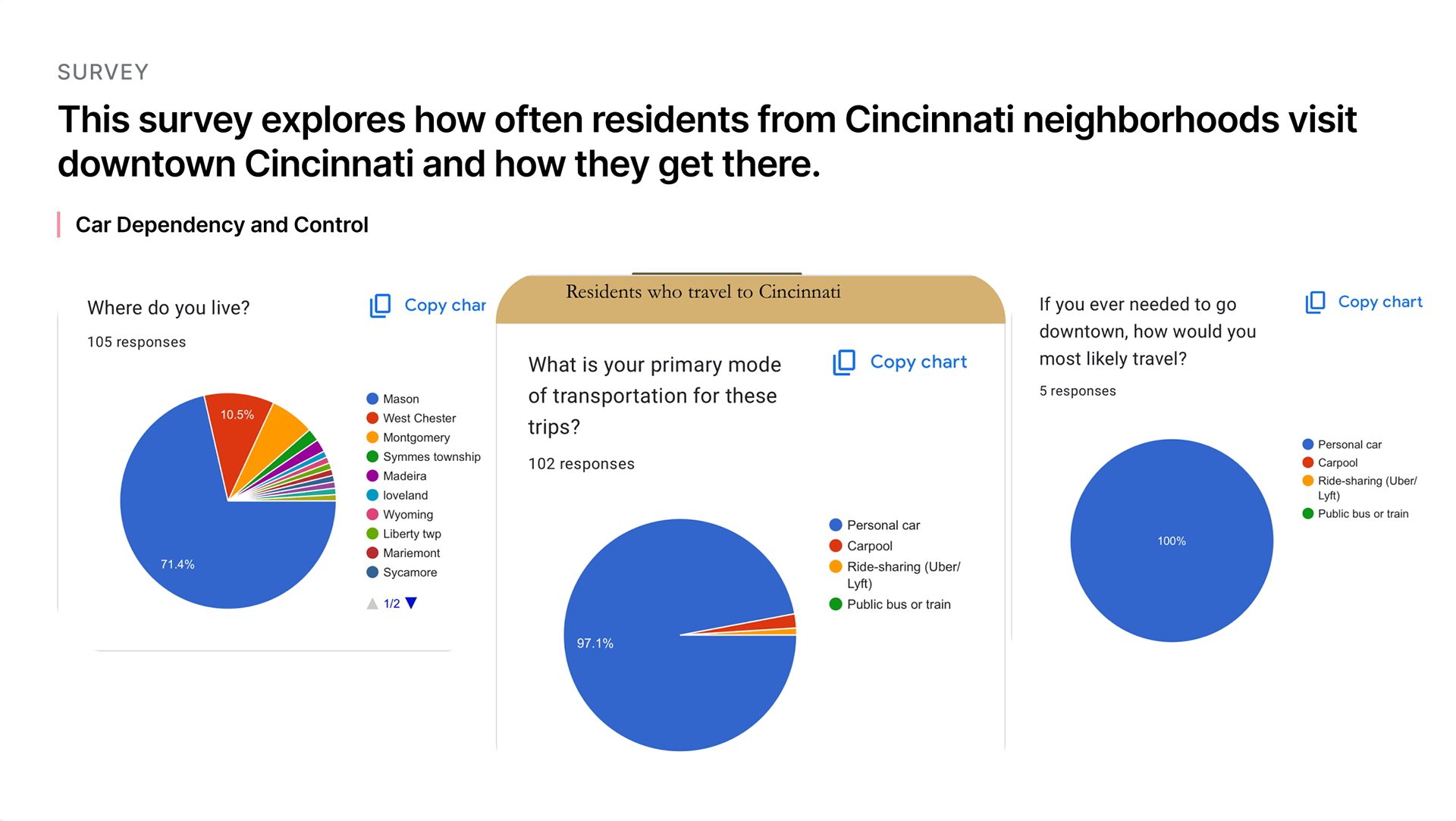
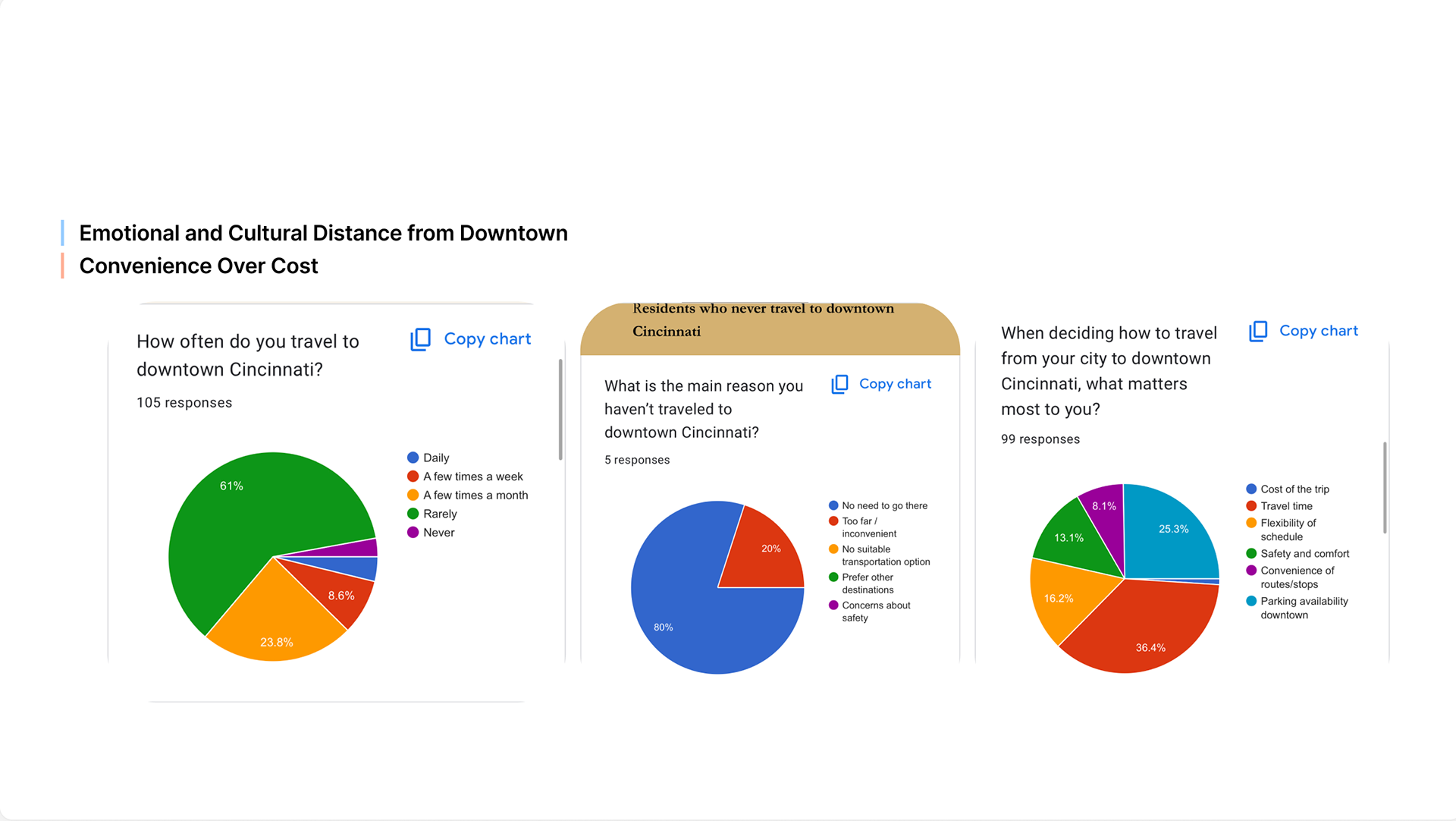
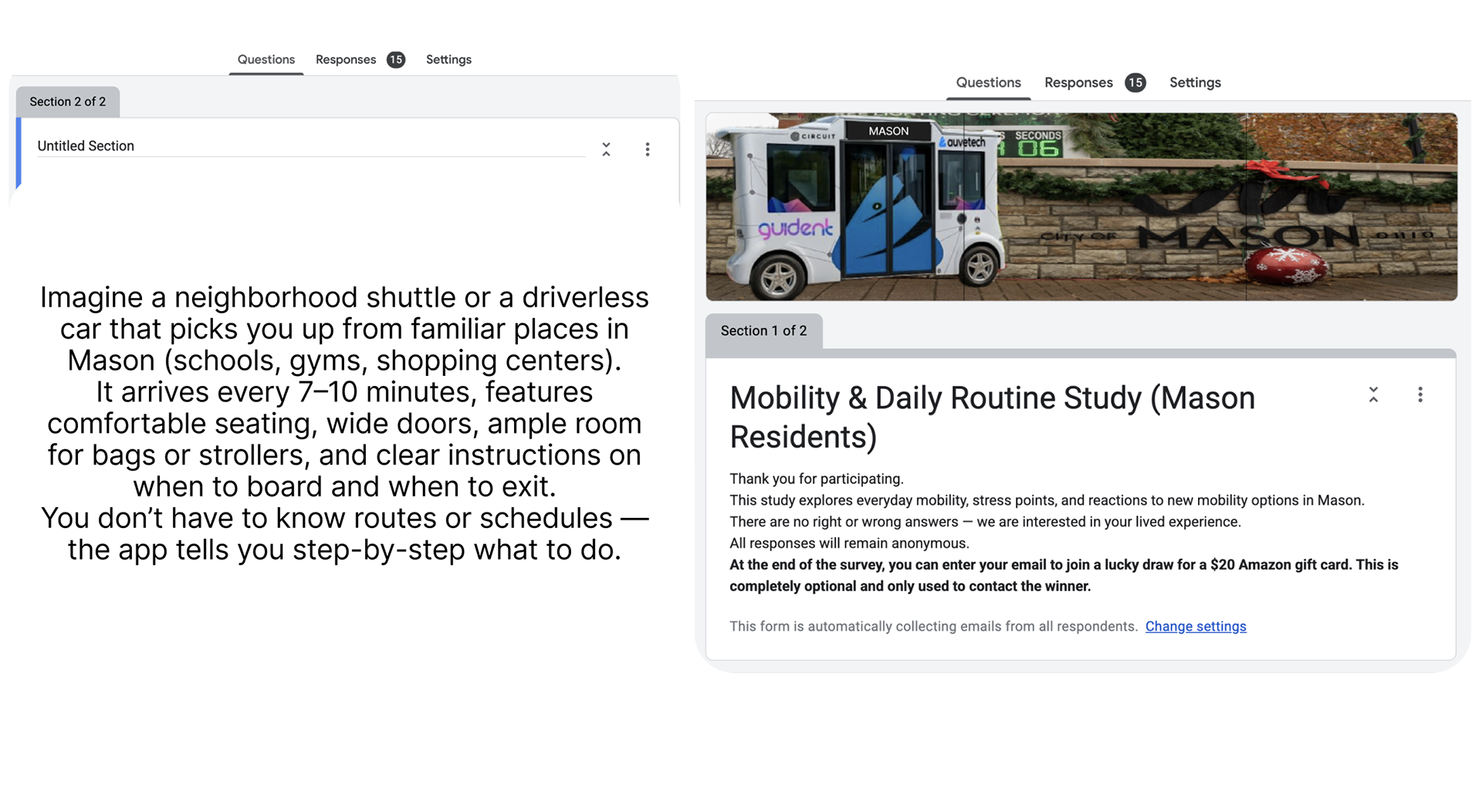
I didn't need to do another survey. But something wasn't feeling right. I wasn't sure of where I was going with my design opportunity statement, so I decided to send another survey to Mason residents like Sara Noor (my IDT). I got 52 responses, which was a great return considering these were the same folks who already did my survey #1.
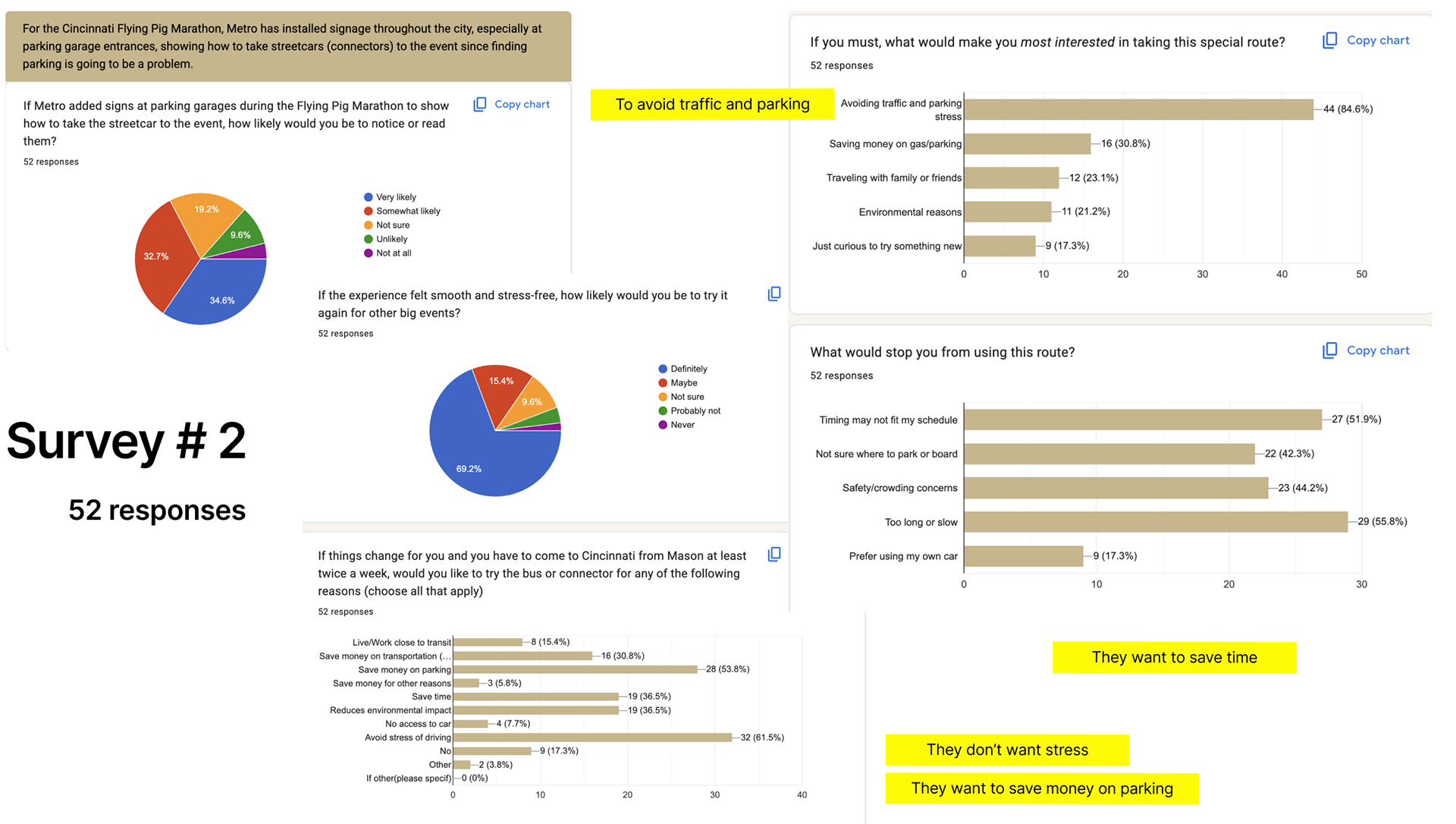
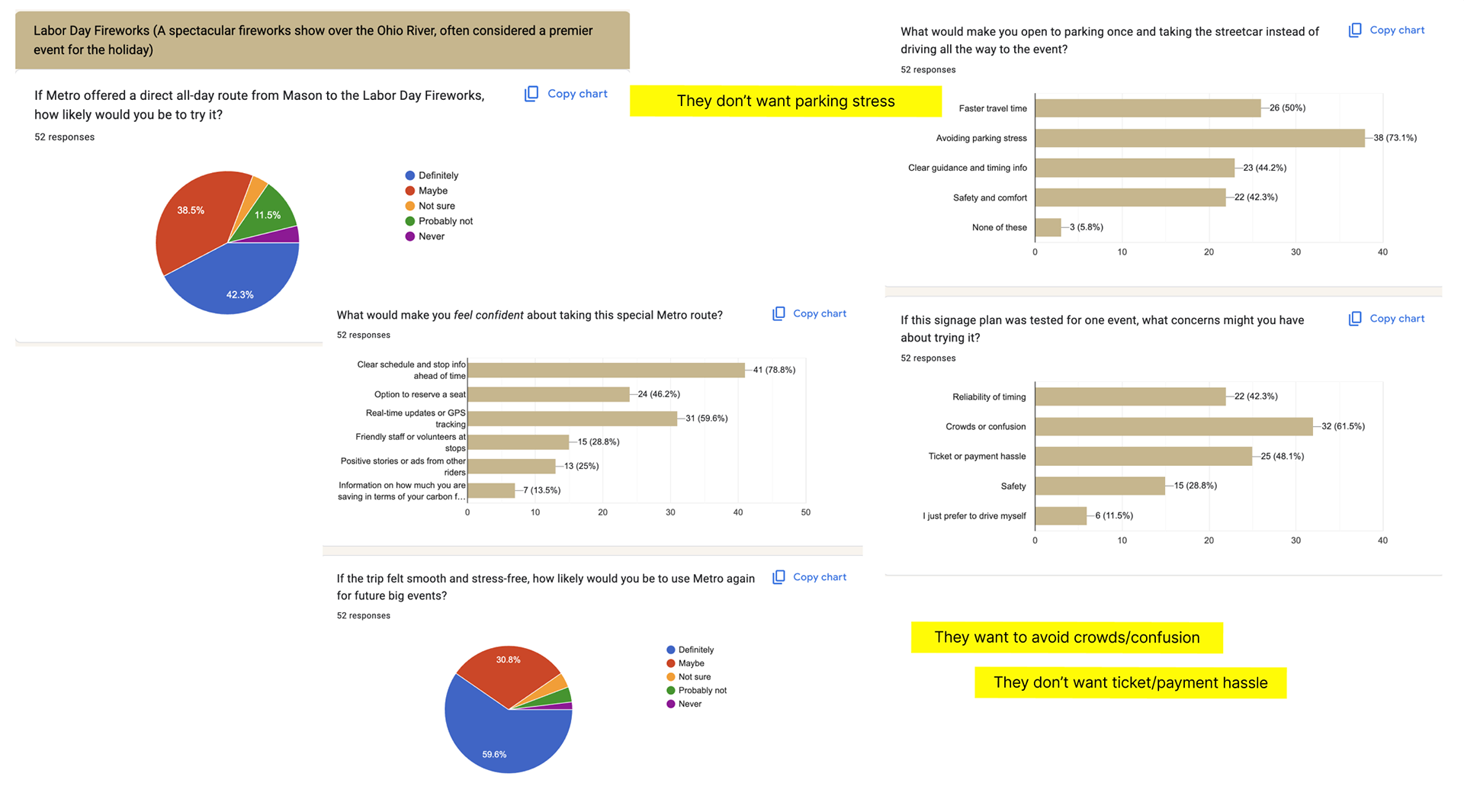
Irrespective of the survey results, I proceeded with my first set of design stimuli. I later called it a BIG MISTAKE.
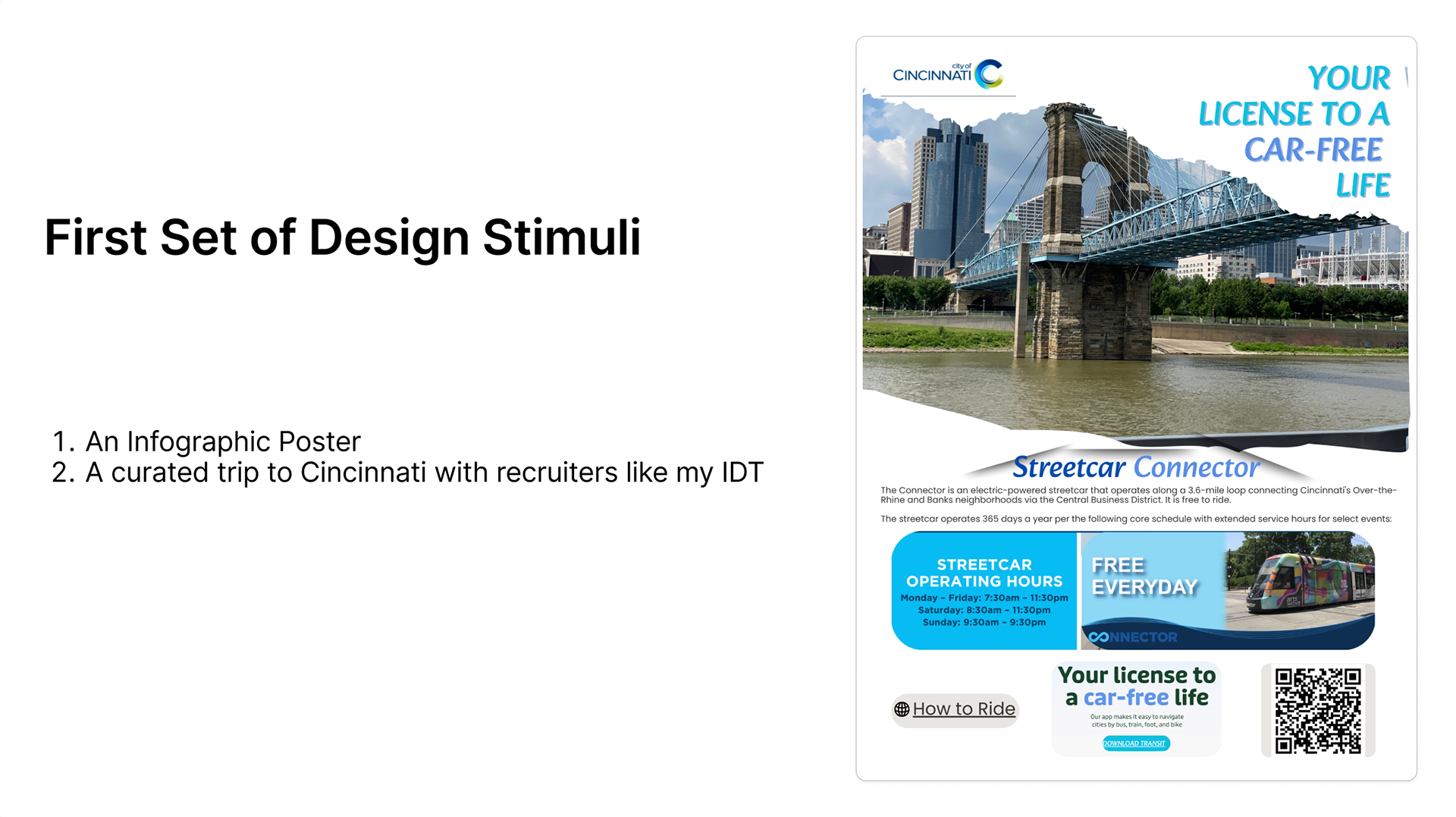
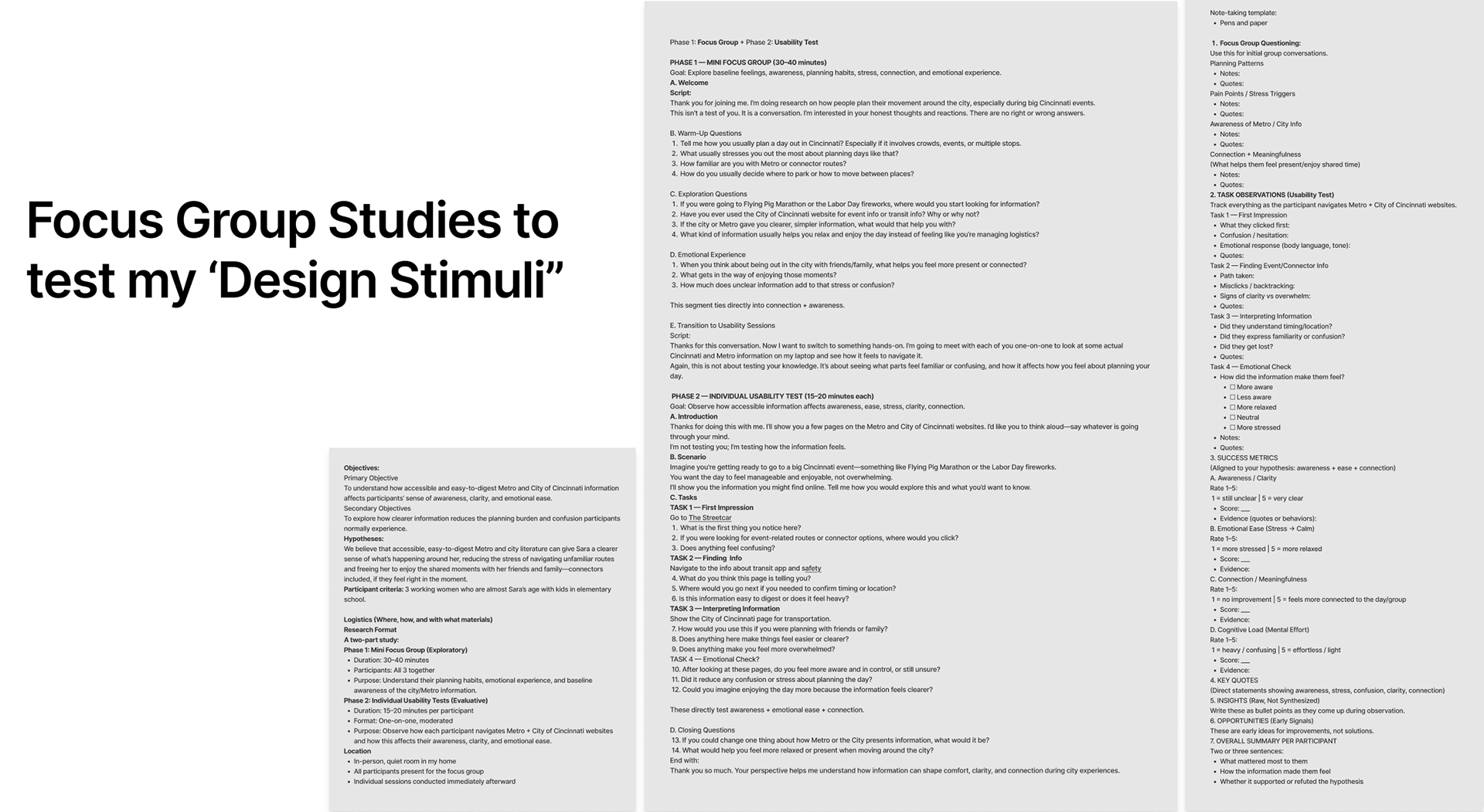
I tried to "sell" my design proposals to people like my IDT (in a focus group), but no one was buying it...
When I tried to put myself in my IDT's shoes, I wasn't comfortable. I did not want to get on the bus... Regardless, I kept trying different methods.
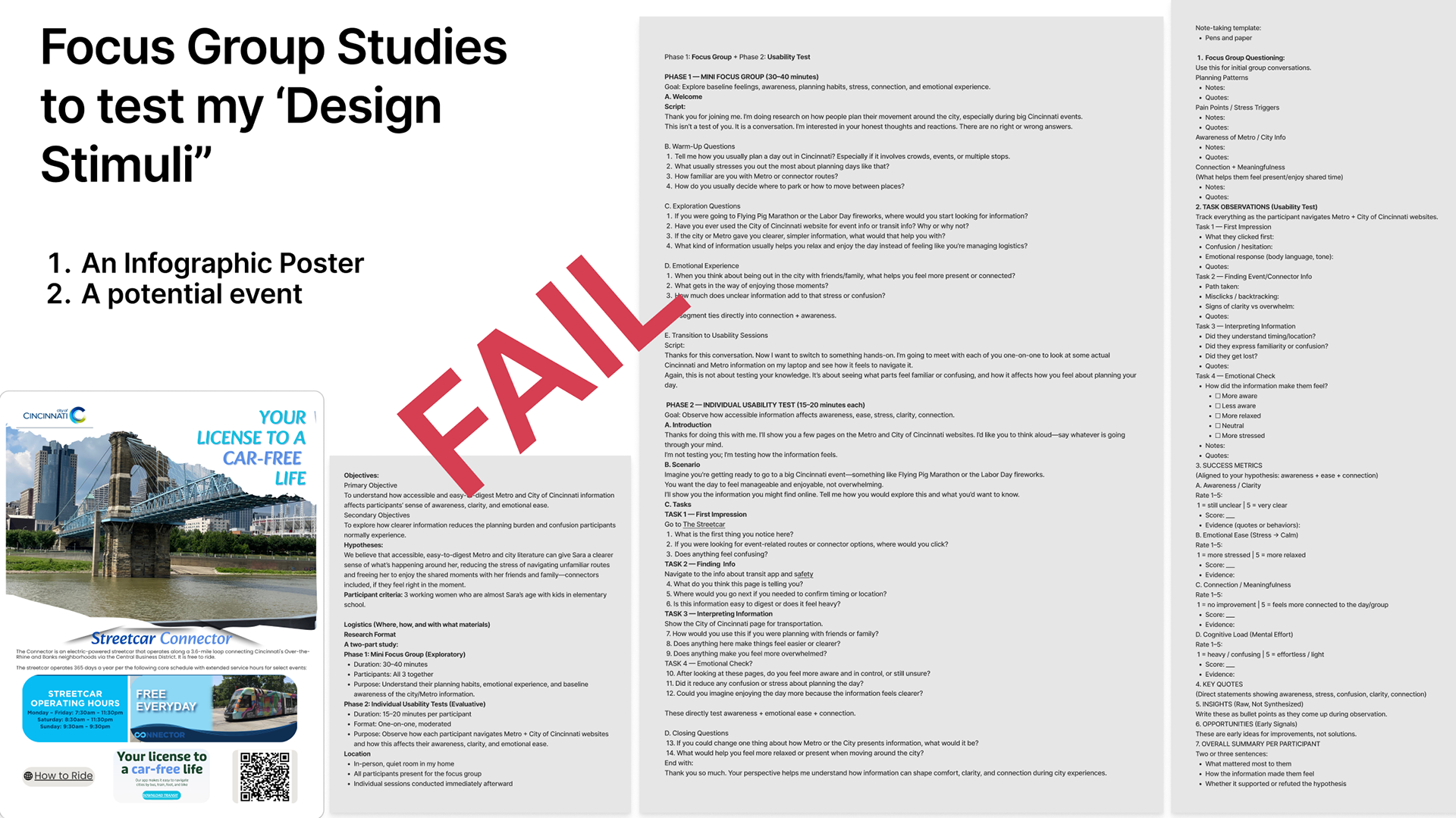
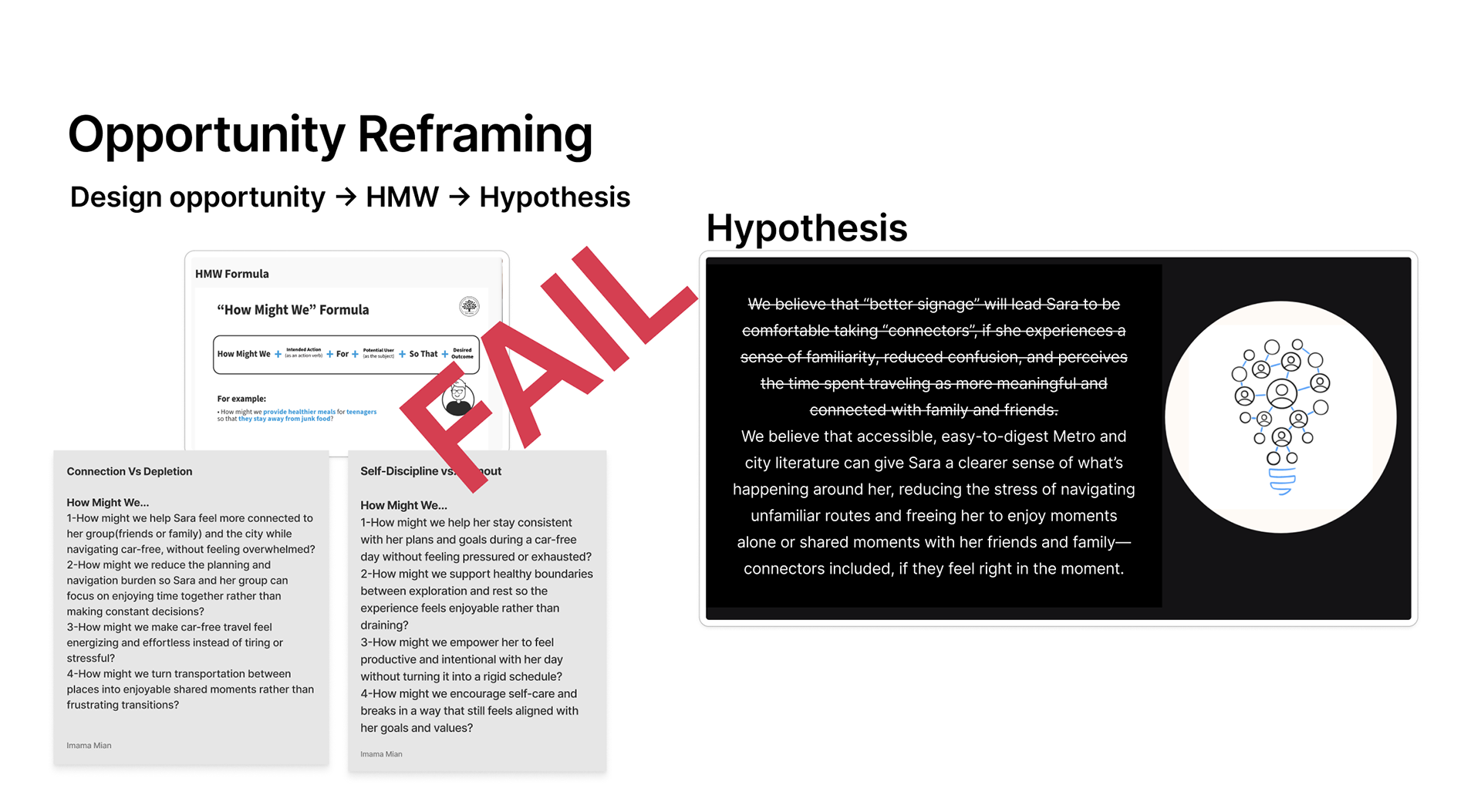
What is my IDT missing?
I decided to sleep on it (not the research method a textbook teaches you), but it is the tried-and-tested method for me.
I woke up, said my prayers, and asked myself these 3 questions using the KNOW FEEL ACT framework.
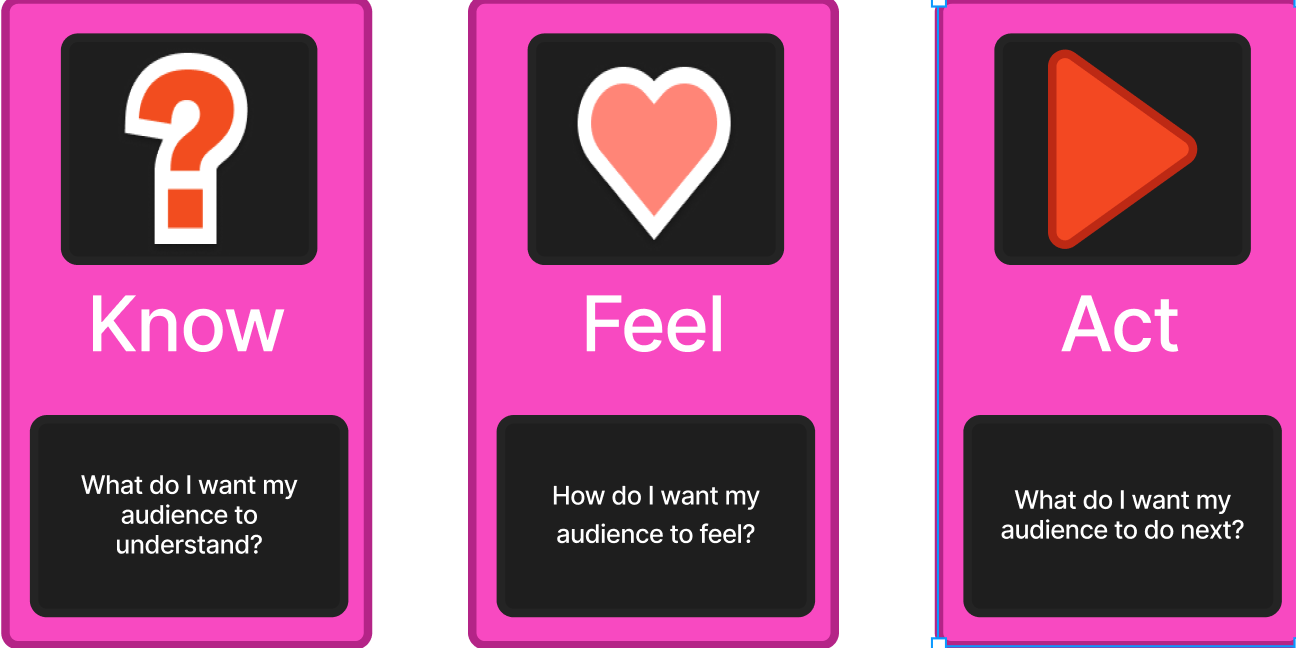
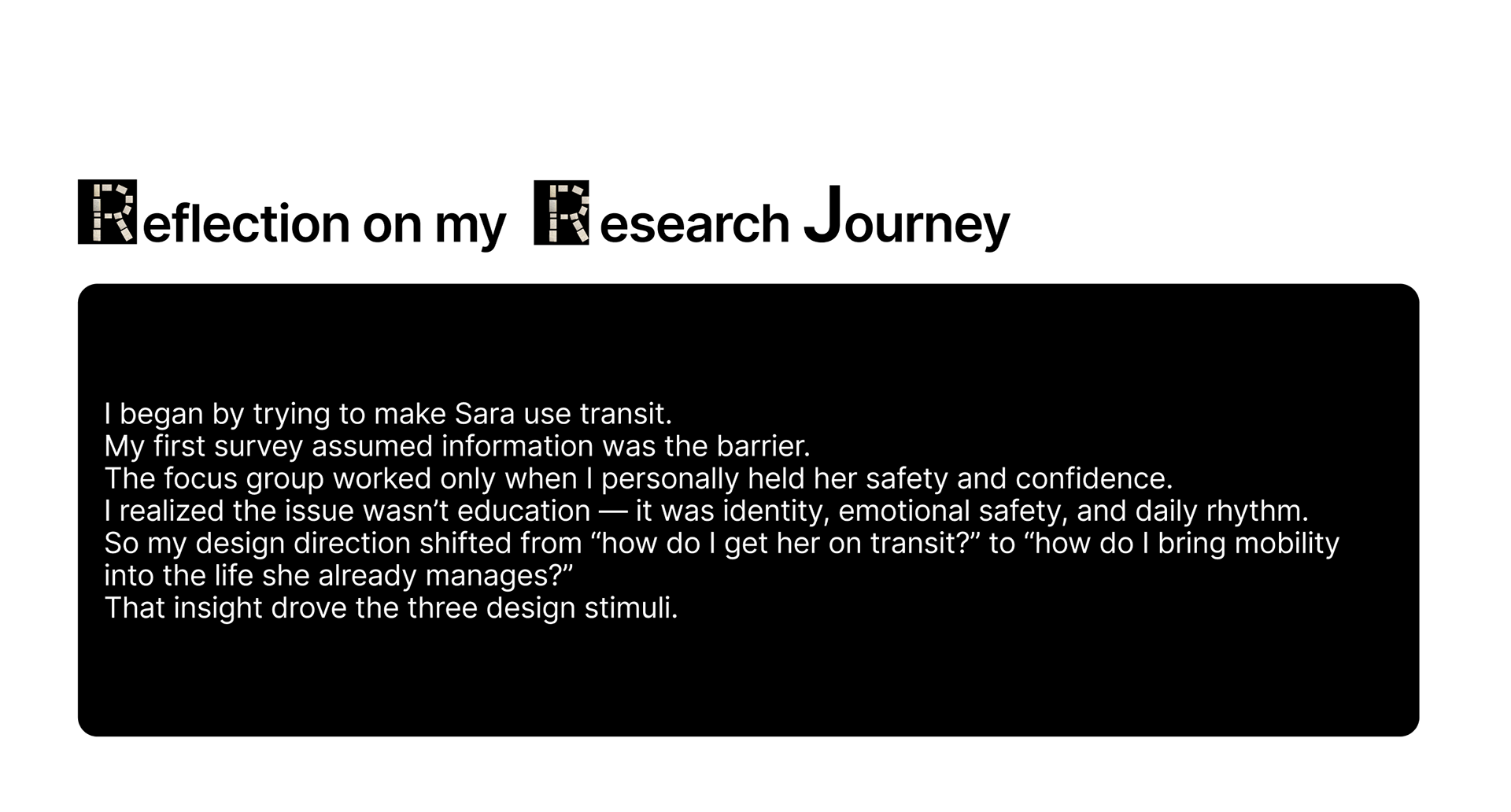
My hypothesis didn't work. What I should realize is that the barrier is not a lack of information.
It is her lived routine, emotional safety, and identity as the person who keeps life running.
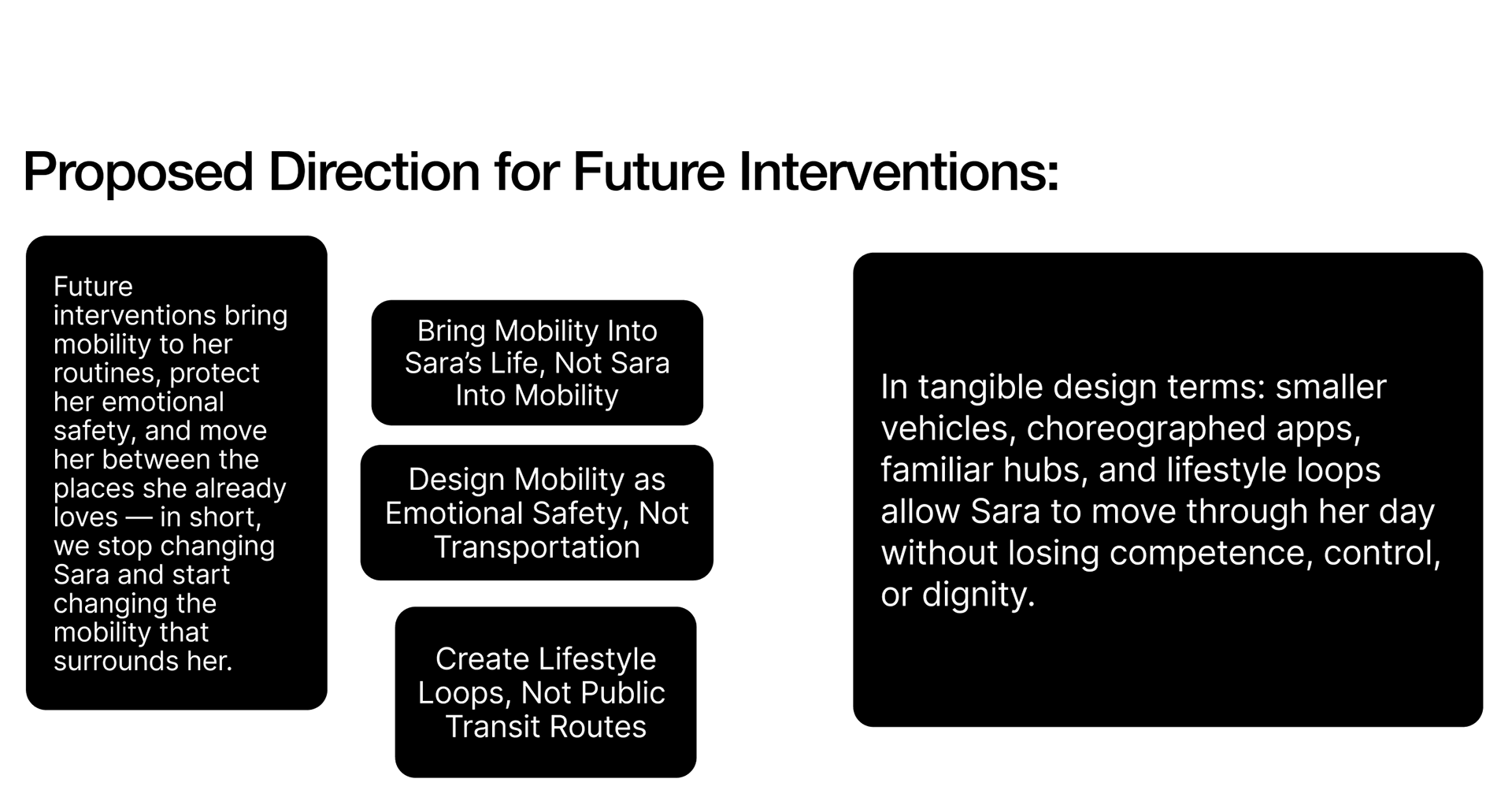
Transit must fit her rhythms, not ask her to adopt its rules. Time to write a new "How might we?"
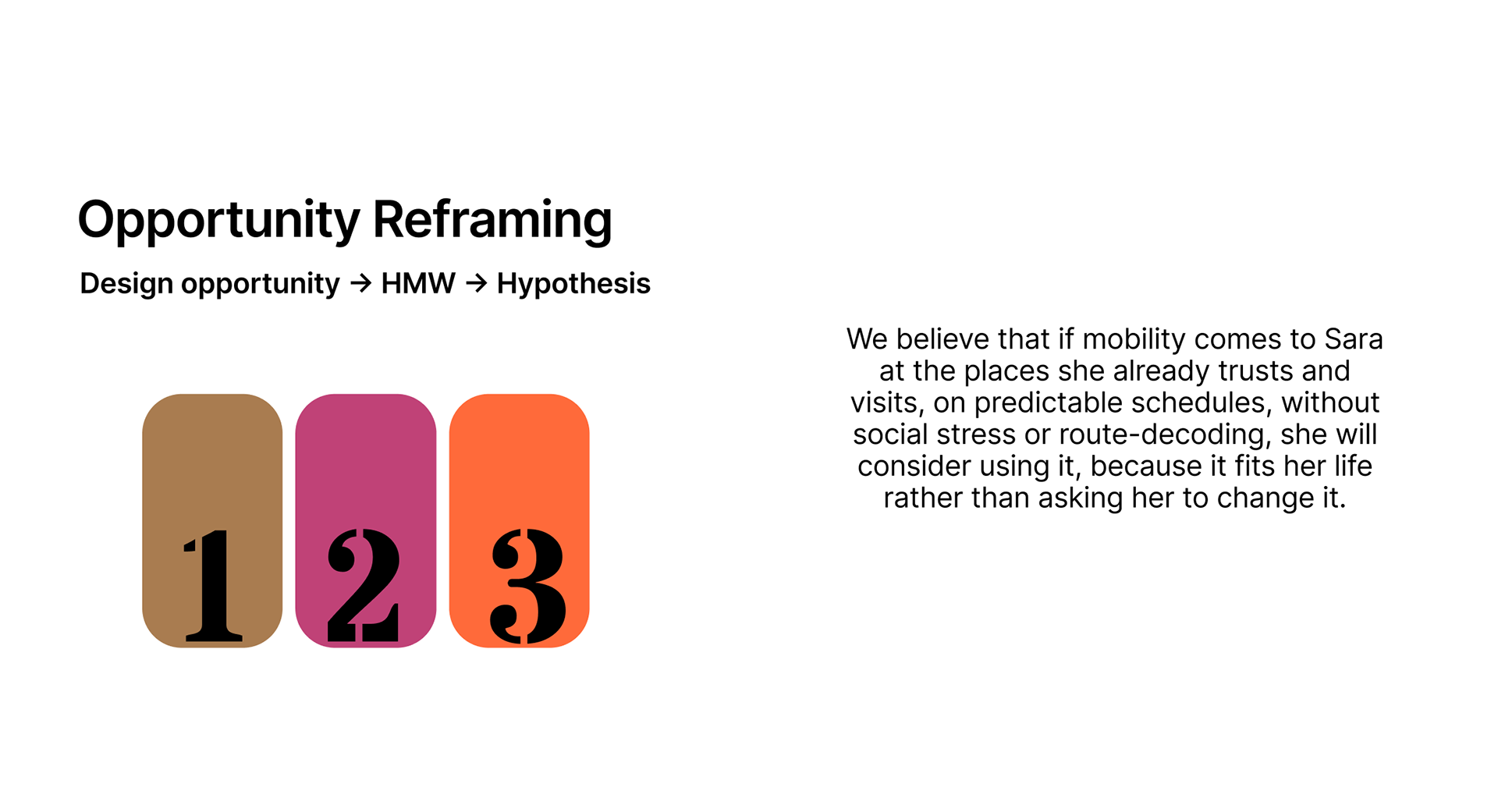
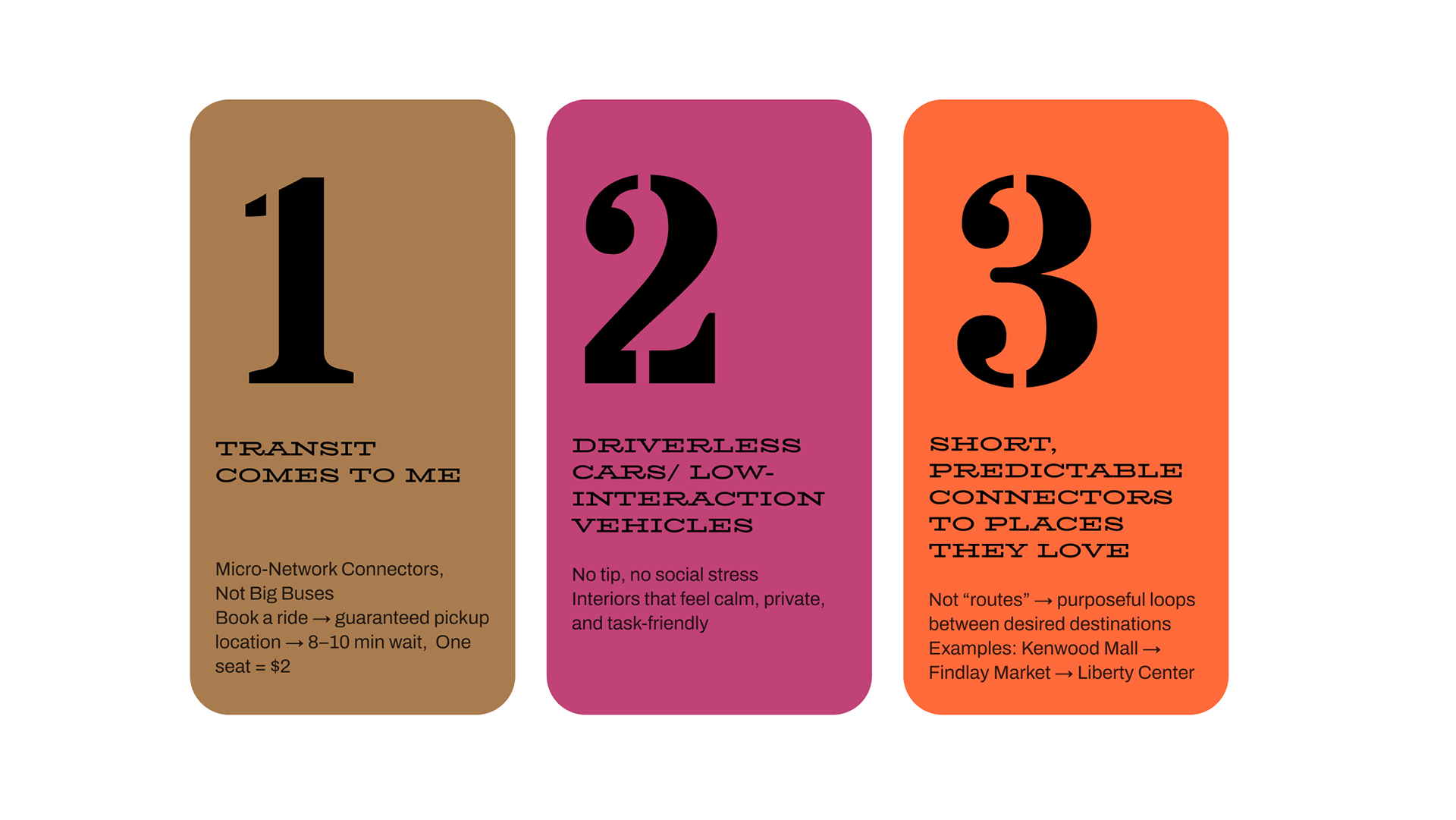
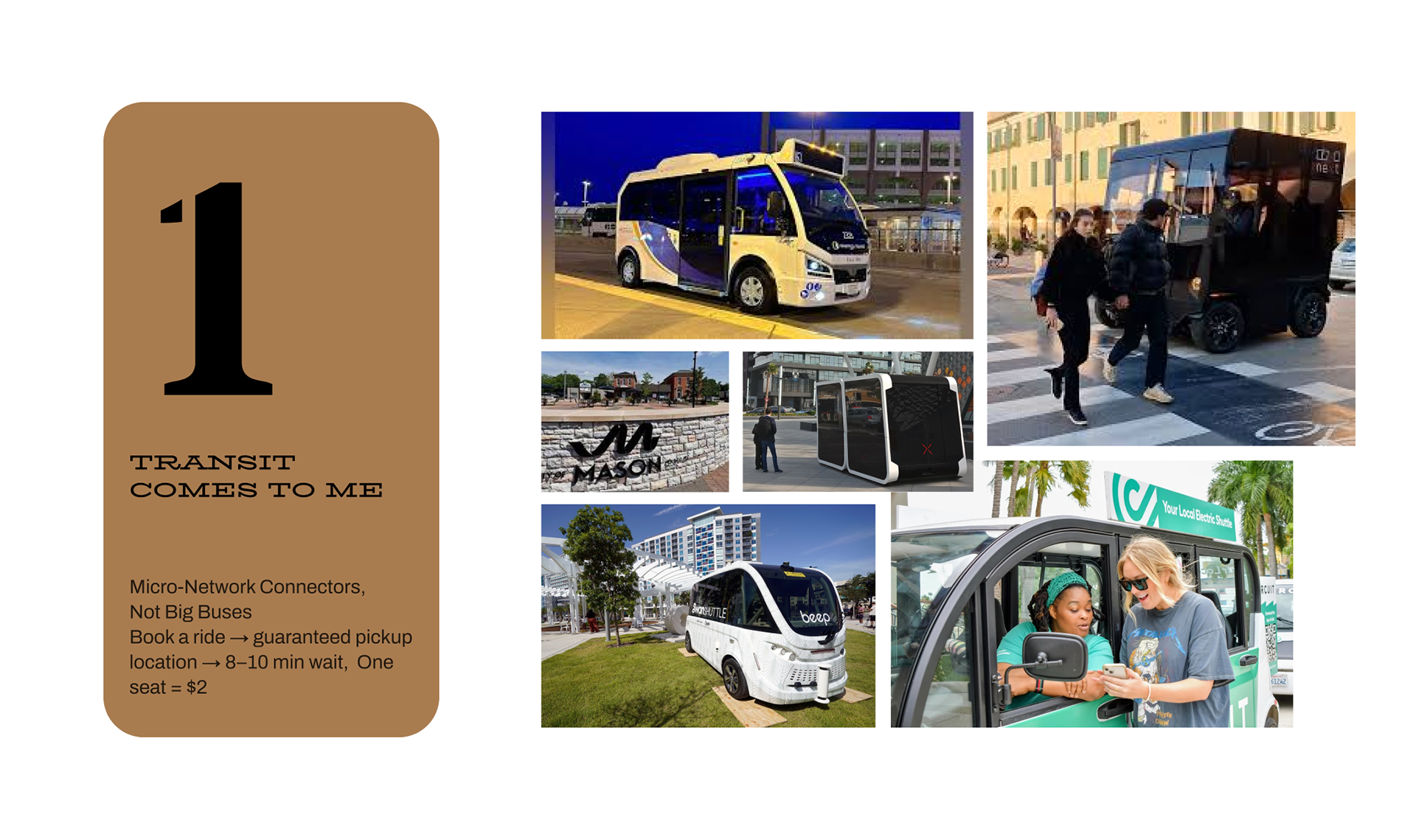
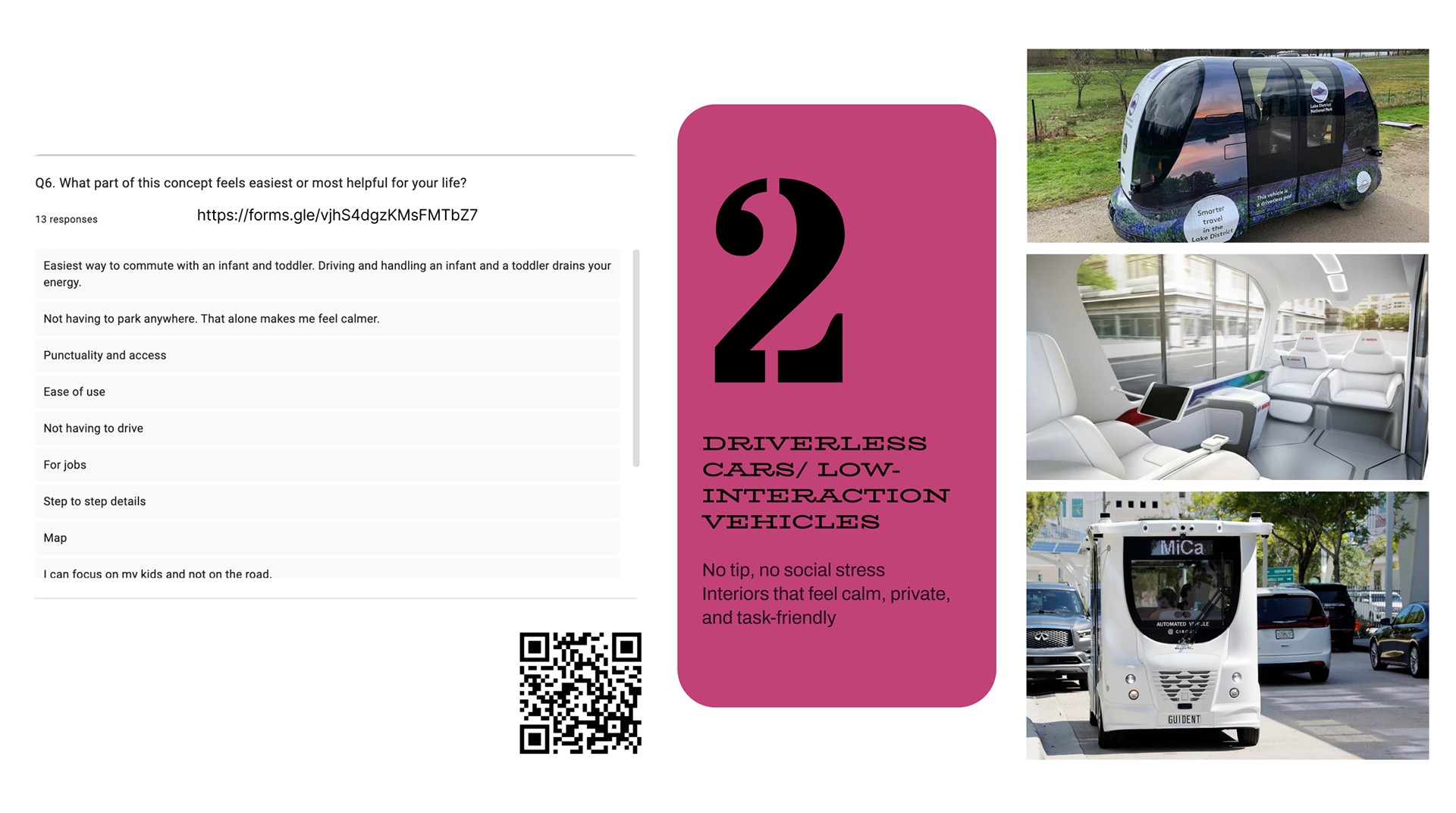
Shifted from information to routine: not “educate her,” but meet her where she already is, makes micro-shuttles and familiar loops logical, not random. Problem isn’t literacy—it’s emotional friction. I still had one foot in “how do I get her on transit,” but I realized the entry point is convenience, not education.
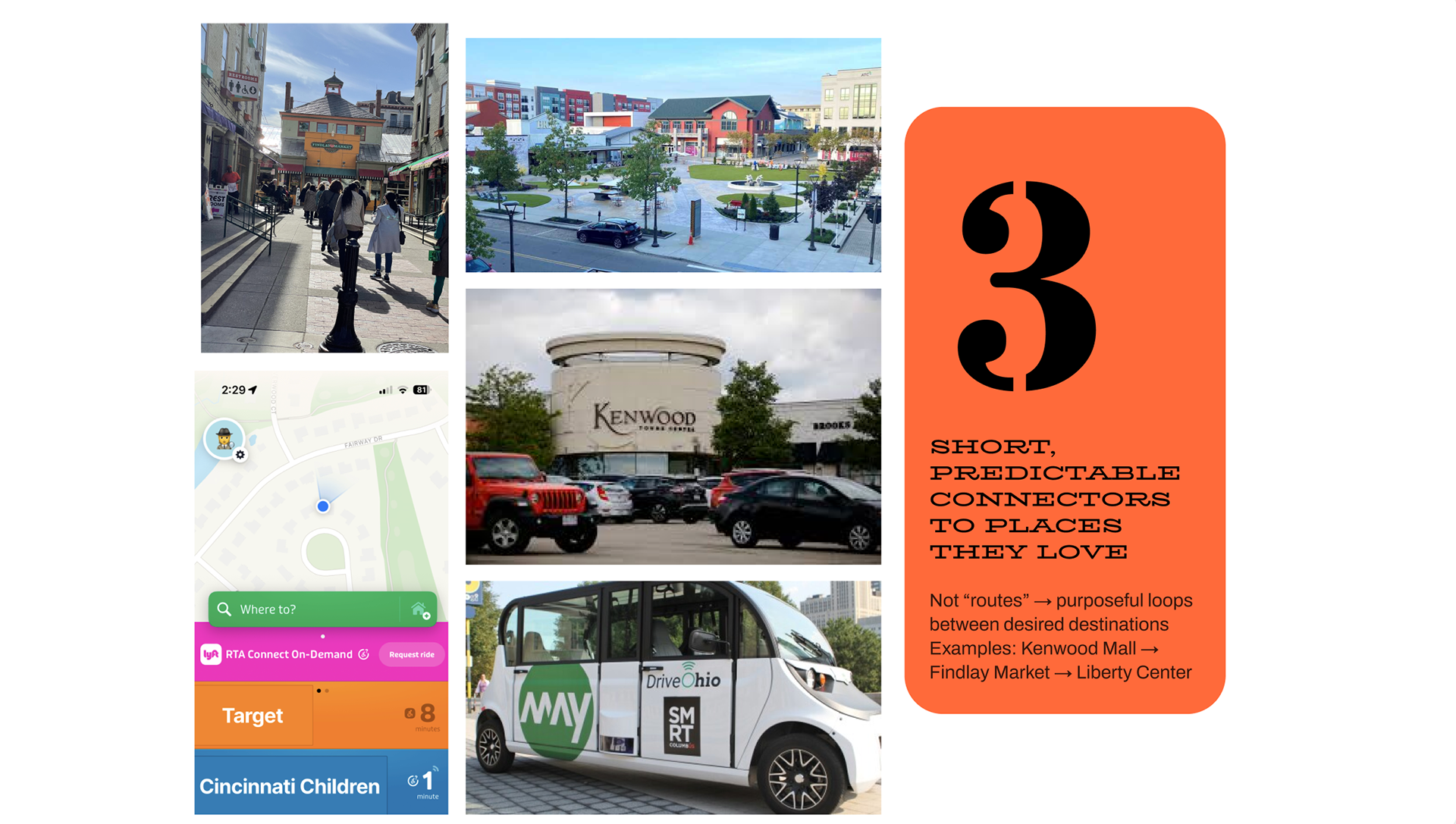
Final Thought:
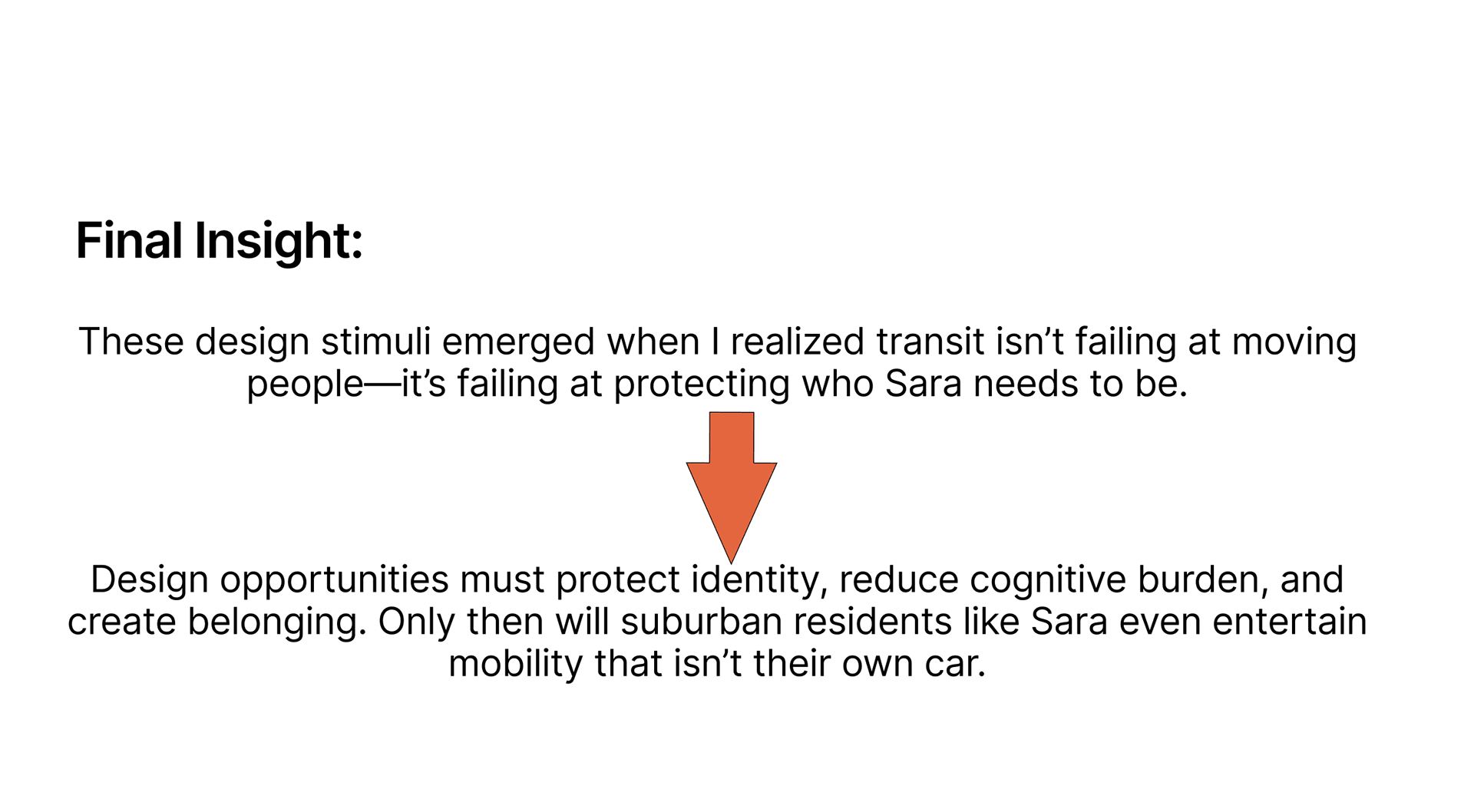
Design opportunities must protect identity, reduce cognitive burden, and foster a sense of belonging. Only then will suburban residents who are non-riders for the public transportation systems even entertain mobility that isn’t their own car.
I feel happy and content with the outcome- a research-driven narrative and set of actionable insights that reframe touch points to designing the mobility conditions she can actually live inside.
Indeed, a happy ending (for now).