In design, we often talk about products, systems, and users. But we rarely discuss what happens to the designer.
There are moments—quiet, surprising, disruptive—where something suddenly clicks. A new connection forms. A problem reframes itself. These are Aha! moments.
Designers experience them constantly, but we almost never see them, study them, or share them.
There are moments—quiet, surprising, disruptive—where something suddenly clicks. A new connection forms. A problem reframes itself. These are Aha! moments.
Designers experience them constantly, but we almost never see them, study them, or share them.

When personal insights stay tacit and unshared, we lose a critical opportunity.
The opportunity to transform individual realizations into collective learning.
The opportunity to transform individual realizations into collective learning.
This limits our ability to build reflective, responsible, and sustainable design practices.
Design today is shifting. We no longer design for users— We design with them.
Co-creation demands new mindsets, shared understanding, and the ability to learn from each other’s experiences. But if we don’t know how to externalize our own Aha moments, how can we invite others into that learning?
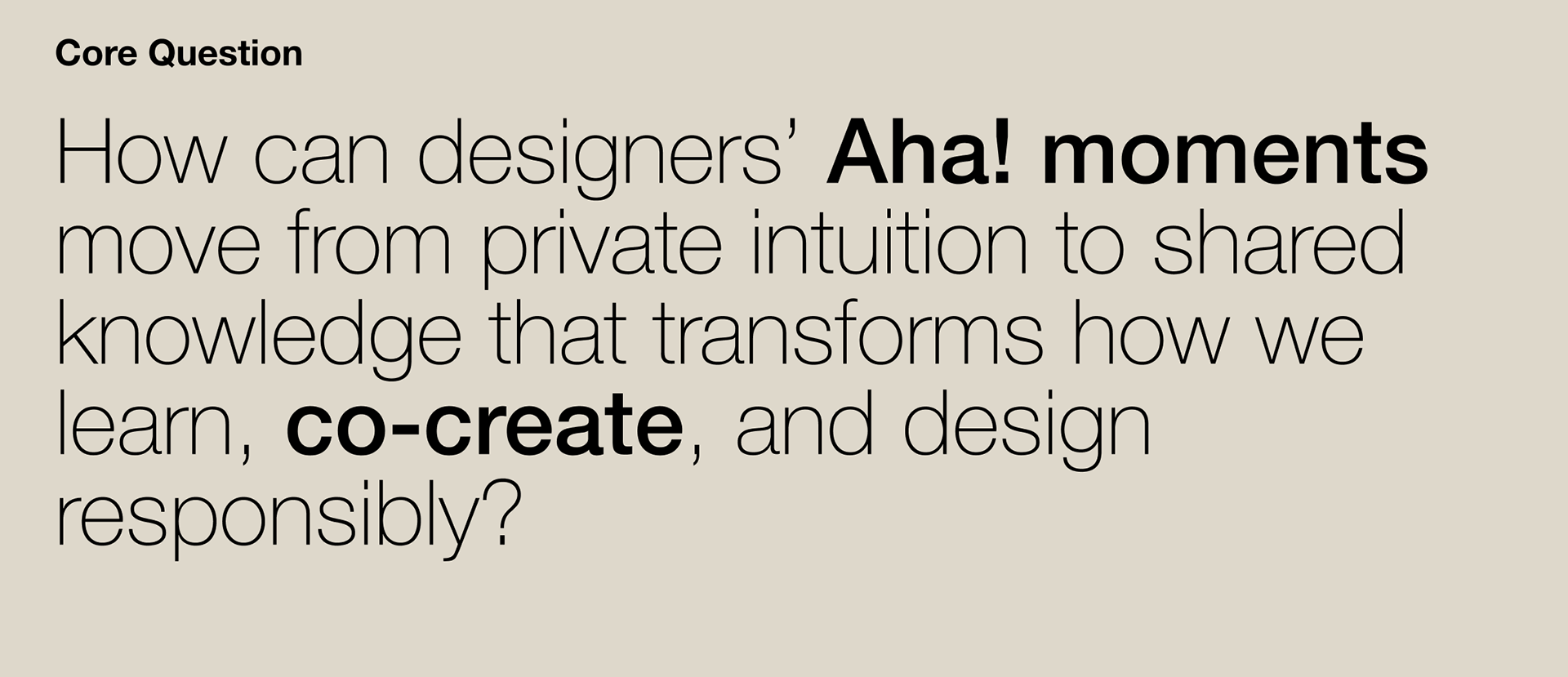
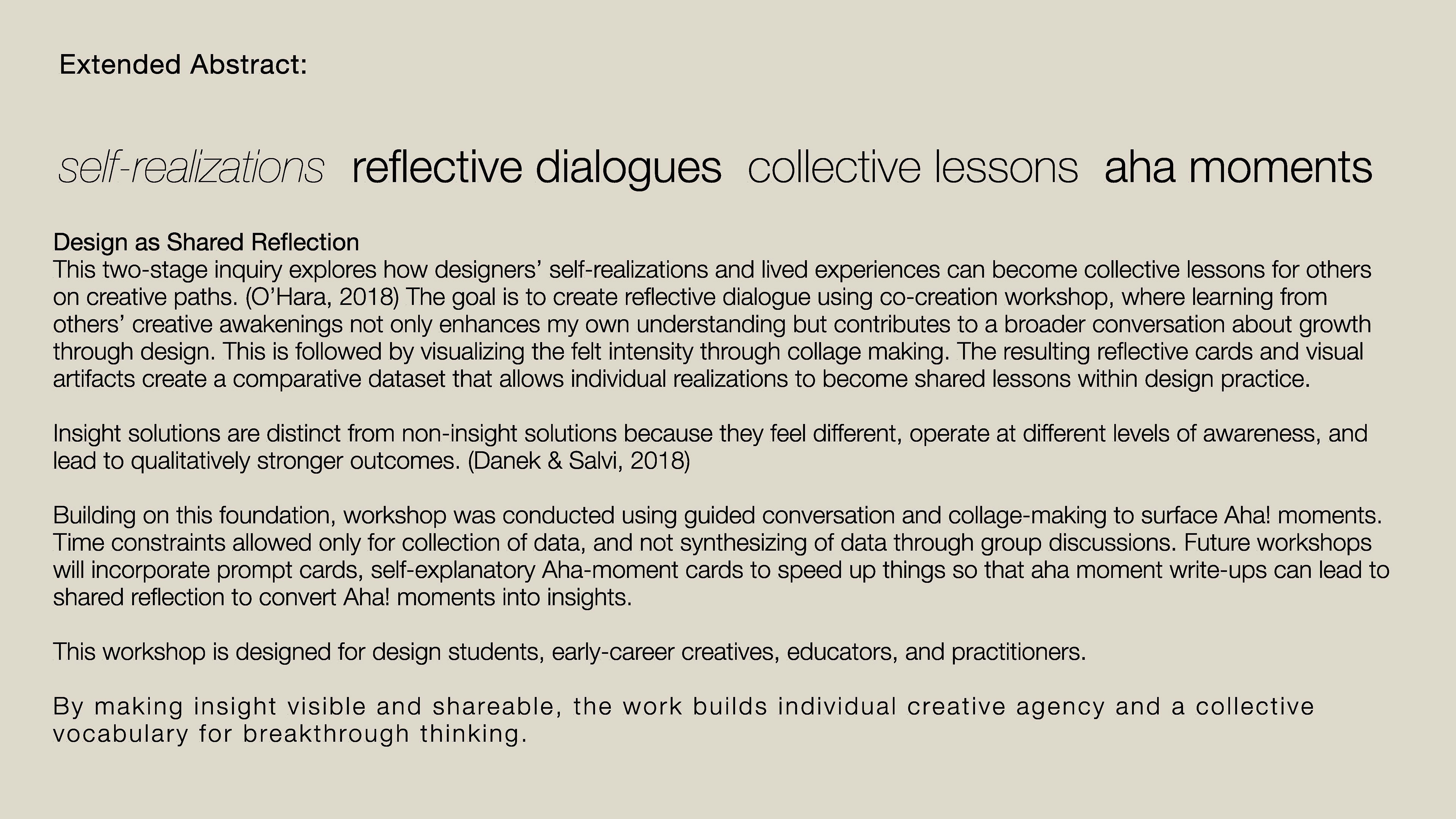
This two-stage inquiry explores how designers’ self-realizations and lived experiences can become collective lessons for others on creative paths. (O’Hara, 2018) My goal is to create a reflective dialogue where learning from others’ creative awakenings not only enhances my own understanding but also contributes to a broader conversation about growth through design. This will be followed by a visualization of its emotional resonance through collage. The resulting reflective cards and visual artifacts create a rich comparative dataset that supports the emergence of shared themes, allowing individual realizations to become collective lessons about creative growth within design practice.
Significance:
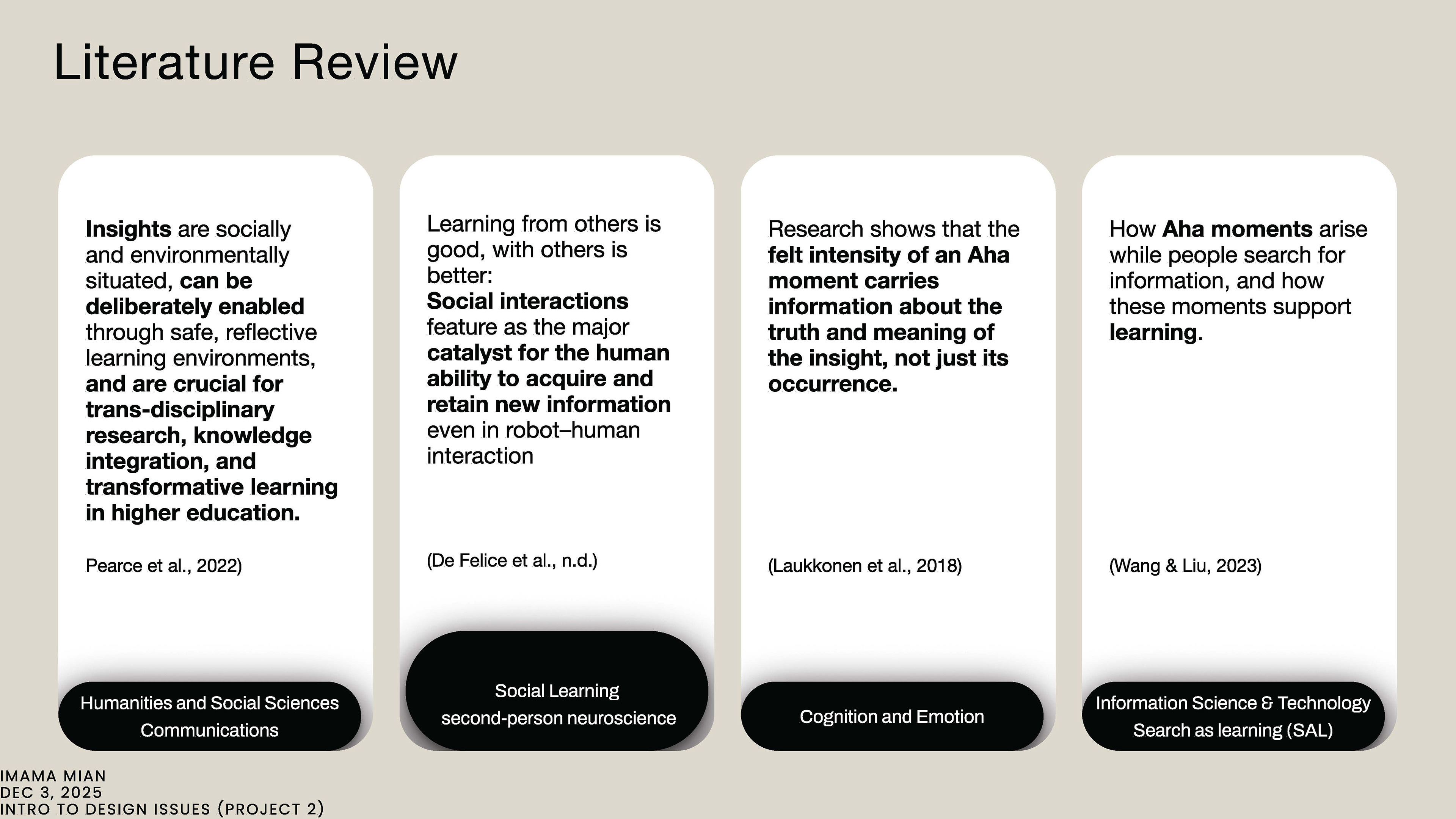
The insight solutions are distinct from non-insight solutions because they feel different, they are processed at different levels of awareness, and, importantly, they lead to qualitatively distinct outcomes, with one being more accurate than the other (Danek & Salvi, 2018)
Significance:
The insight solutions are distinct from non-insight solutions because they feel different, they are processed at different levels of awareness, and, importantly, they lead to qualitatively distinct outcomes, with one being more accurate than the other (Danek & Salvi, 2018)
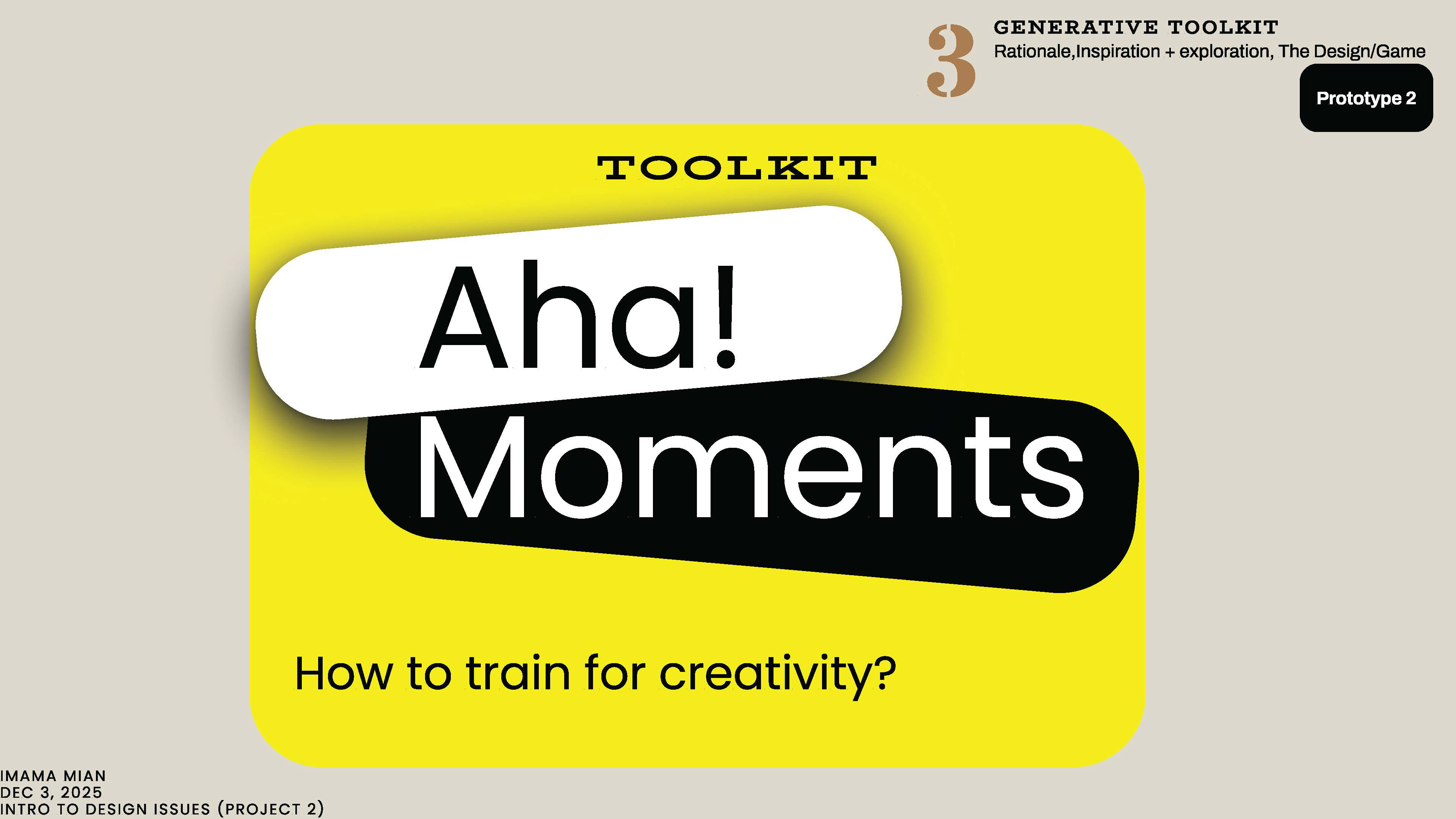
This 2-part co-creation toolkit can be used to explore how design students can be trained for creativity.
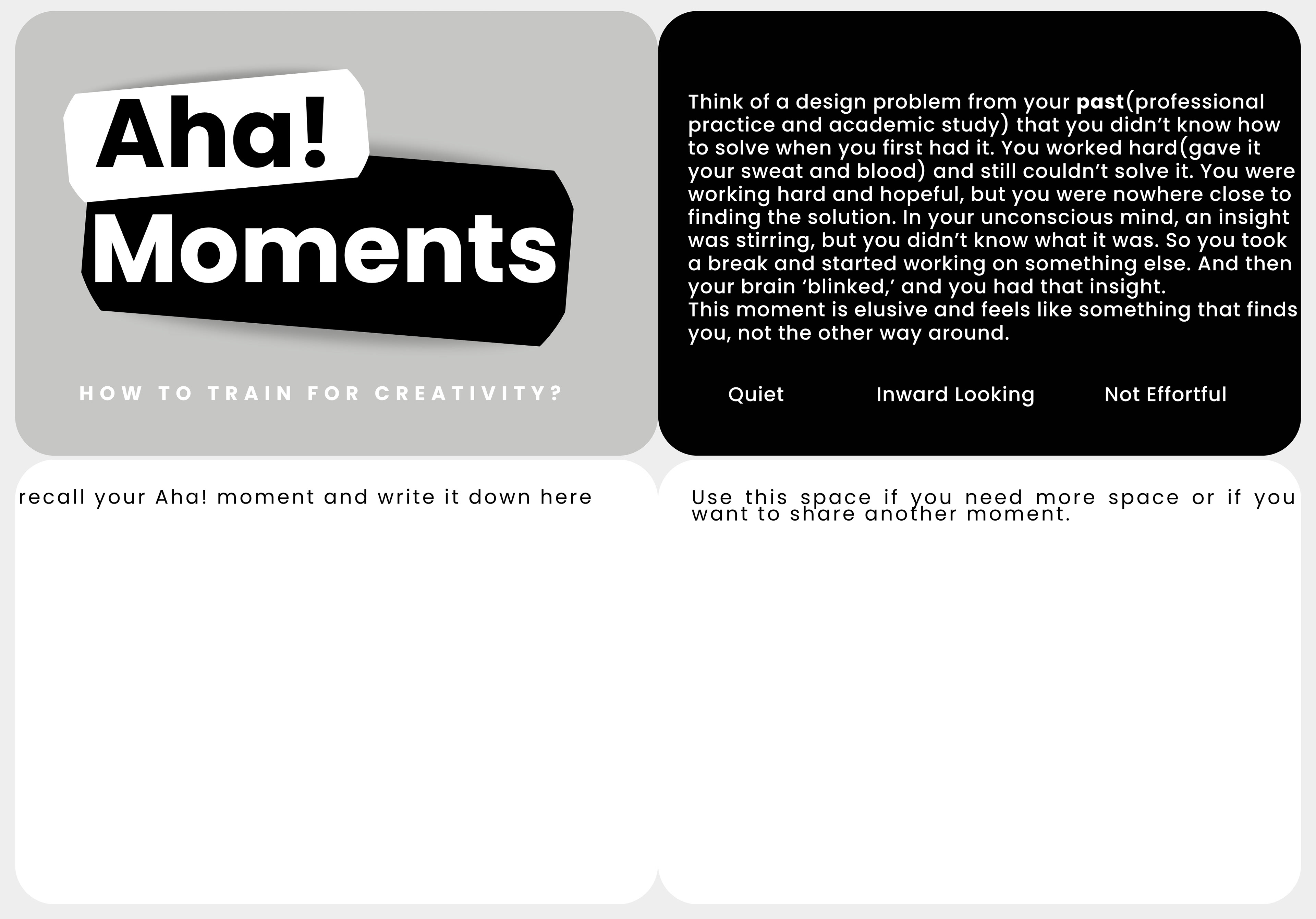
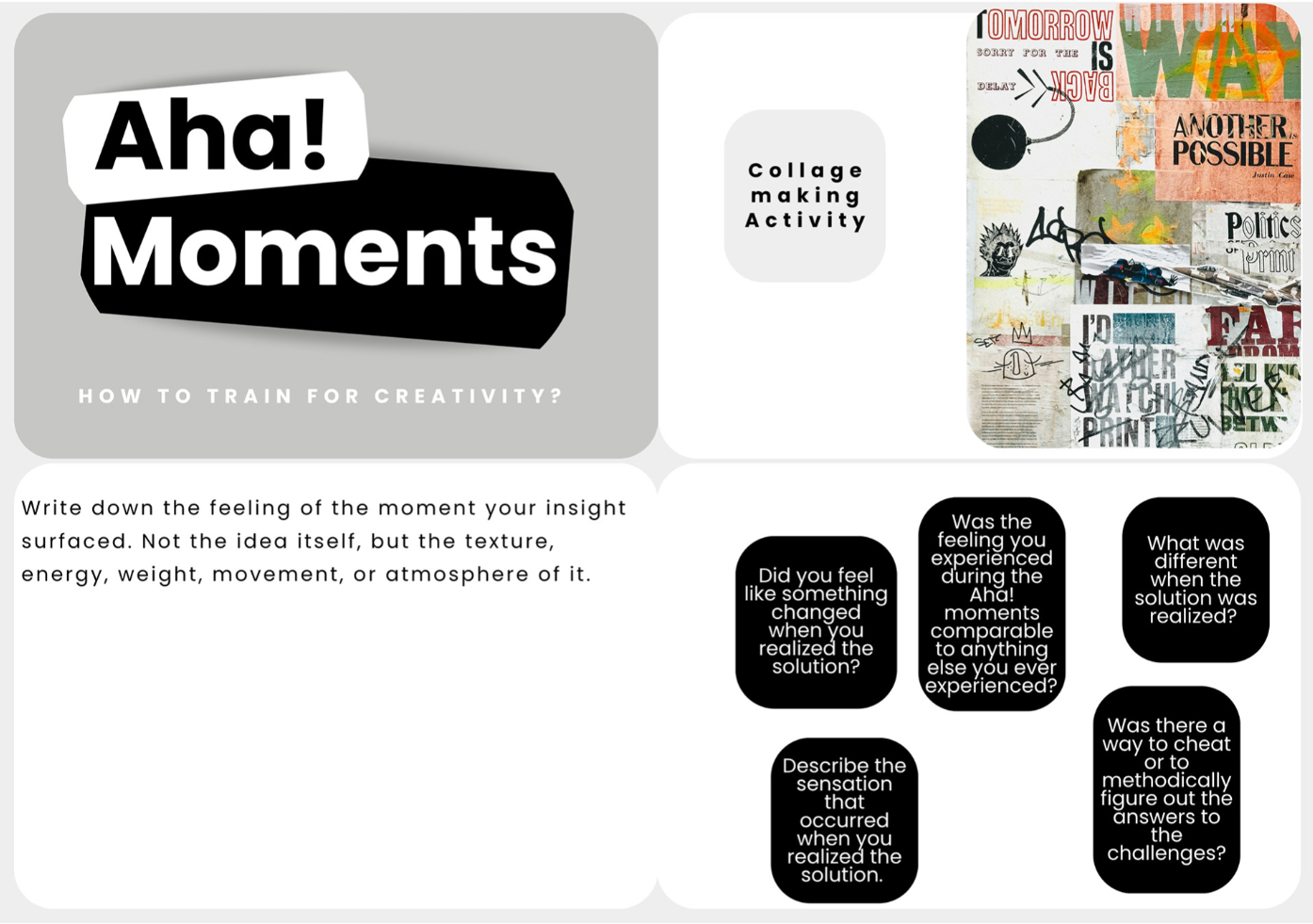
1
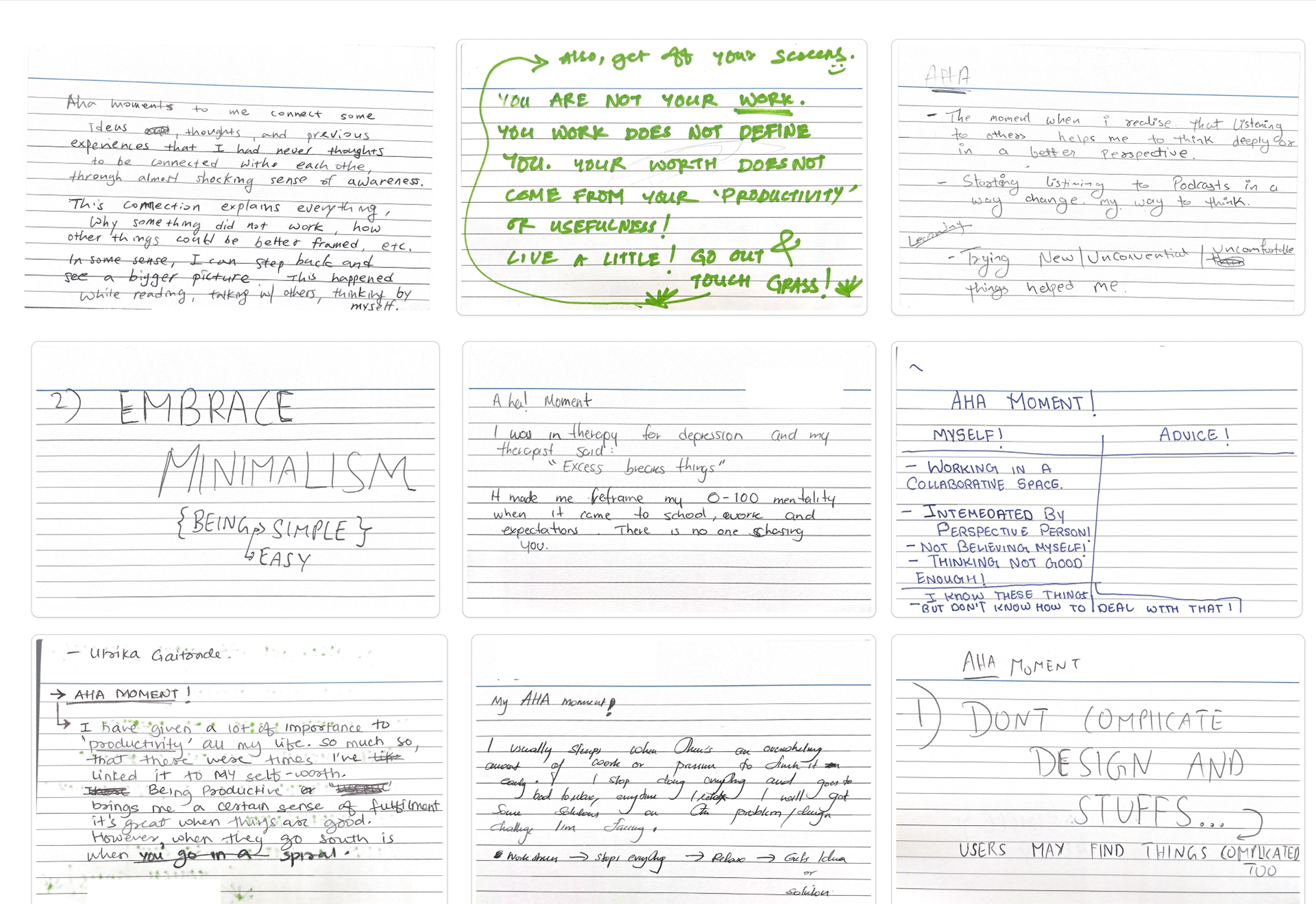
Collecting the Aha! Moments!
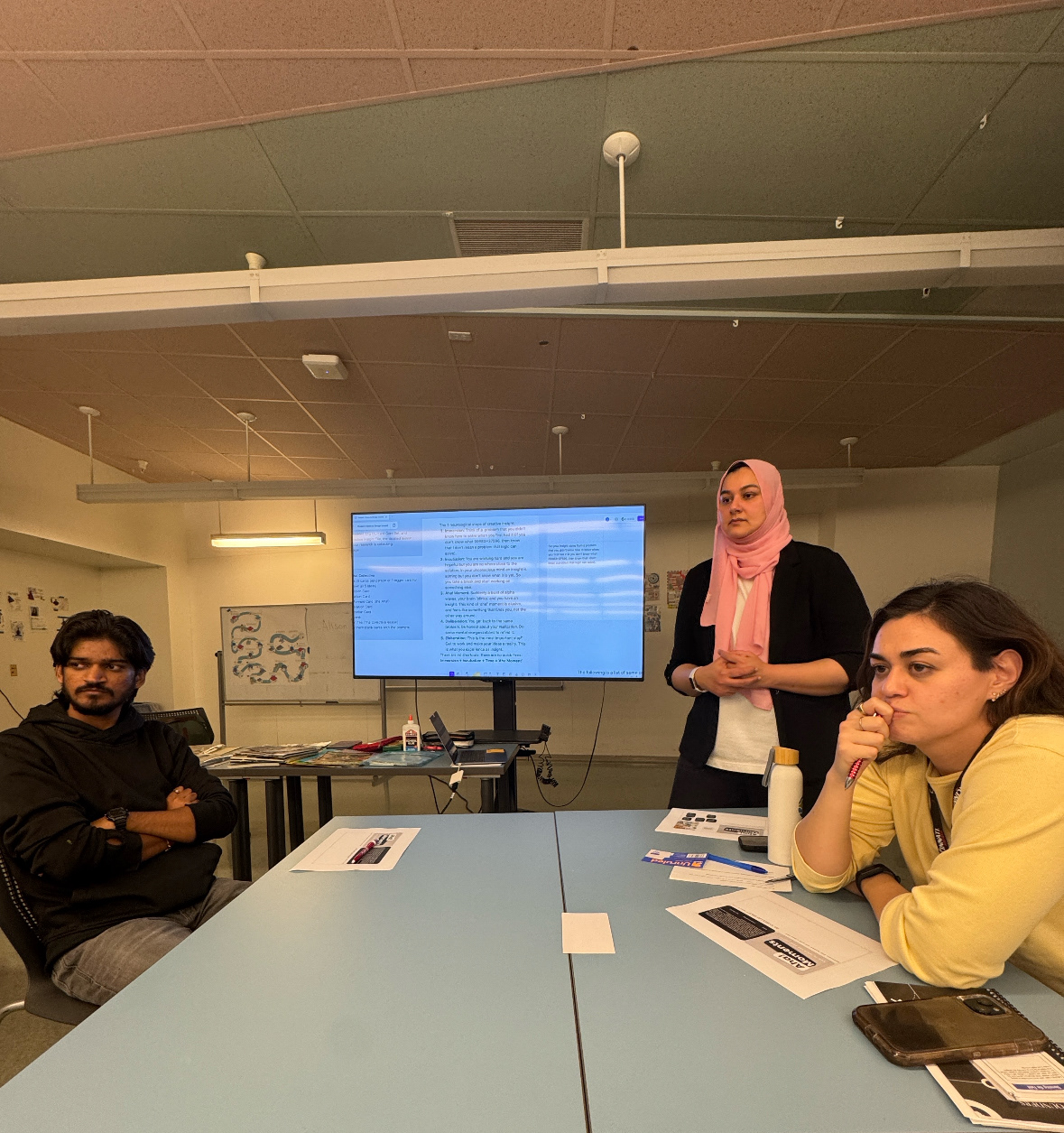
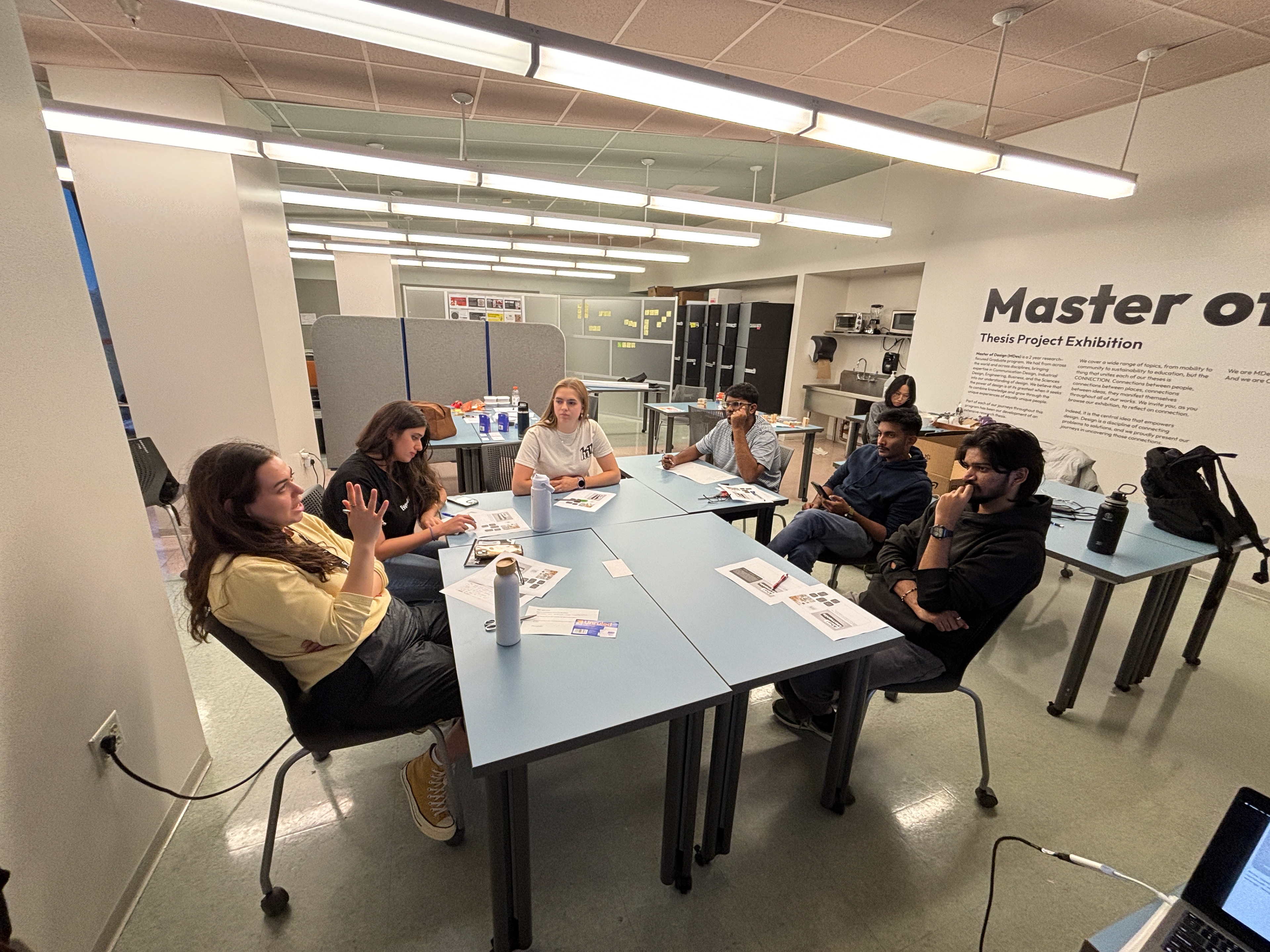
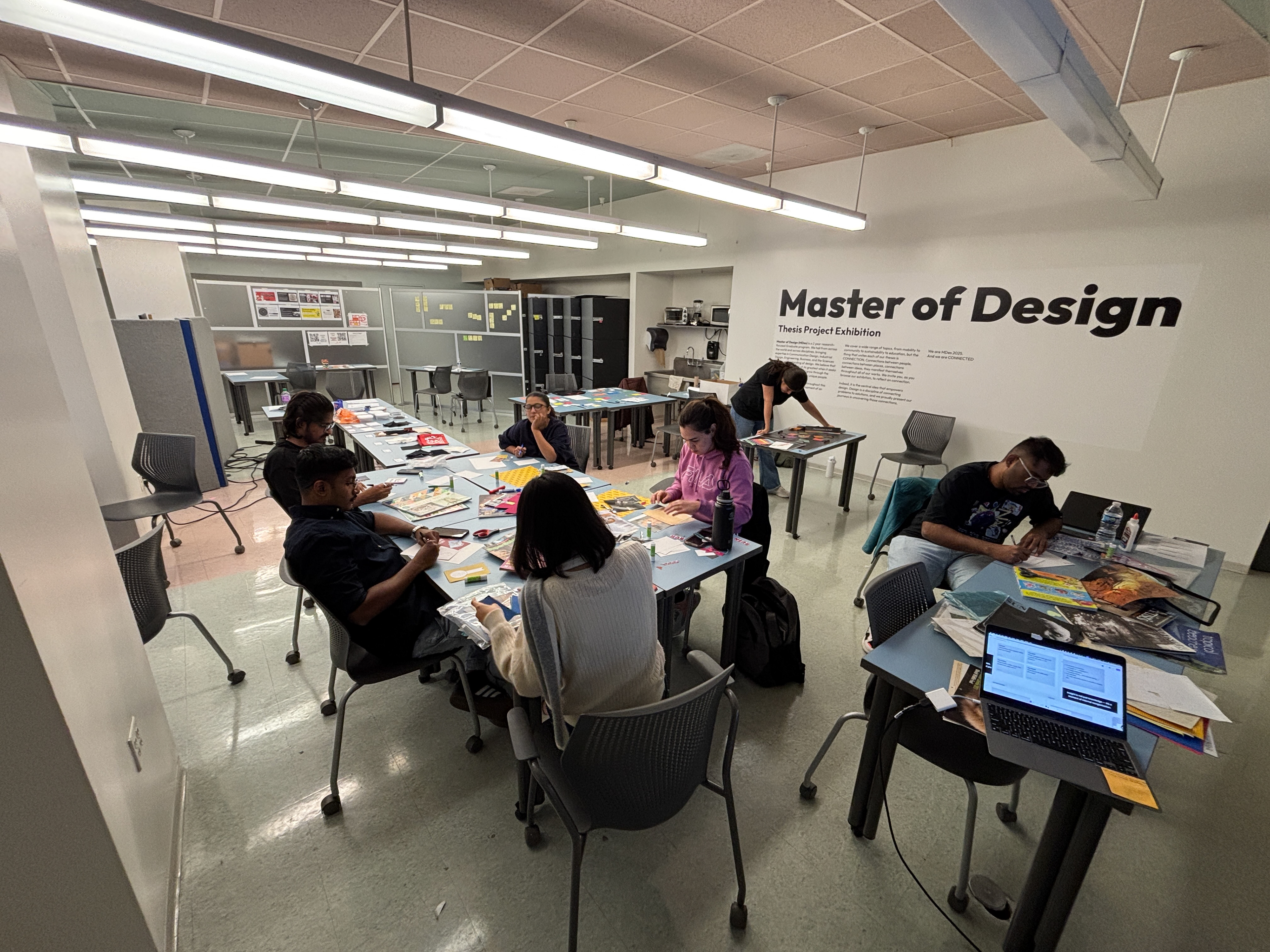
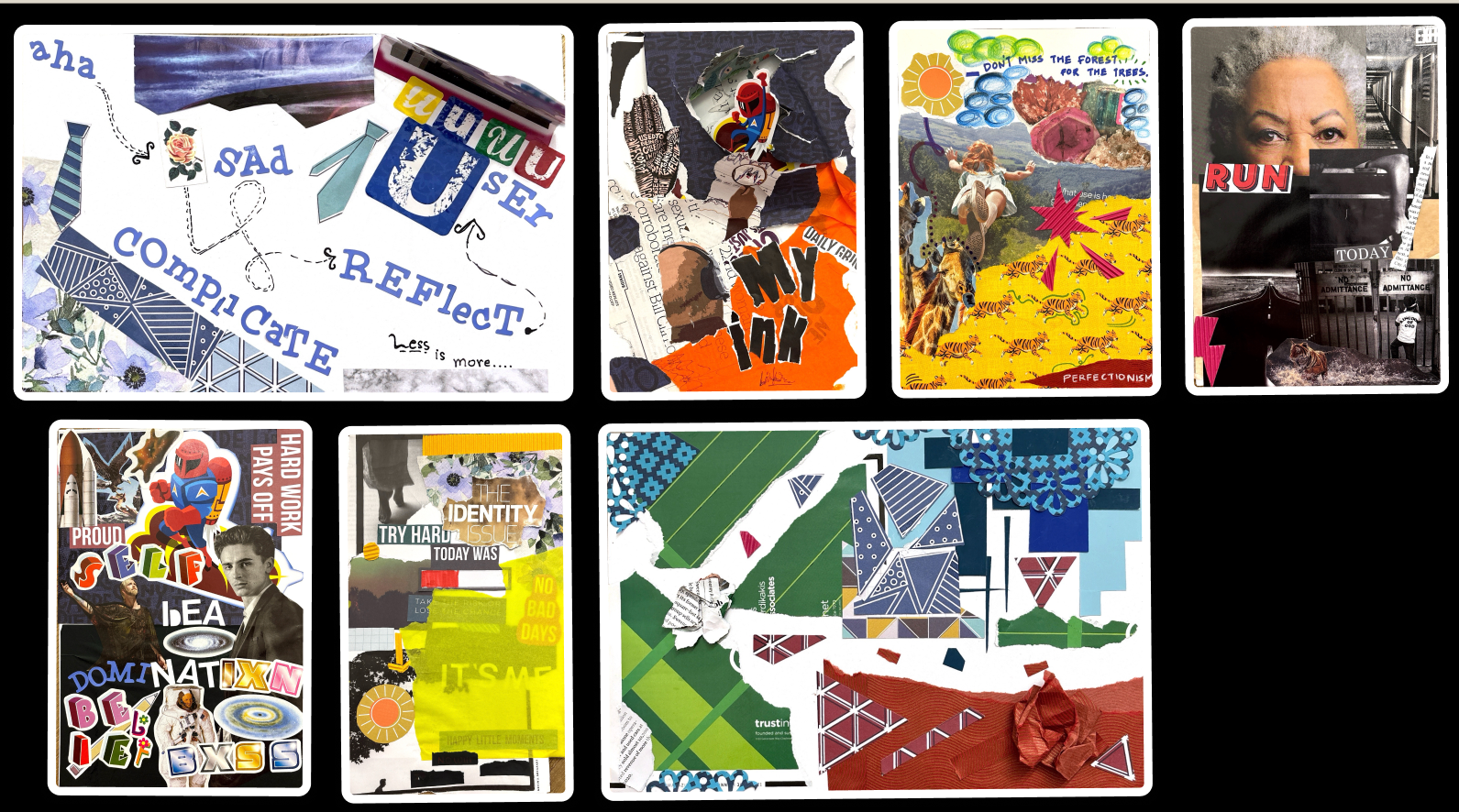
Sample Aha moments and collages
2
Synthesizing Insights
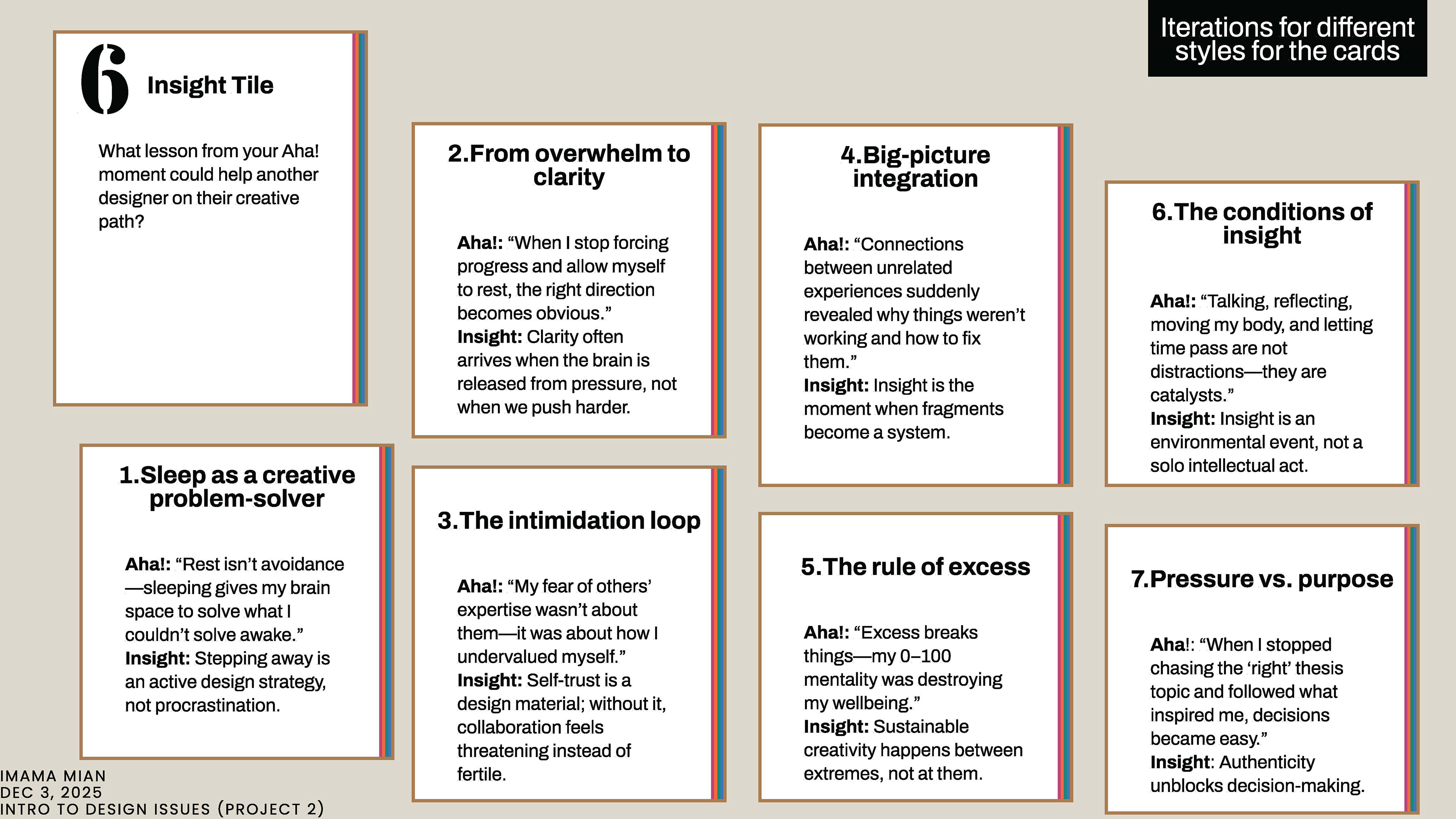
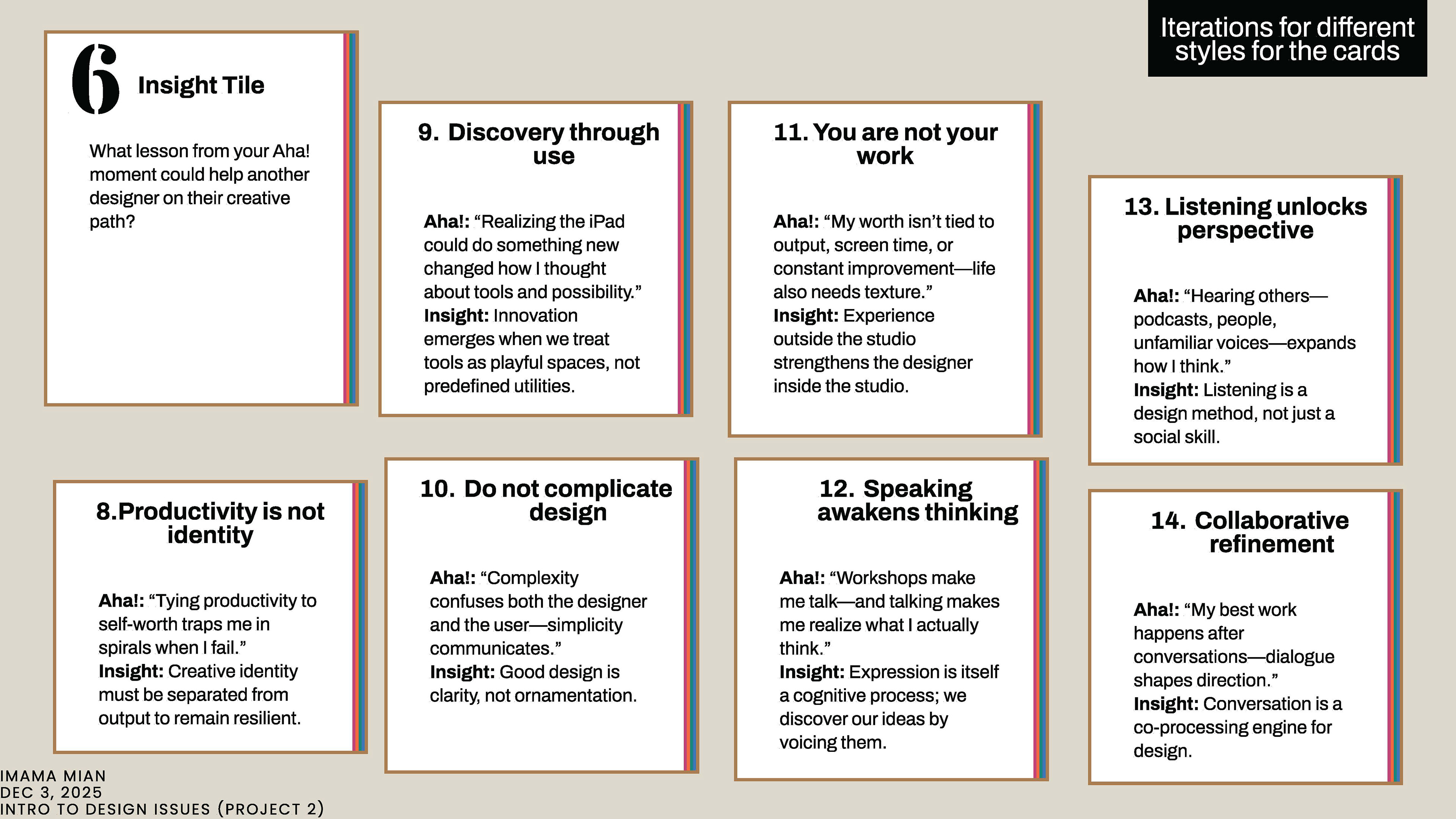
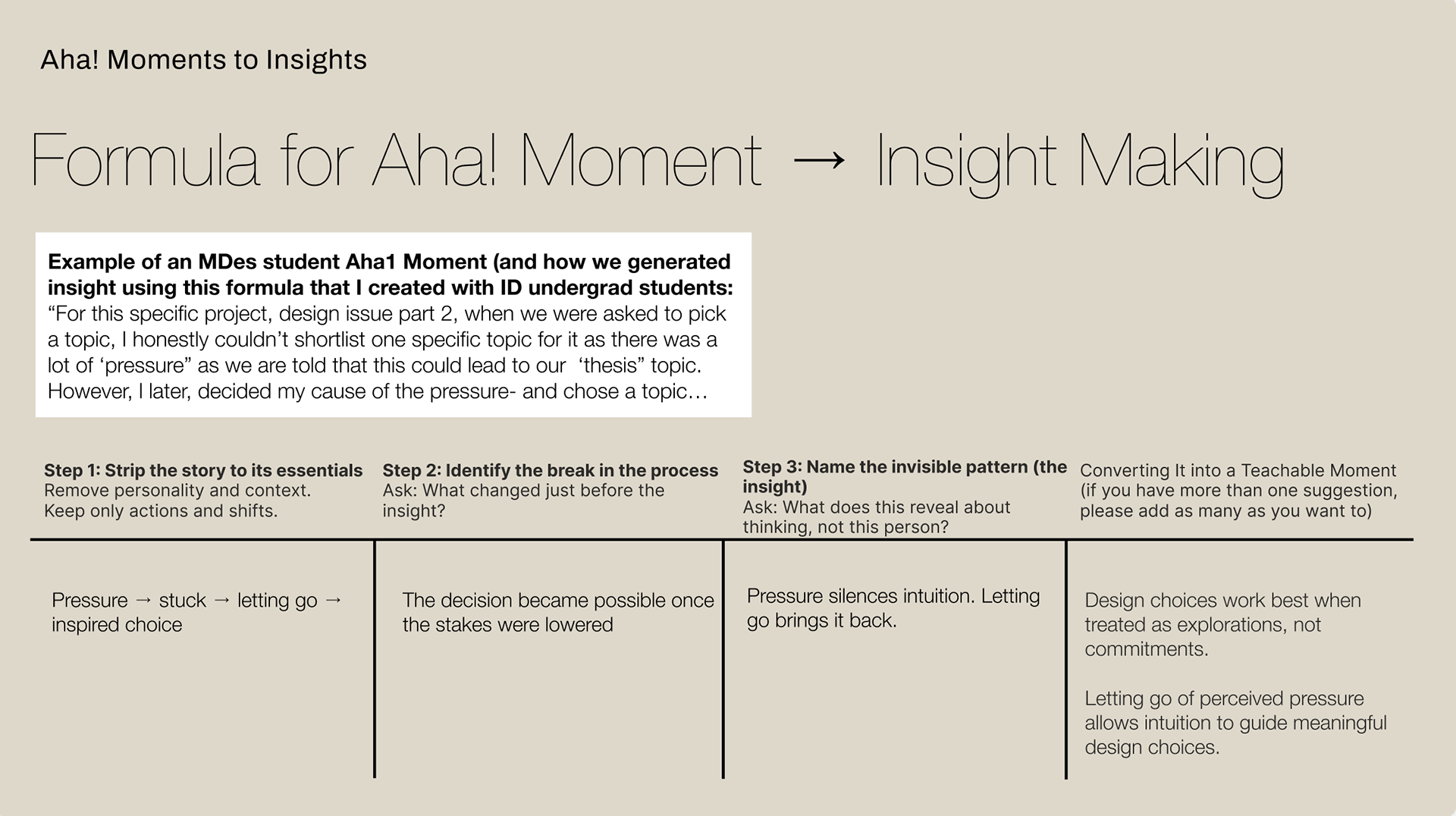
Moment to insight
Collage to the mood/behavior at the time of realizing the moment
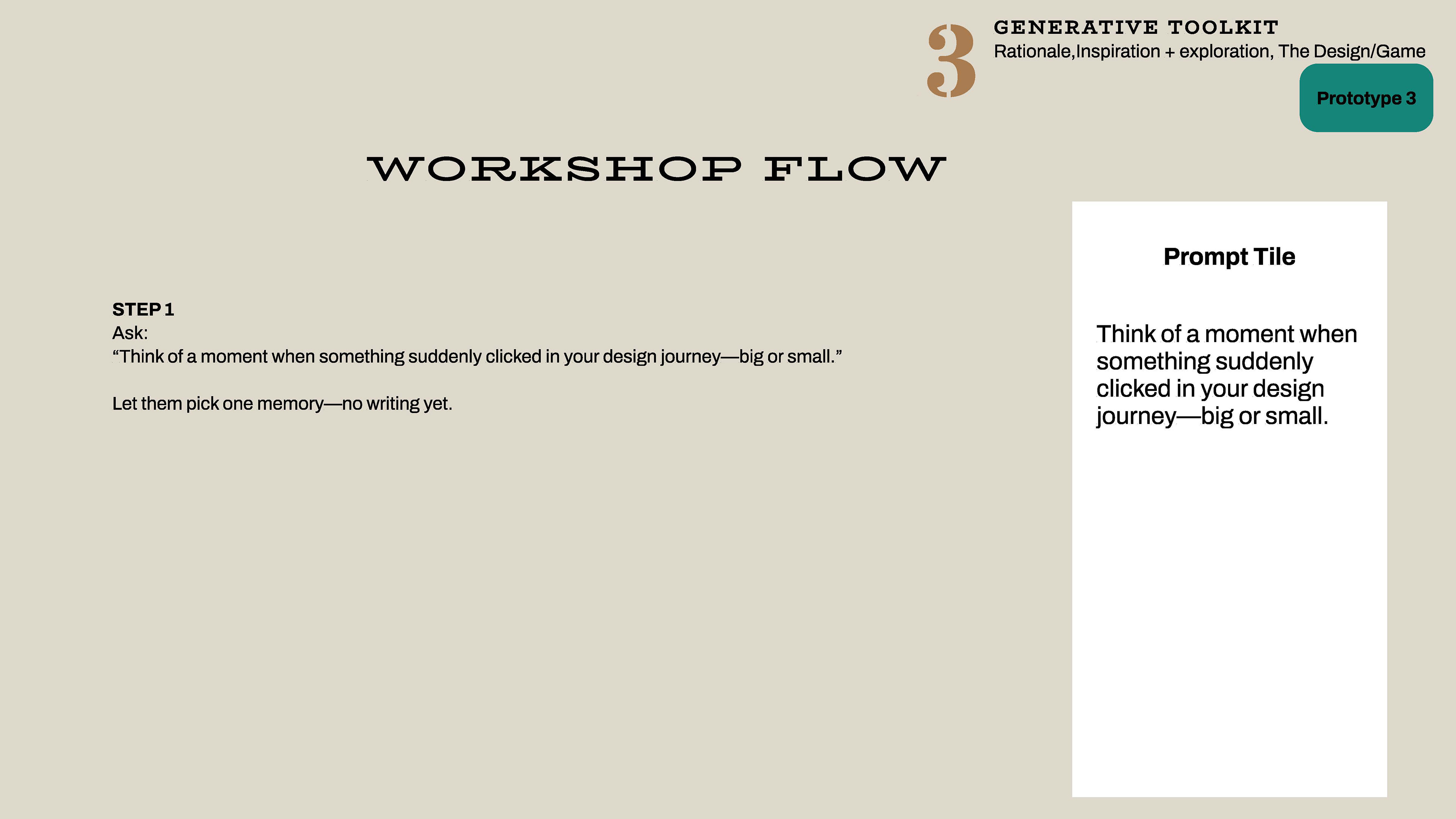
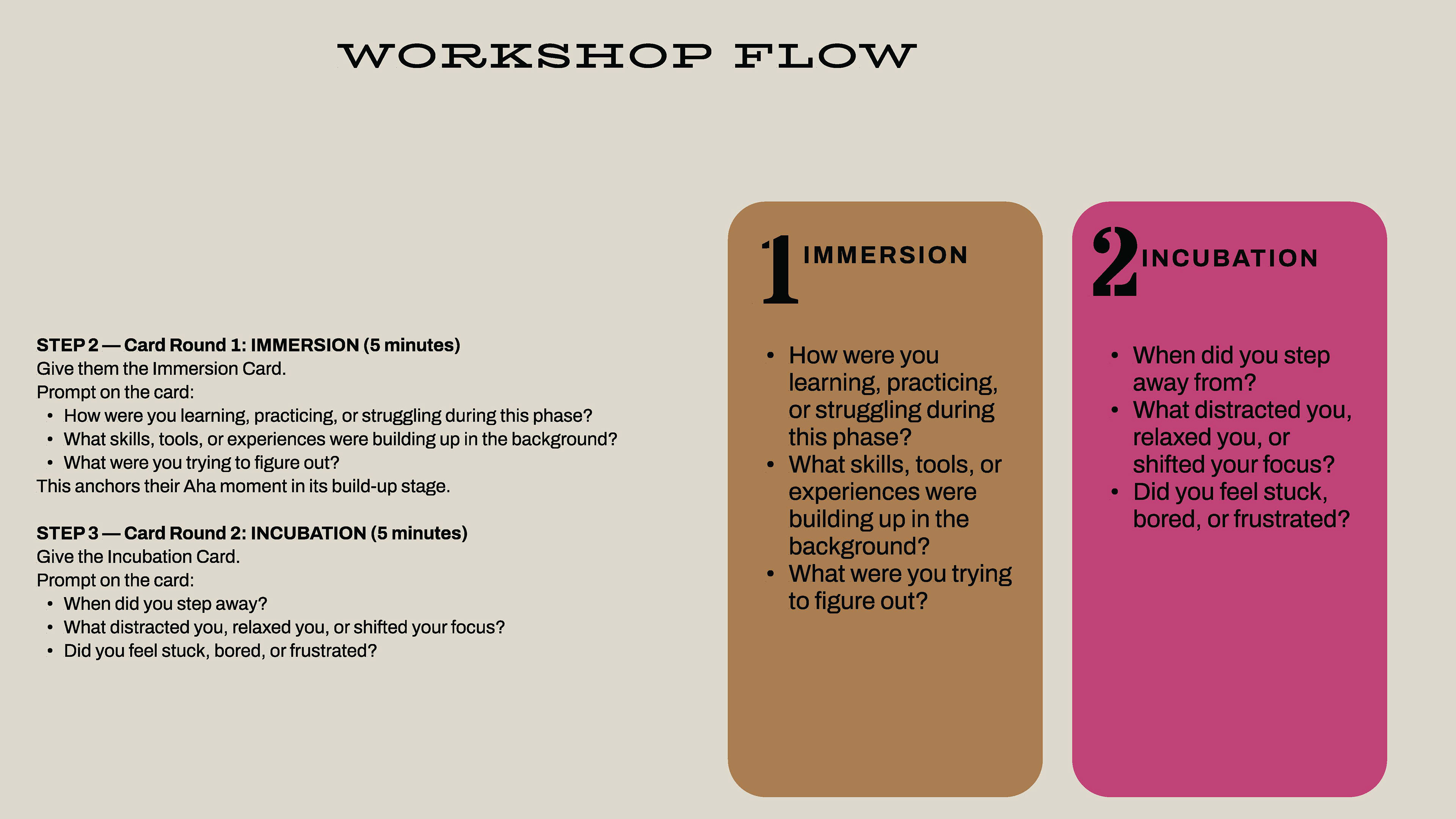
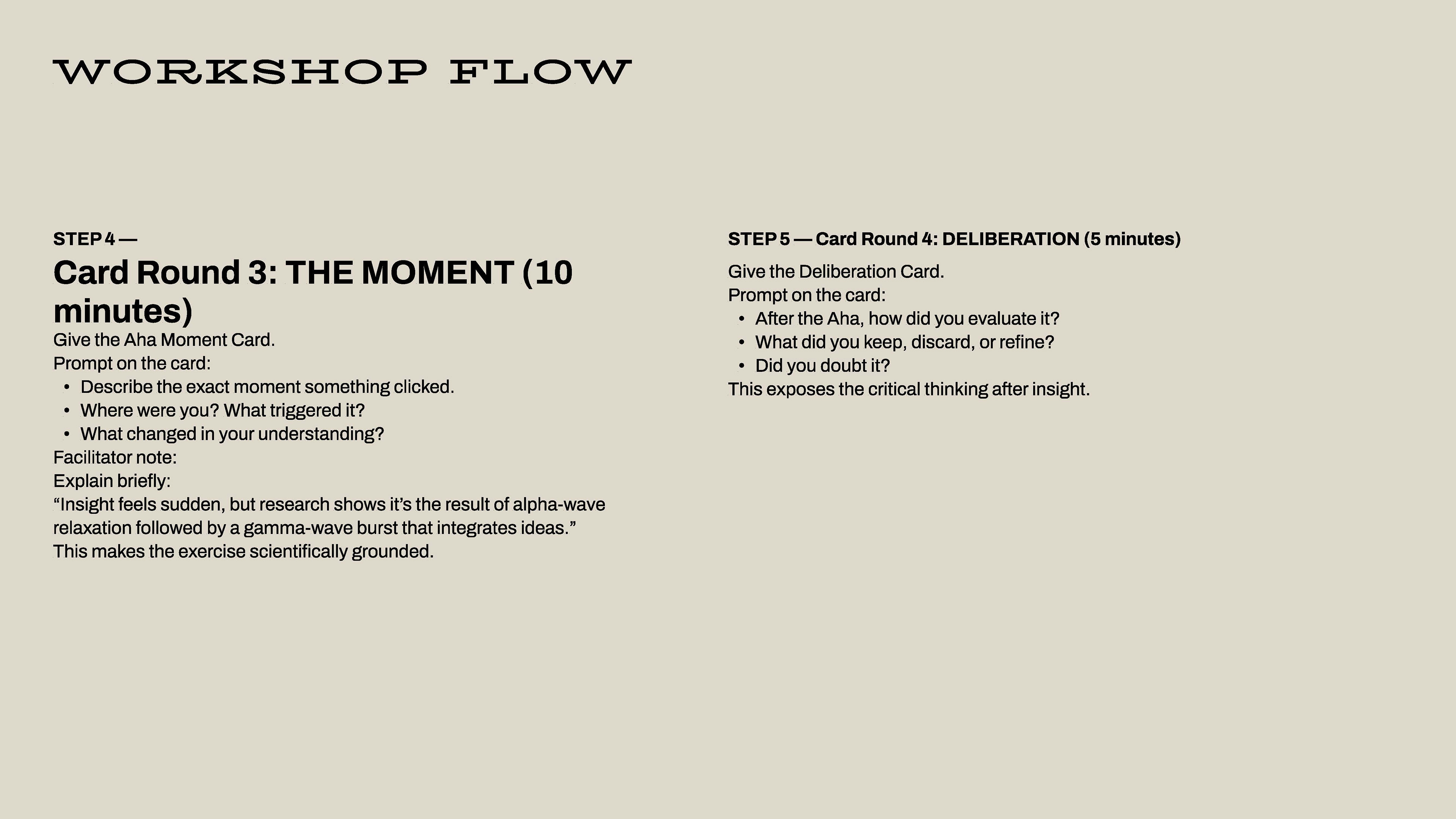
My 4-step approach to turning moments into insights.
Initial Reflection:
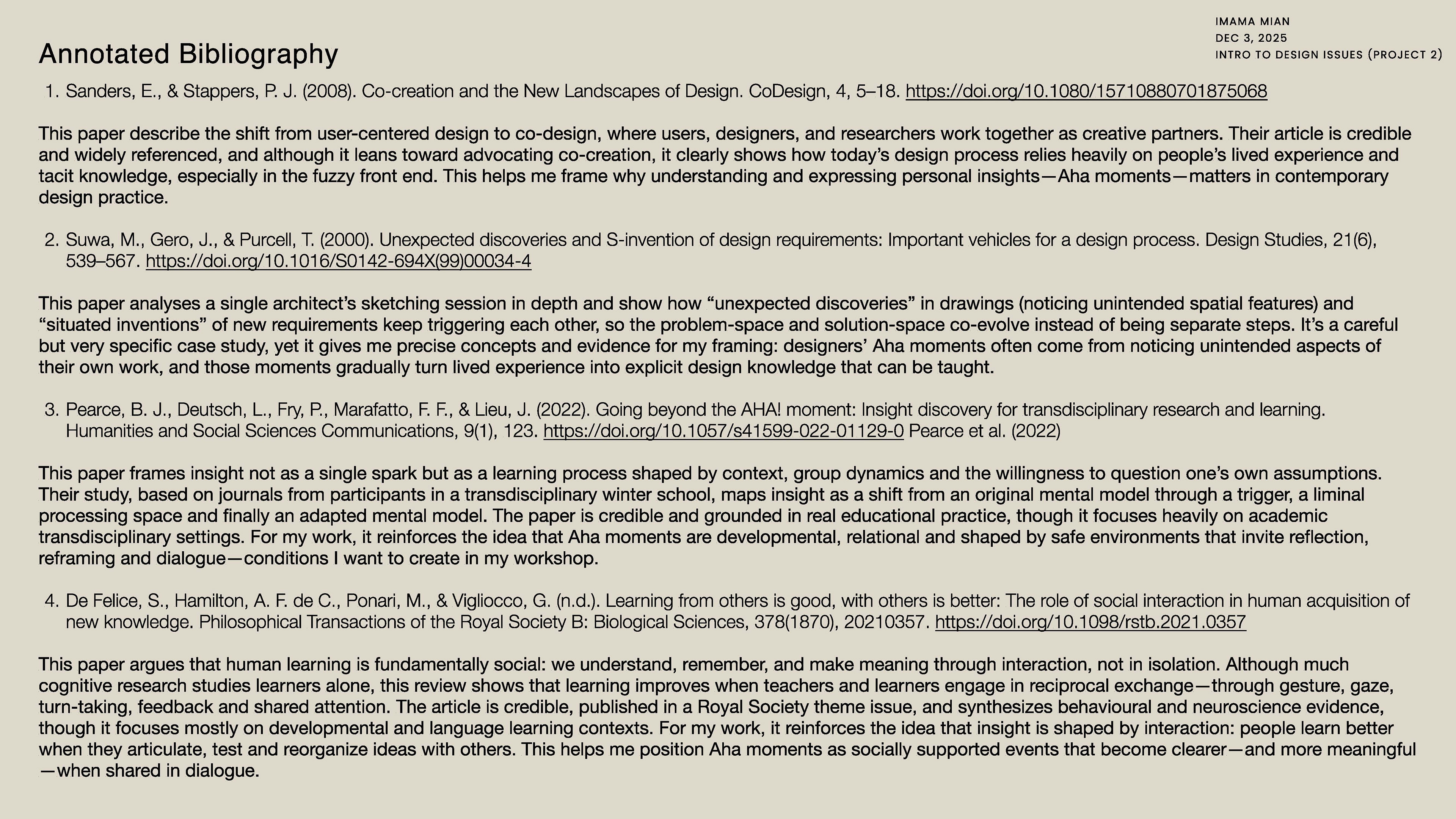
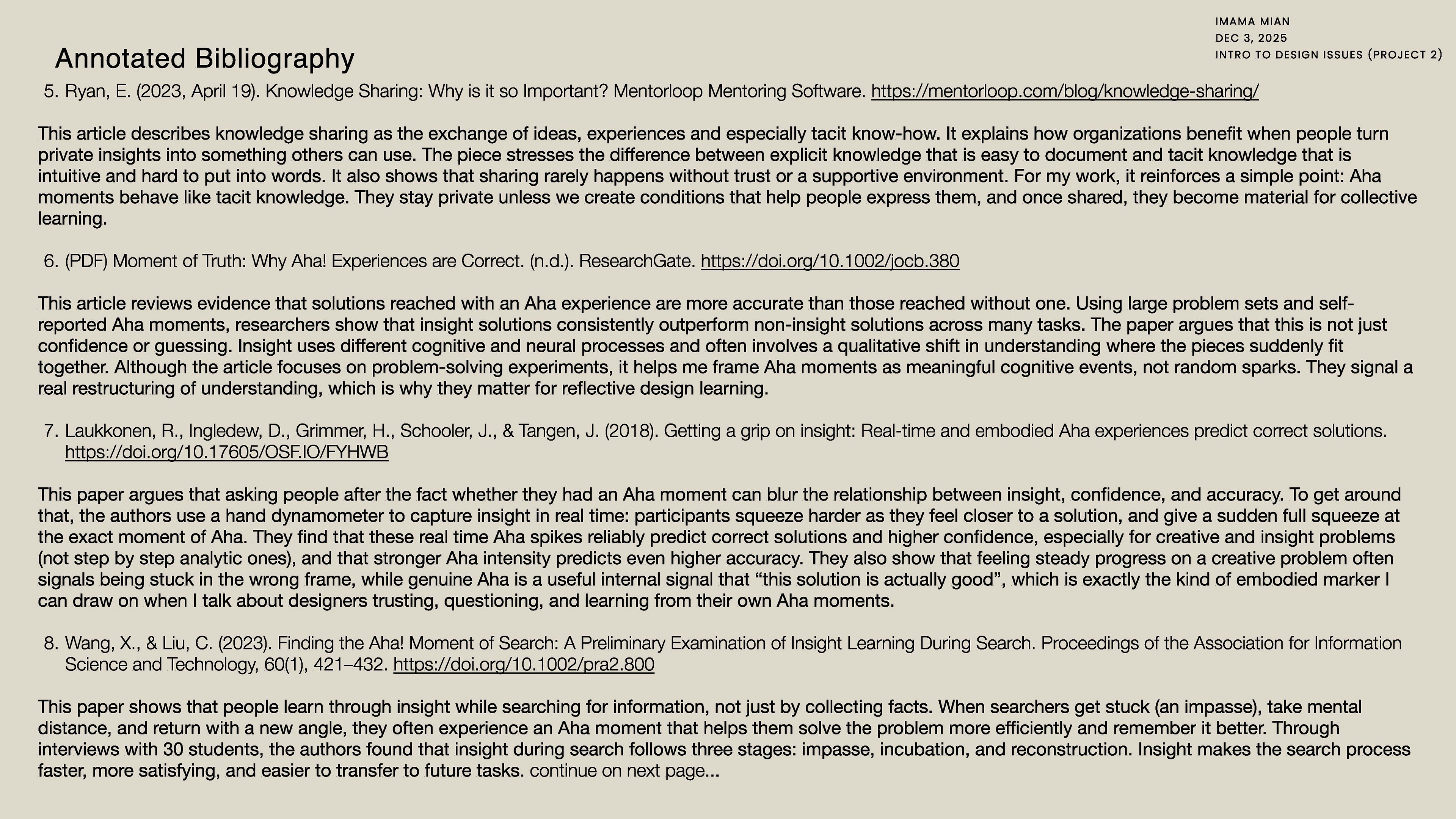
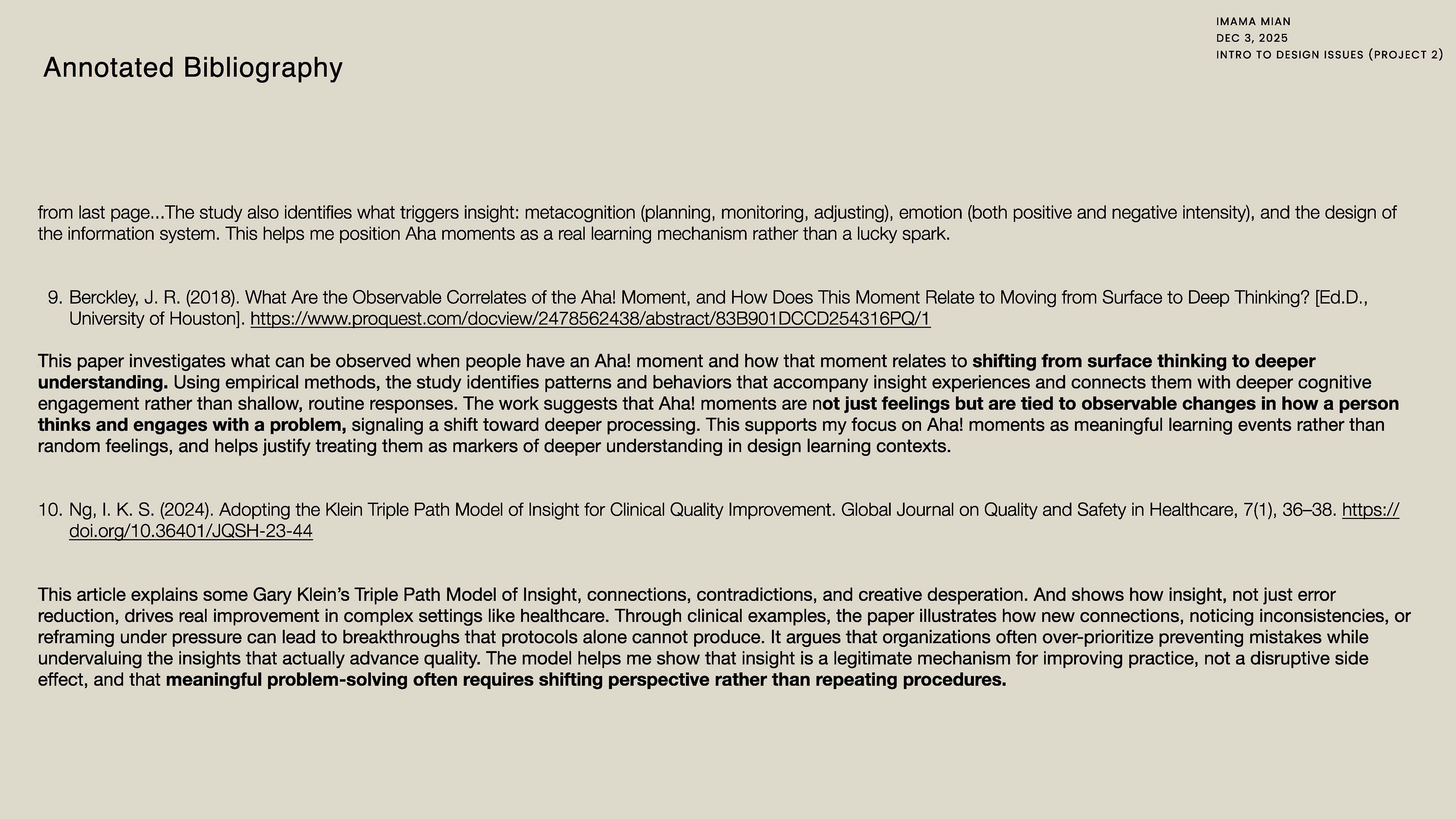
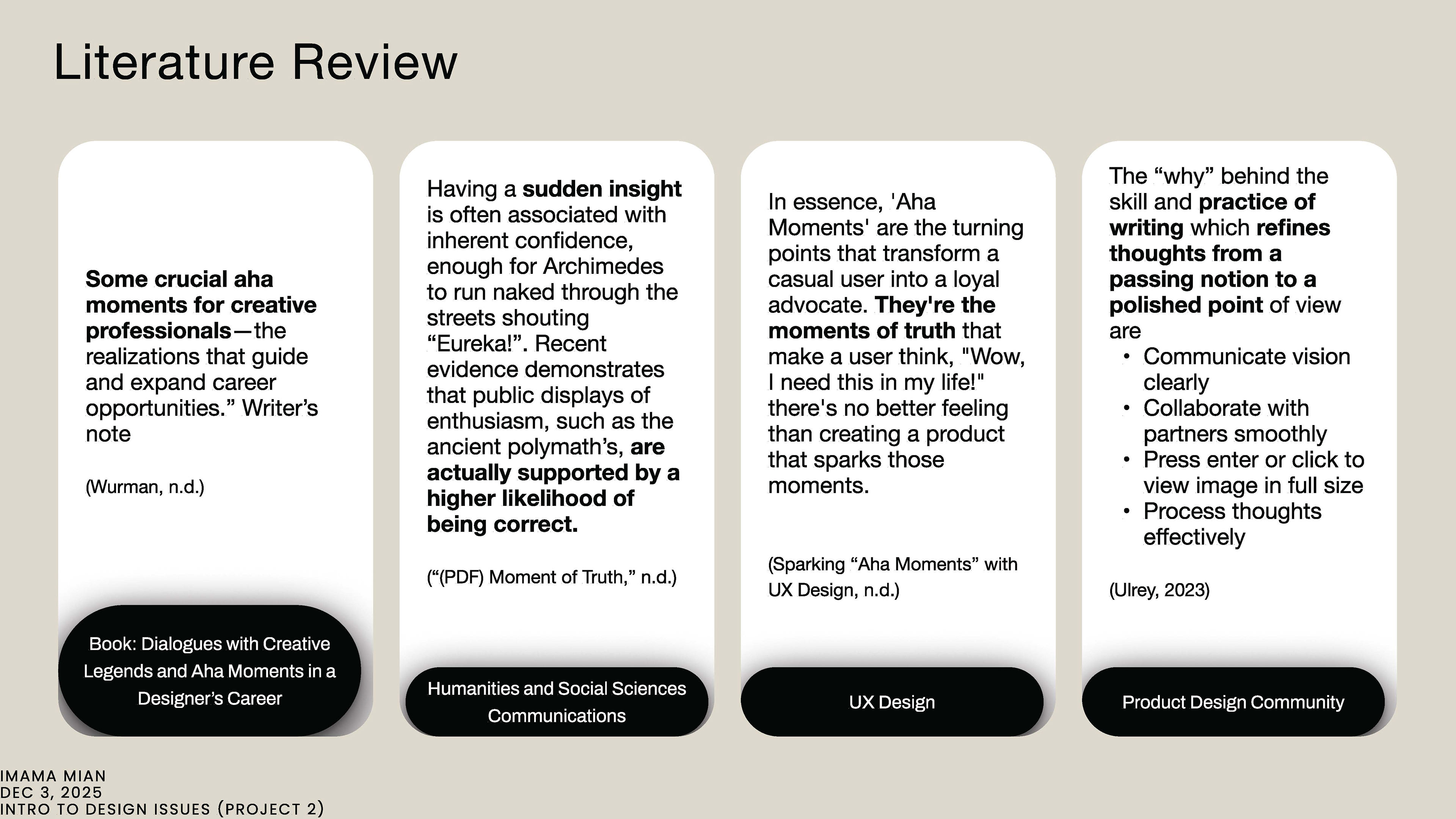
The concept of moment of truth originates in service design but has grown over the years to encompass service, product design, and user experience design. I wanted to use it for designers to get in touch with their designerly way of knowing and doing things.
The best way to conduct this workshop is through discussions, preferably in pairs or groups, to break the ice between creative thinkers and foster insights and deep learning.
Improving the toolkit...
I realized that too much time was spent on introducing participants to what aha moments are, and it was exhausting to me(and maybe to some participants). Pre and post-surveys are always helpful to measure change/before and after learning. It is helpful always to “see” the growth and also how much I needed to inform them about what aha moments were.
Same for a set of prompts, which I think can help with the pace of the workshop.
Same for a set of prompts, which I think can help with the pace of the workshop.
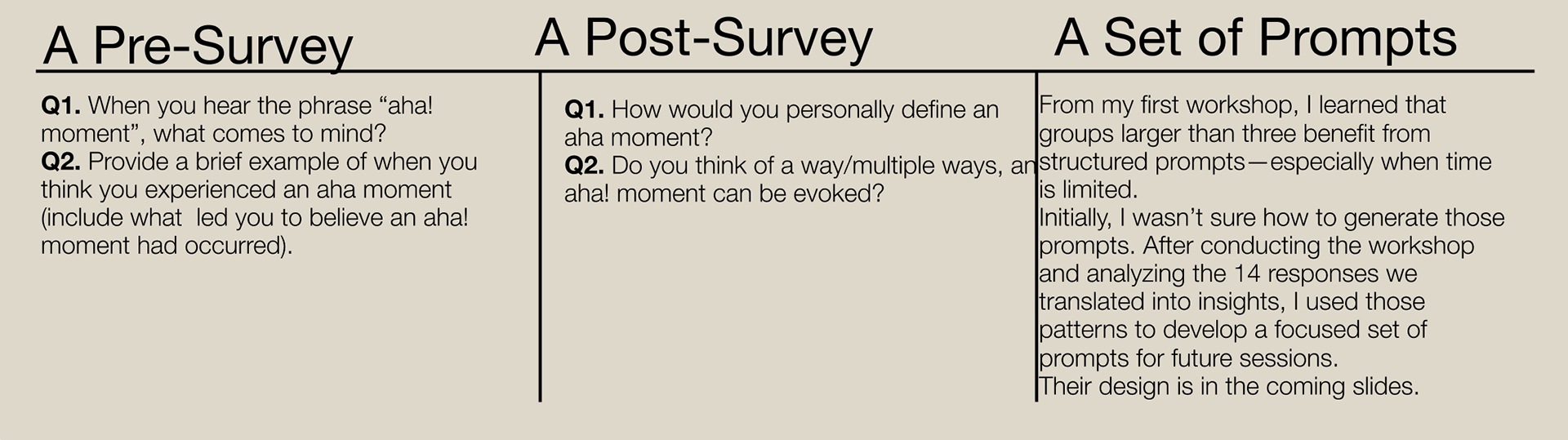
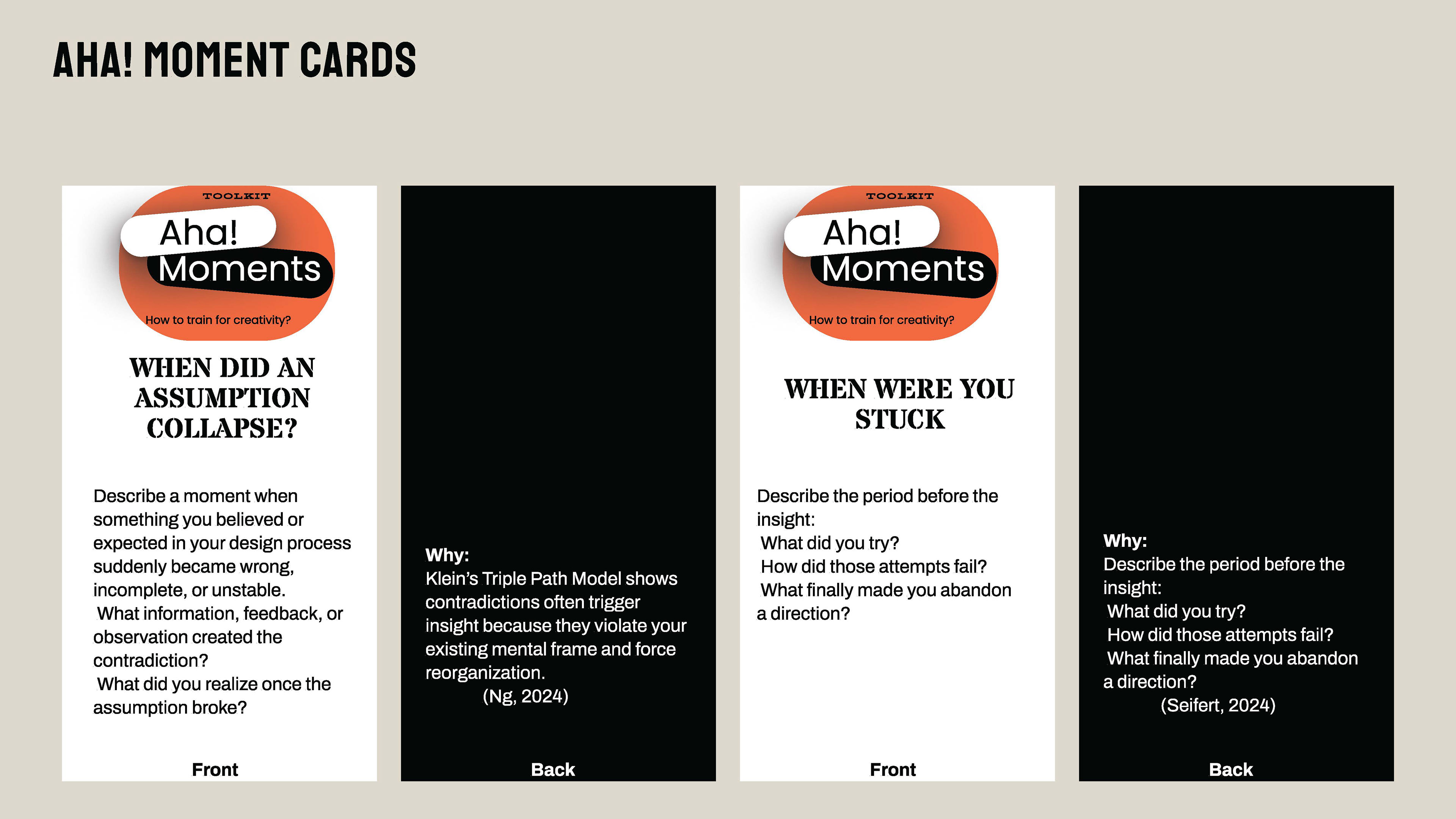
I changed the design to make it more self-explanatory (Collage card stays the same).
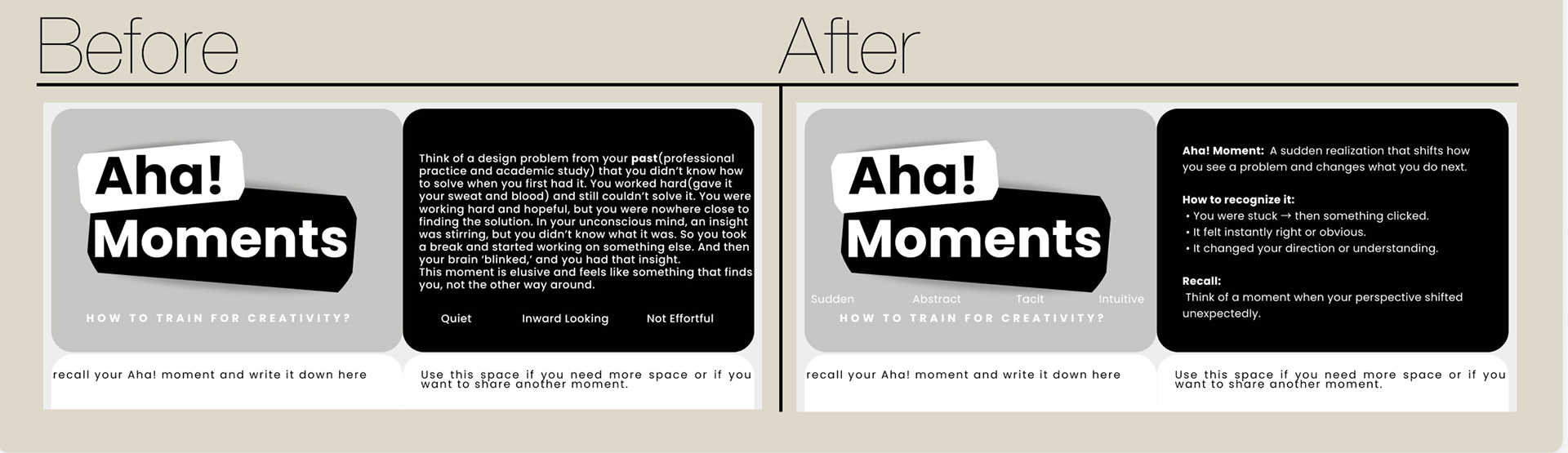
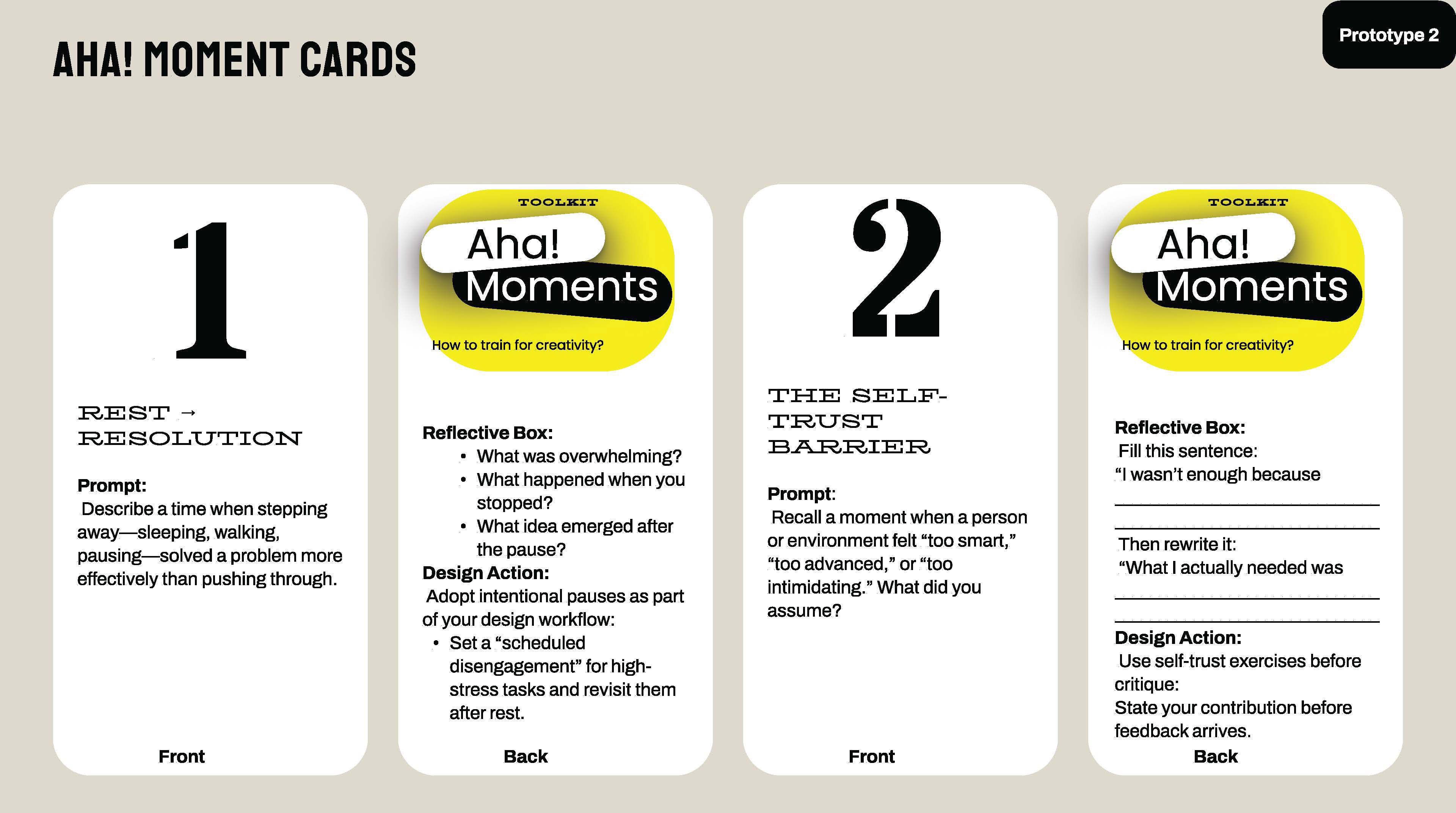
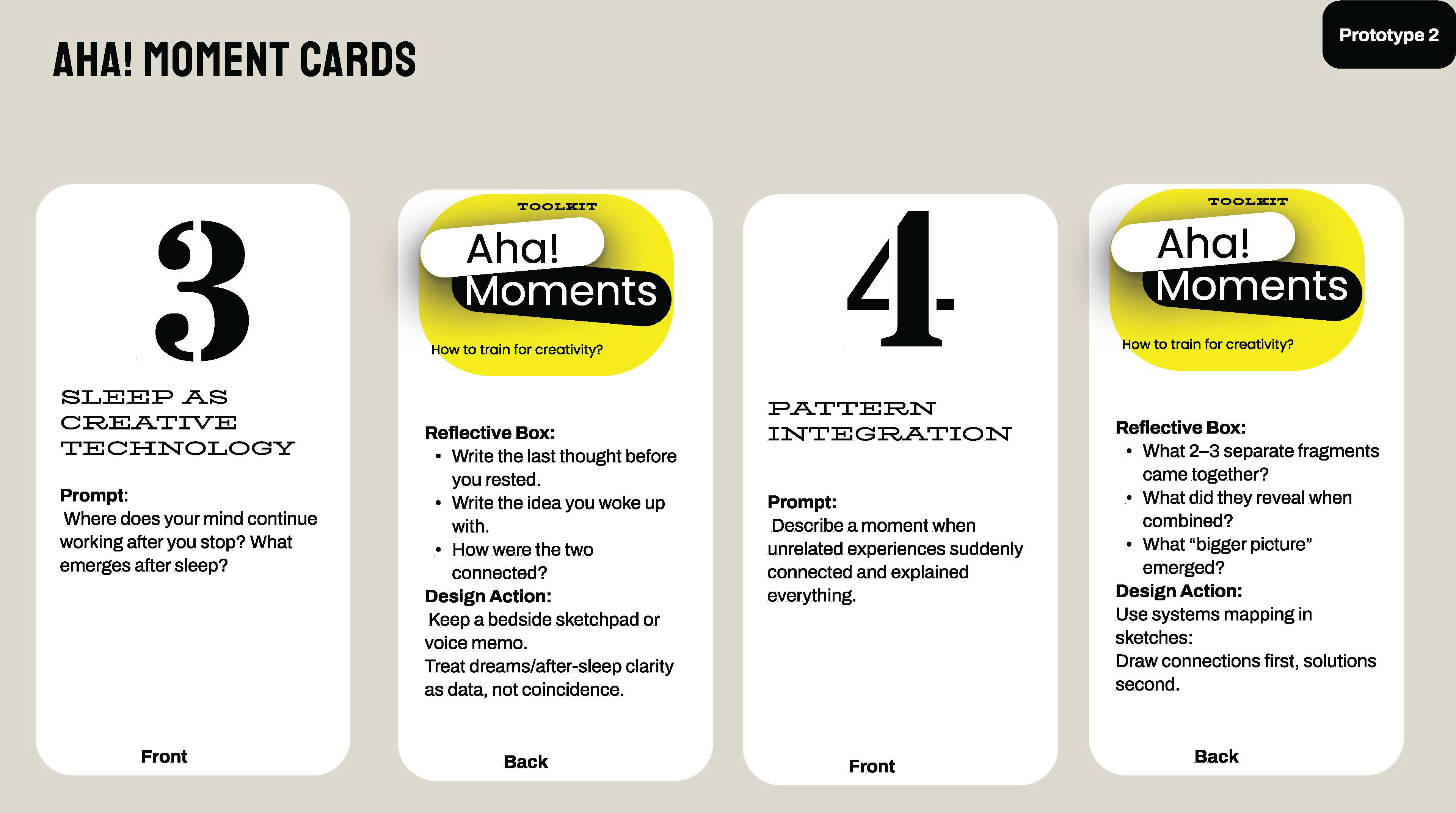
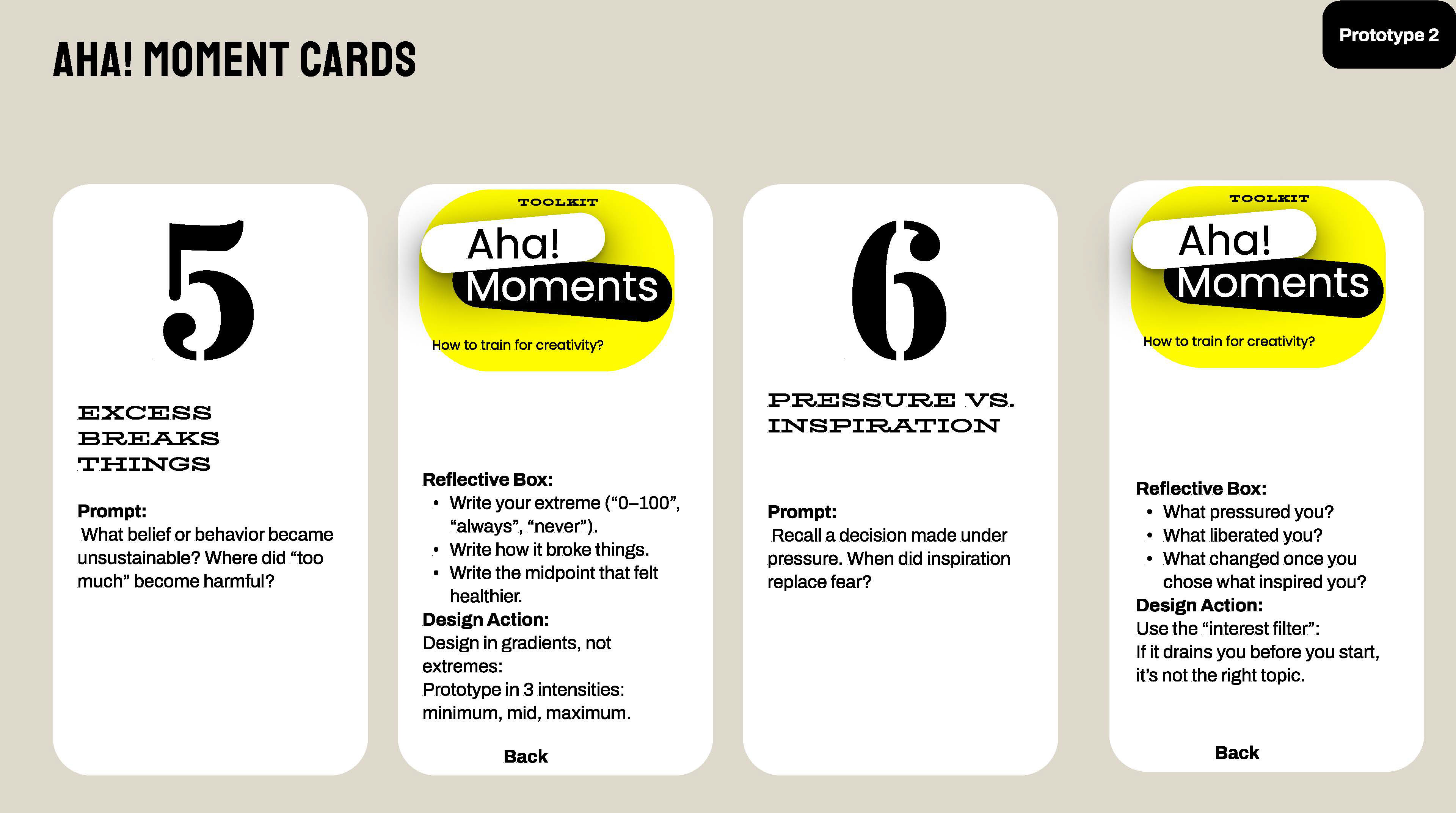
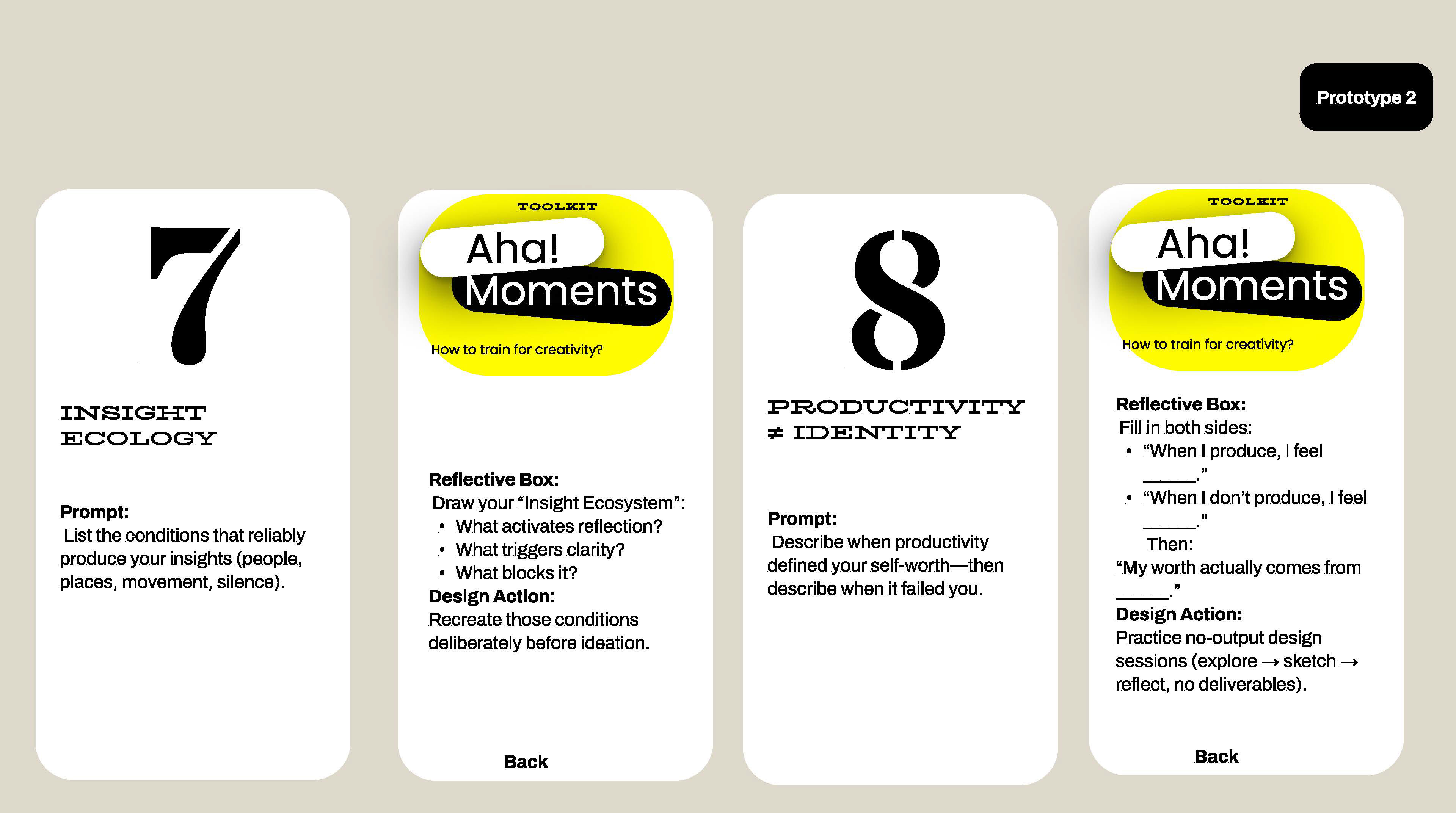
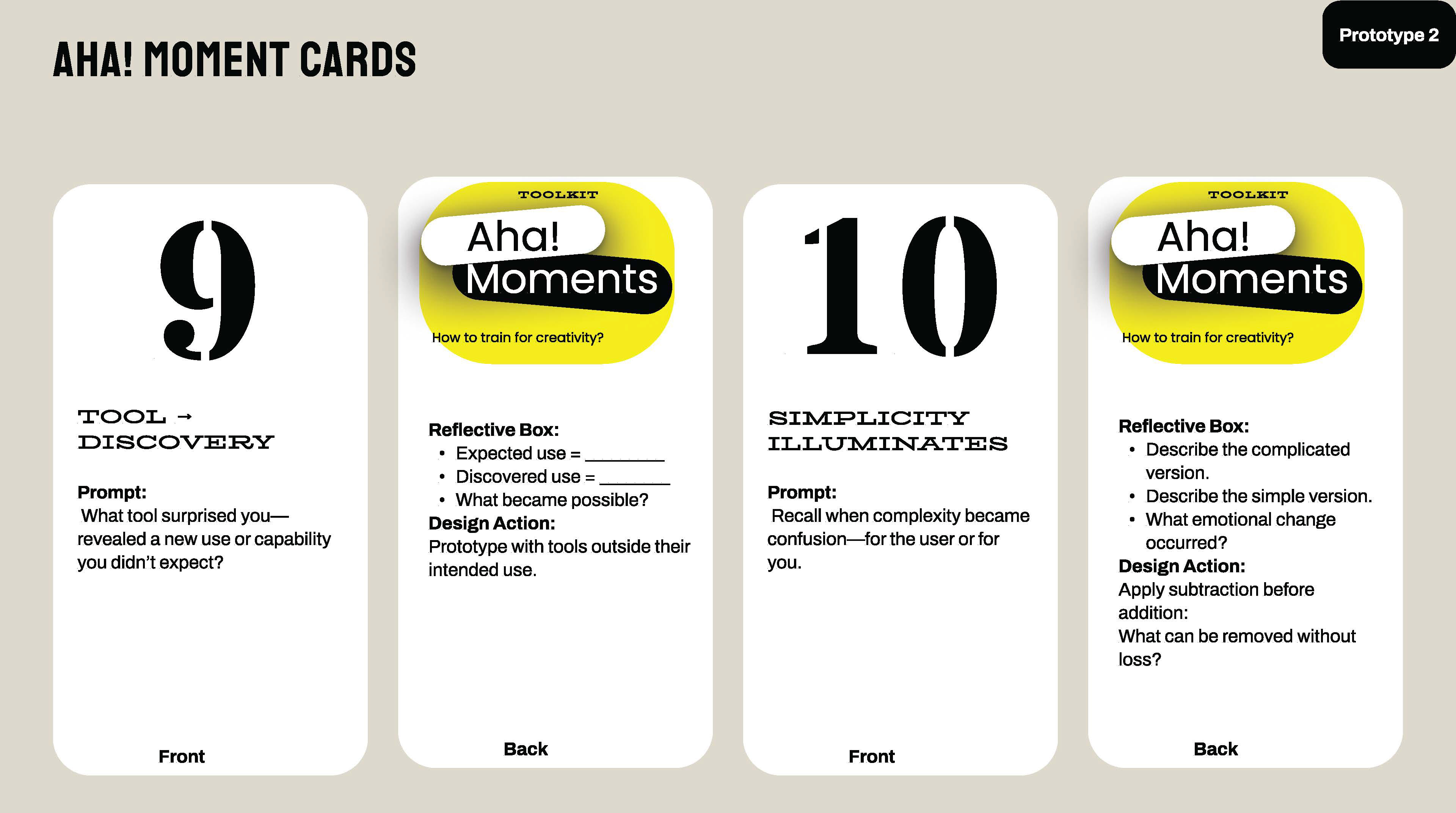
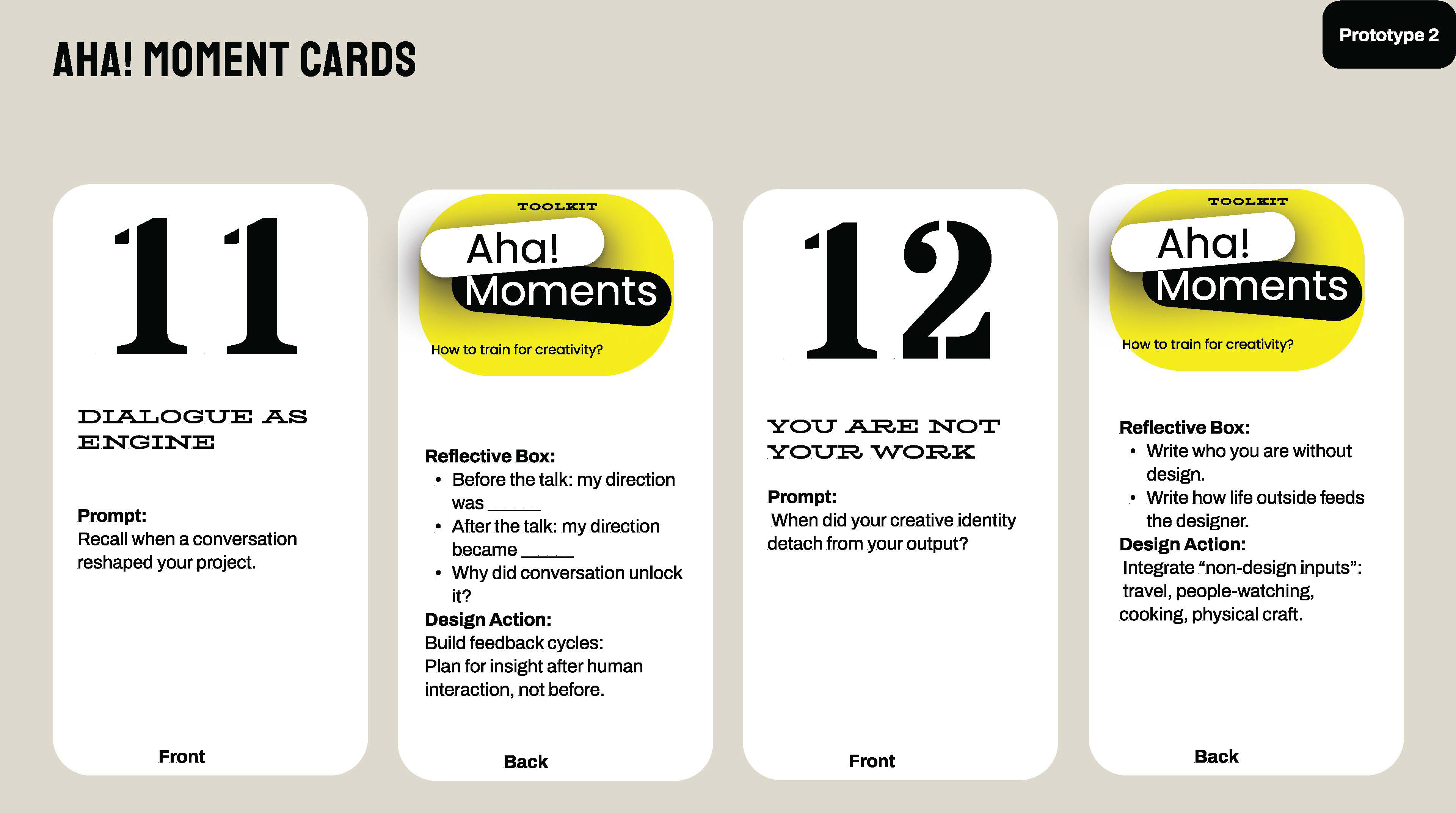
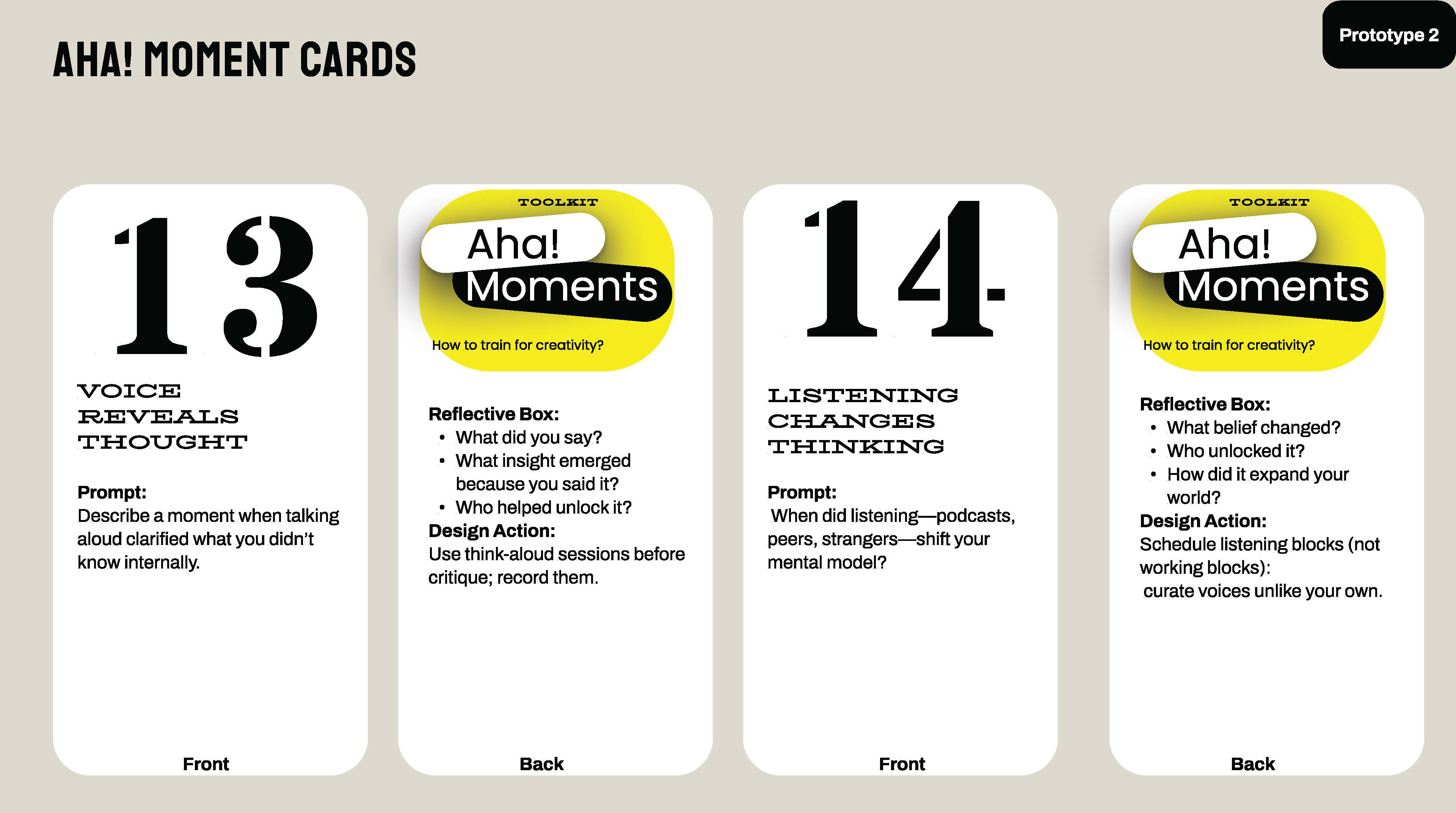
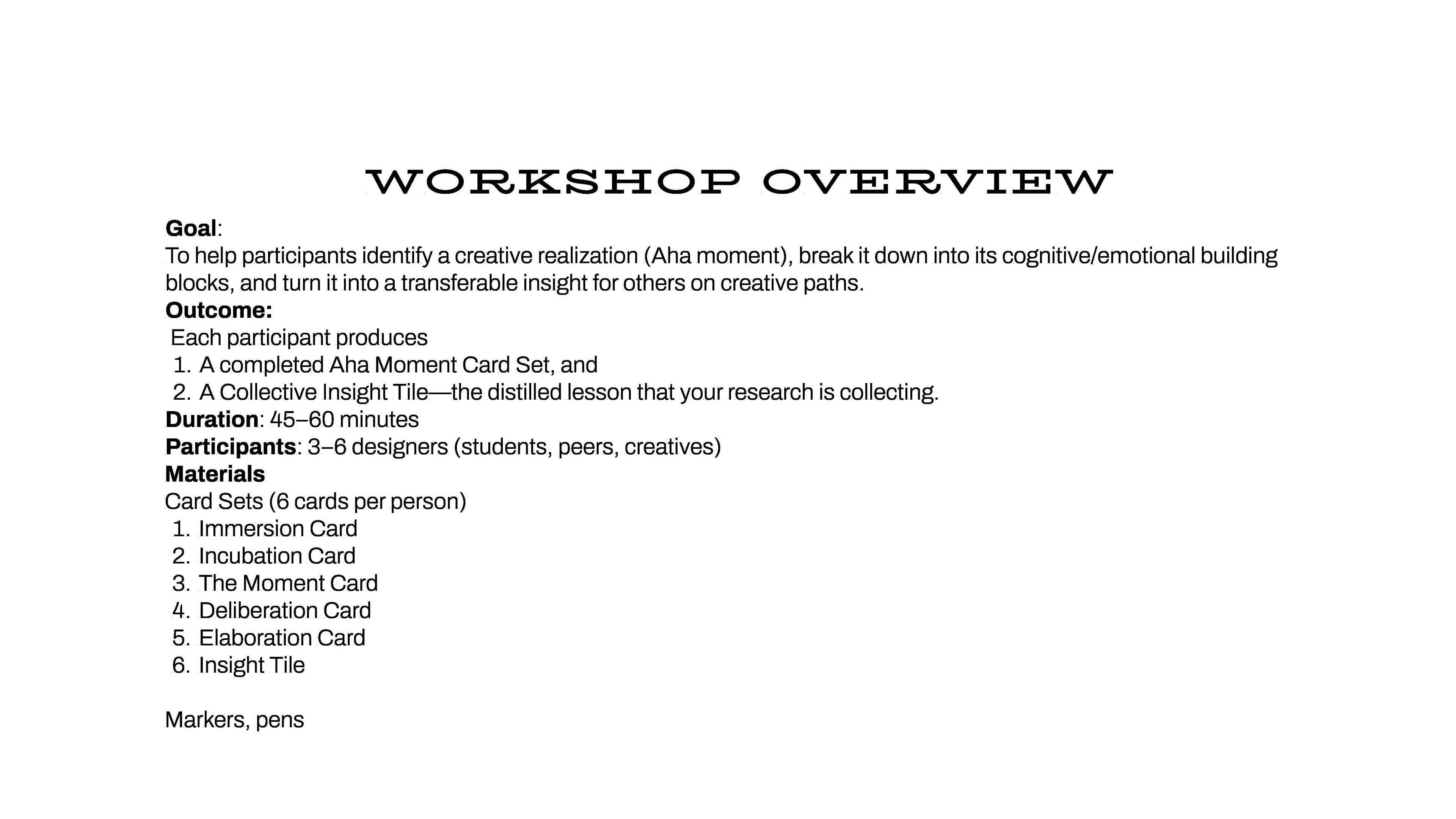
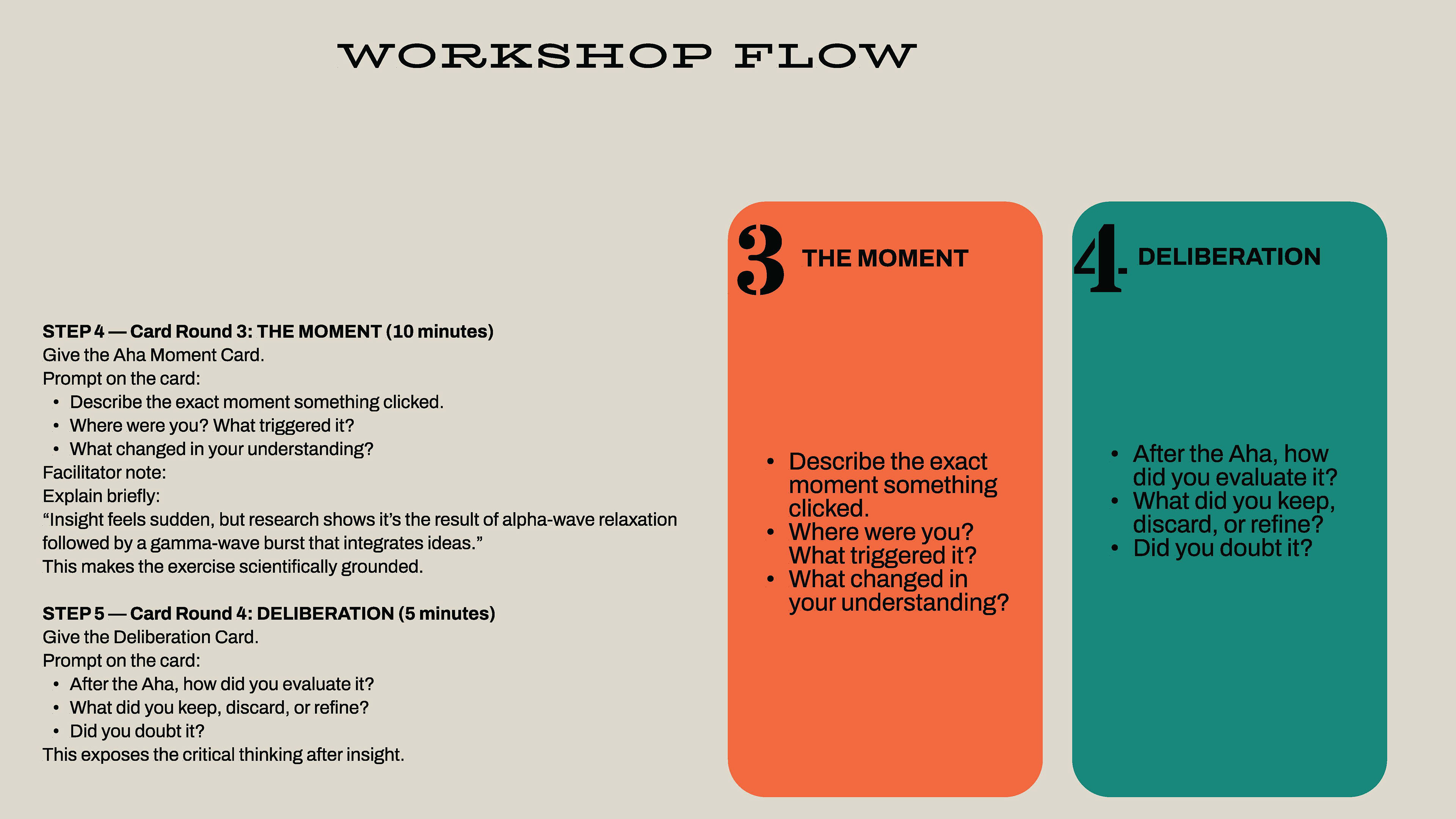
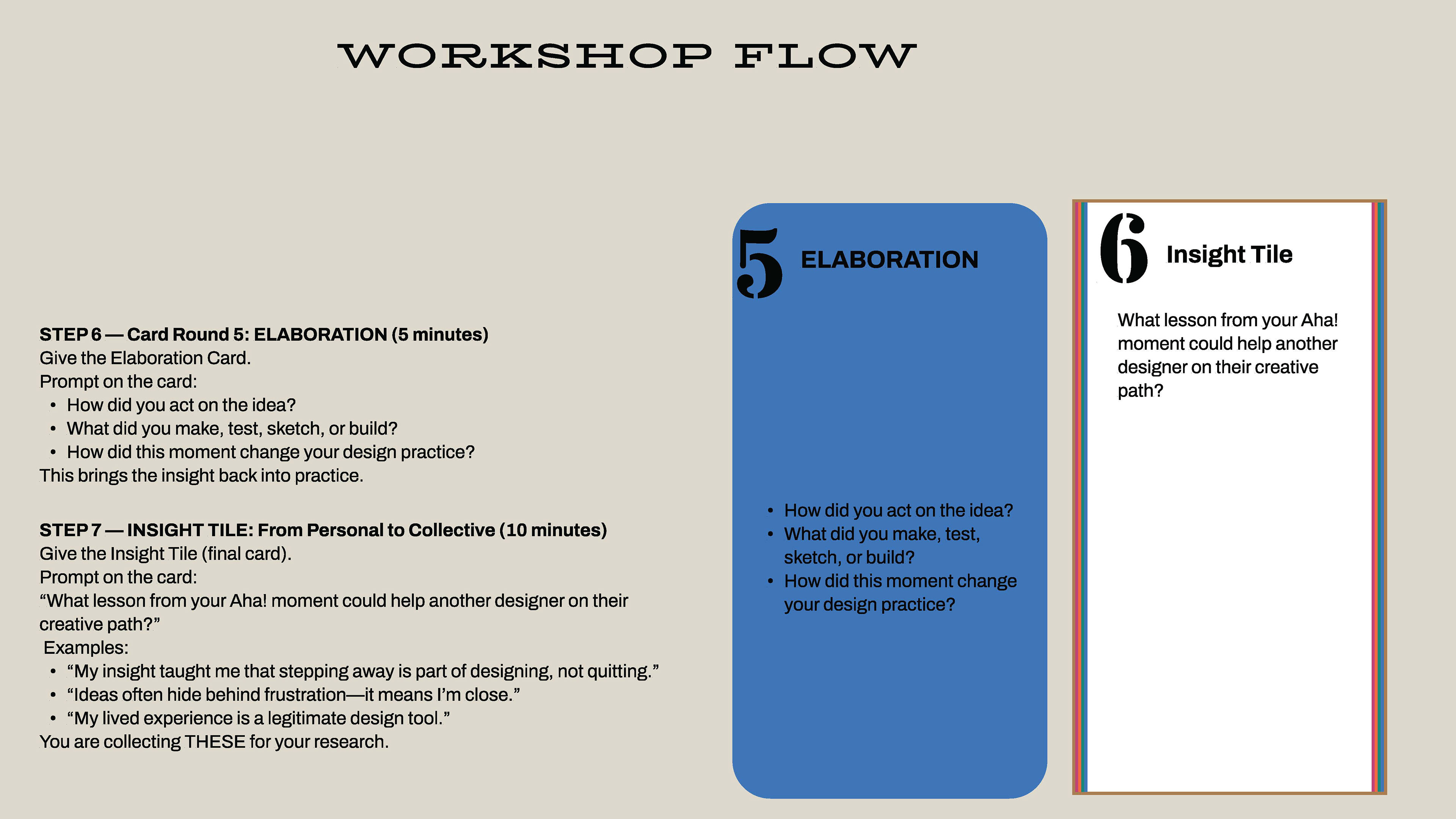
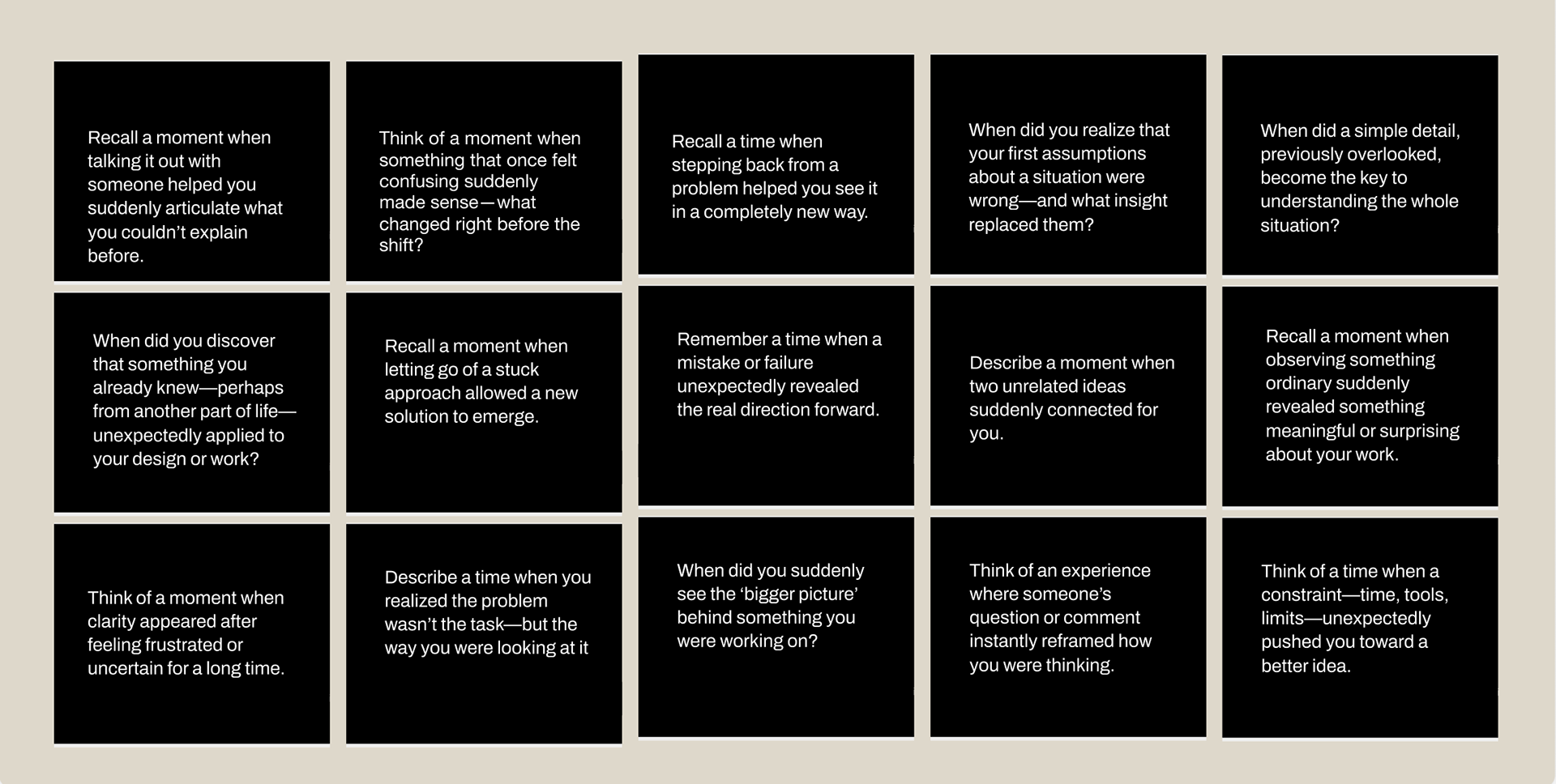
A prompt card deck was made and added. Now the set includes
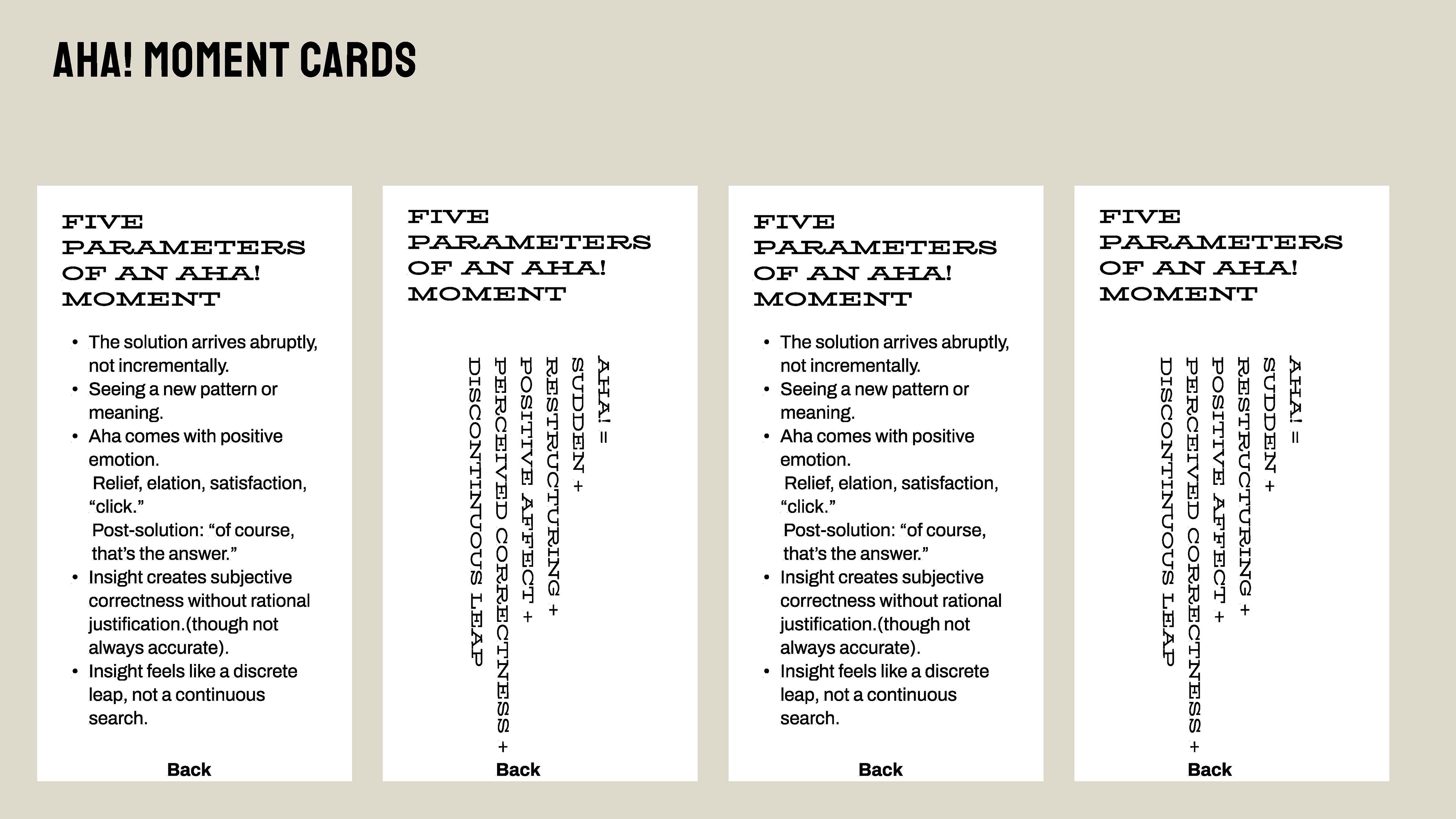
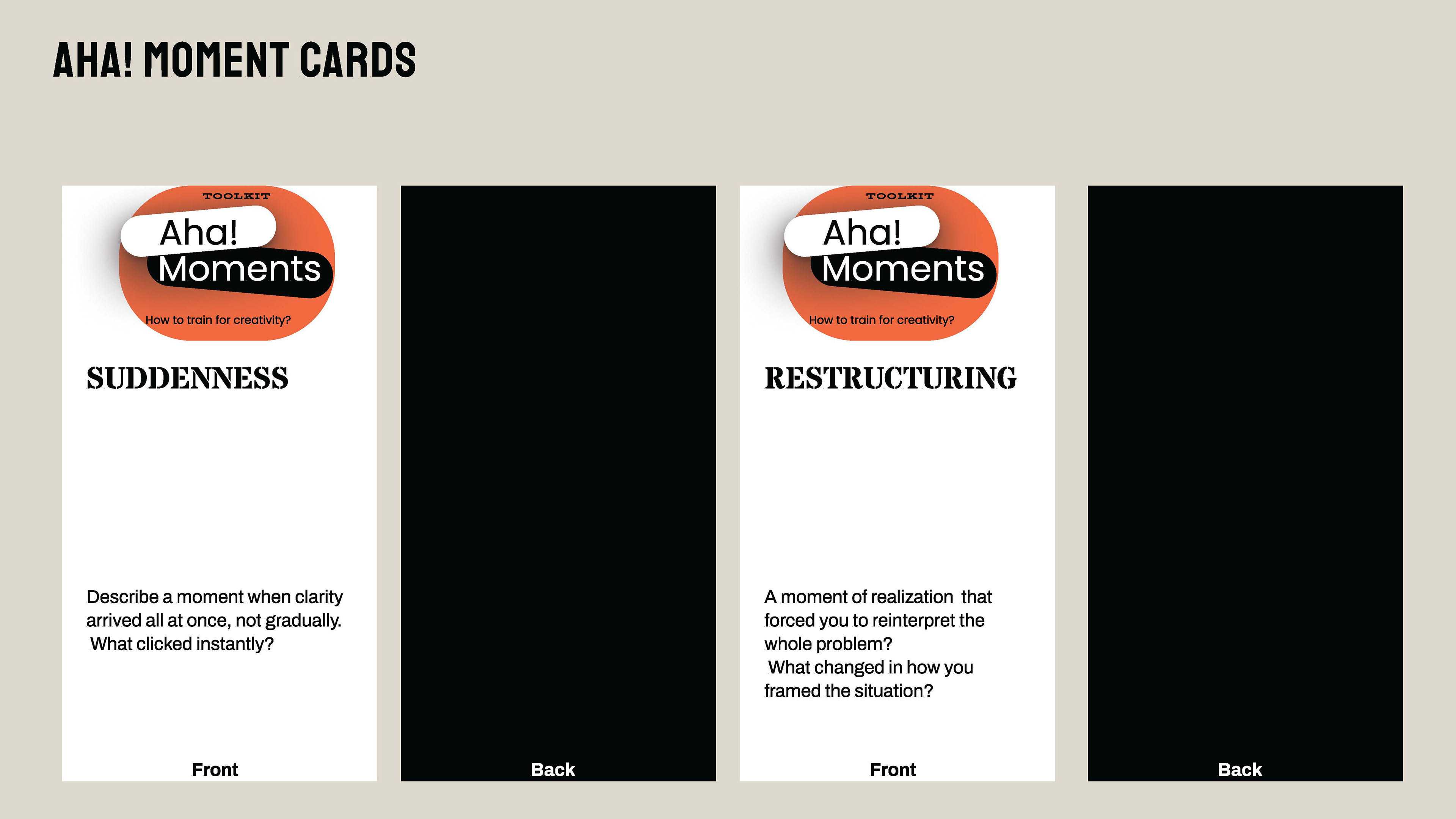
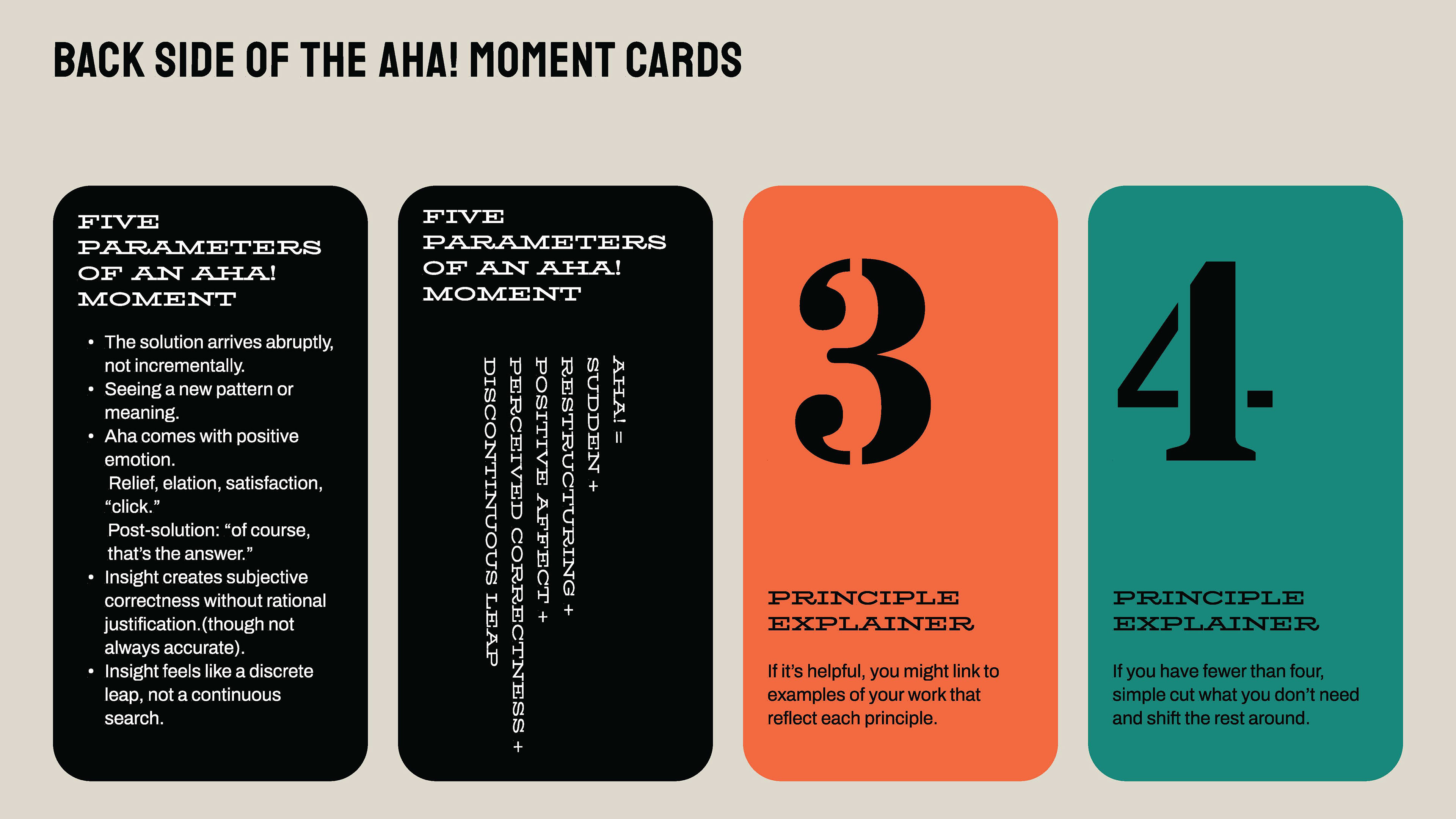
Two Aha! Moment cards (A5 size)
A deck of empty index cards
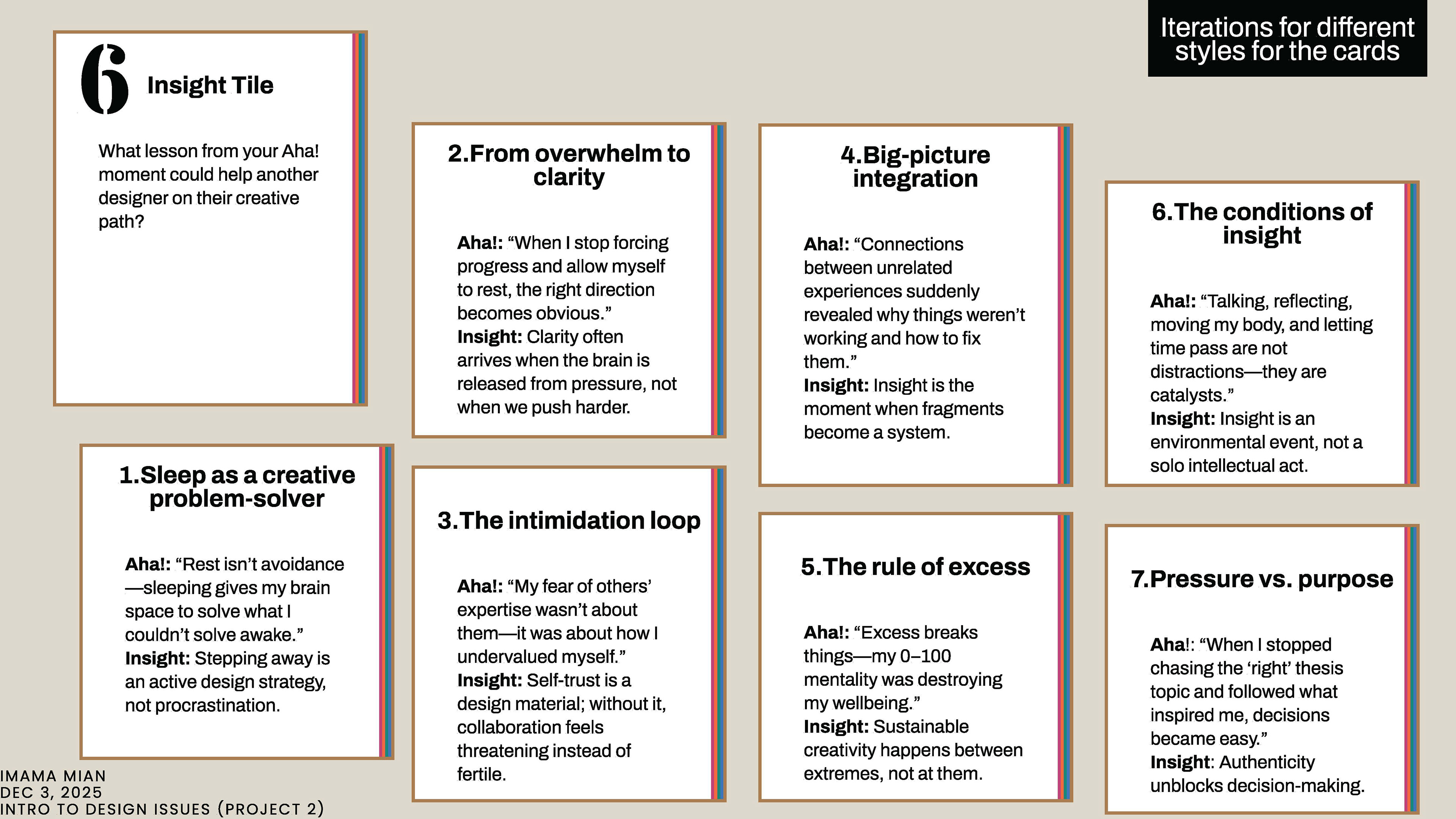
16 prompt cards
4-8 participants can play this game for 2 to 4 rounds to practice creativity and collaboration for design thinking.
Final Reflection
Dec 3, 2025
Process, Findings, Lessons Learned
According to this amazing article, aha! Moments are valuable in pedagogy, and so little work is done in this direction. This is my humble attempt to dig a little deeper (with better tools) into Aha! Moments.
A key lesson learned is that insight cannot be rushed, but it can be supported through structure. Prompt cards, shared reflection, and simple tools help people externalize thinking more quickly, making group synthesis possible even in short workshops.
According to this amazing article, aha! Moments are valuable in pedagogy, and so little work is done in this direction. This is my humble attempt to dig a little deeper (with better tools) into Aha! Moments.
A key lesson learned is that insight cannot be rushed, but it can be supported through structure. Prompt cards, shared reflection, and simple tools help people externalize thinking more quickly, making group synthesis possible even in short workshops.
Designers need scaffolding, not because they lack ideas, but because articulating tacit knowledge is cognitively demanding.
Creating a system that helps surface, compare, and build on these moments moves the work away from isolated stories and toward a responsible, sustainable framework for understanding how creative growth happens over time.
This is pretty much it for a conclusion. But my mind doesn't stop there. I keep iterating... below is just the extended work done in slides that I am sharing for enthusiasts like myself. Take it or leave:)